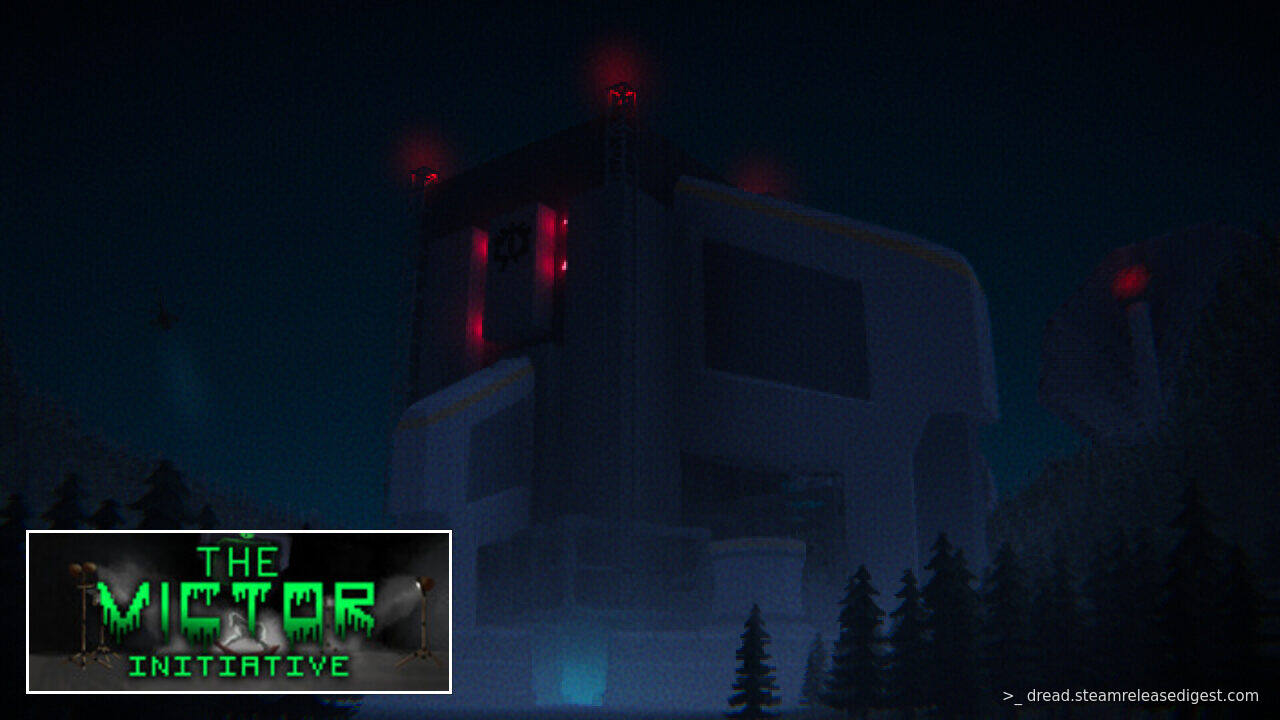
“You’ll never see rocking horses the same way again.” This is the quiet warning left by players who have ventured into the subterranean concrete depths of the Initiative, a game where the mundane objects of childhood are twisted into instruments of acute, agonizing tension. Set within a mysteriously abandoned 1960s government facility in North Wales, this lo-fi survival horror title doesn’t rely on hyper-realistic blood spatters to get under your skin. Instead, it builds its dread through the uncanny silence of its concrete corridors, the crackle of old magnetic tapes, and the deeply unsettling realization that you are being hunted by things that do not follow human geometry.
As a nameless contractor sent by a shady government agency, your task is deceptively straightforward: descend into the facility and close a “rift” that has been tearing at the fabric of reality for sixty years. From a first-person perspective, the game strips away your typical survival-horror safety nets. There is no health bar ticking down on your HUD, no companion whispering hints in your ear, and very little explanation of what went wrong before the facility went dark. It is an experience that players describe as “tough as nails” on normal difficulty, demanding patience as you navigate a spiraling maze of abandoned offices, flooded basements, and sterile laboratories. To survive, you must search for keycards, solve localized environmental puzzles, and collect tools to bypass the anomalies that have claimed the complex.
The game’s narrative framework relies heavily on physical media and live-action video. The experience begins with a grainy, recovered videotape from thirty years ago showing three friends disappearing in the Welsh woods. As you push deeper, you uncover the facility’s history through scattered documents and rich audio logs. These logs feature surprise vocal cameos from genre icons like Sam Lake and Samantha Béart, grounding the narrative in a surreal, Remedy-esque reality. There is a distinct Twin Peaks meets Alan Wake 2 flavor to how the game handles its supernatural elements—not as mere monsters to shoot, but as cosmic aberrations that have permanently stained the environment.
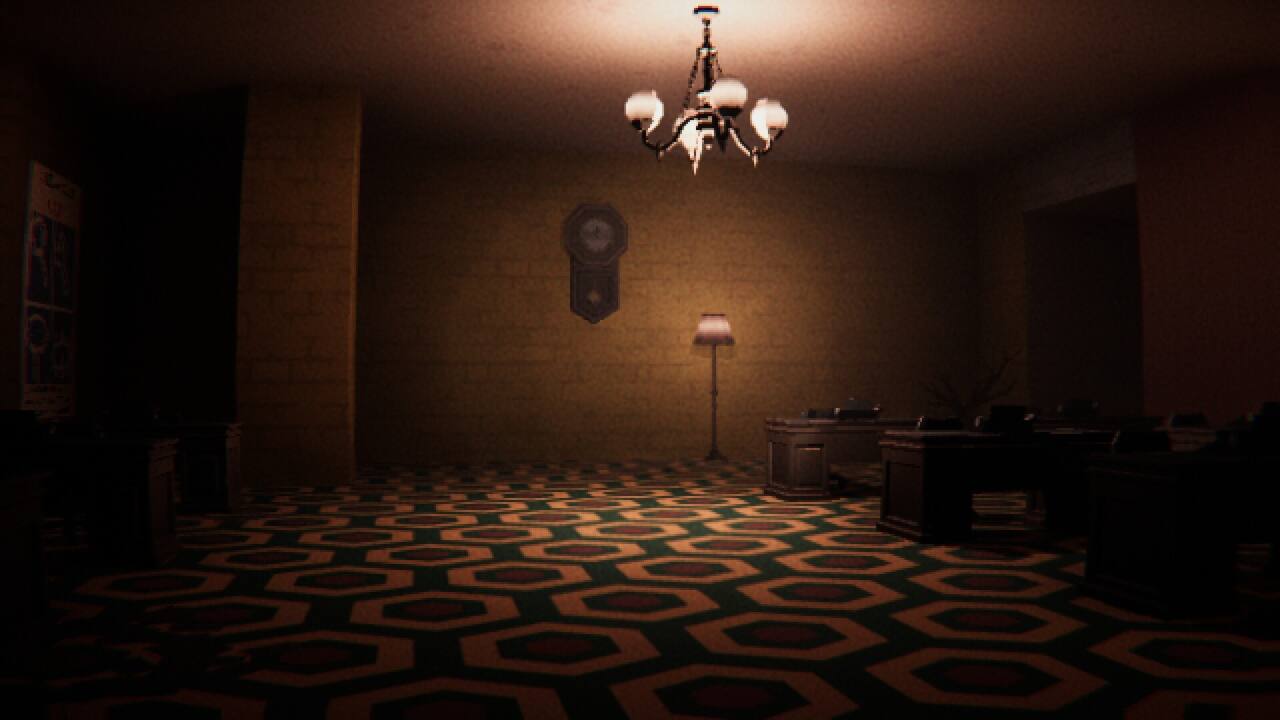
The atmospheric weight of the experience is heavily carried by its superb sound design, which has players practically begging for a standalone soundtrack release. The oppressive hum of fluorescent lights, the distant metallic groans of the facility, and the stark, synth-driven musical cues combine to create a sensory chokehold. The developer understands that silence is often far scarier than a roaring monster, and they use positional stereo audio to make you second-guess every footstep behind you. When the soundscape does swell, it serves to heighten the uncanny, dreamlike quality of the narrative rather than just setting up a cheap shock.
What makes the game truly stand out—and occasionally frustrate—is its approach to enemy design. Players have quickly latched onto the game’s first major threat, affectionately dubbed “Equine Larry,” a terrifyingly simple entity that leverages a “look-at-me-to-survive” (or rather, look away) mechanic. While this creates a frantic, sweat-inducing game of red-light-green-light, it introduces a classic design paradox. By forcing players to look away from the threat, the game actively prevents you from absorbing its meticulously crafted, eerie environments. Similarly, some players have noted that the crawling, neck-snapping entities in the later chapters are so intensely stressful that they’ve had to pause their playthroughs just to recover.
The puzzle design has also drawn some mixed reactions. While the mechanical loop is praised for getting immense value out of a few simple tools, some of the environmental puzzles lean a bit too heavily on basic real-world logic rather than demanding deep, in-universe deduction. Furthermore, the game features a warning that it contains a high volume of jump-scares. For our readers who generally despise loud noises as a substitute for genuine dread, there is a saving grace: these jump-scares can be completely muted in the settings, allowing the game’s exquisite, low-rumble audio design and stereo depth to do the heavy lifting.
At its core, this is a triumph of budget-conscious, high-atmosphere indie horror. It is custom-built for players who miss the analog dread of late-90s PC horror, who enjoy piece-by-piece lore delivery, and who don’t mind a steep, unforgiving difficulty curve on their first run. If you can forgive some slightly simplistic puzzles and the occasional mechanic that forces your eyes to the floor, this Welsh nightmare offers a genuinely unsettling, lore-rich journey that punches far above its weight class.
Key Facts
- Developer: Spacepiano Games
- Publisher: Spacepiano Games
- Release Date: Jun 1, 2026
- Price: $10.39