Author: sitemill

  • Last Call: The Anomaly Hunter That Turns Office Routine Into Deep Paranoia

    Last Call: The Anomaly Hunter That Turns Office Routine Into Deep Paranoia

    You spend most of Last Call staring fixedly at mundane office fixtures, terrified that a desk lamp moved two inches to the left.

    Developed and published by Two Sleepy Cats, this atmospheric horror experience takes the popular anomaly-hunting formula—famously featured in titles like The Exit 8—and embeds it into the suffocating, uncanny quiet of an office building during a solitary night shift. Your objective on paper is simple: inspect each floor, observe every detail, and look for anything that feels slightly out of place. When you spot an anomaly, you pull out your in-game smartphone camera, snap a photo to document the discrepancy, and attempt to move on to the next floor. If you miss a detail, make an incorrect judgment, or break a rule, the building quietly resets your progress, trapping you in a terrifying loop back at the start.

    Rules That Refuse to Stay Static

    What elevates Last Call beyond a standard spot-the-difference game is how it manipulates tension through evolving rules and instructions. Rather than relying strictly on passive observation, the game sends cryptic text messages to your phone as you progress. Some messages offer helpful hints about what to look for on a given floor, while others demand specific actions you must perform before you are allowed to exit. Crucially, the narrative hints early on that not every message originates from a trustworthy source, forcing you to second-guess whether following orders will save you or lead you directly into a trap.
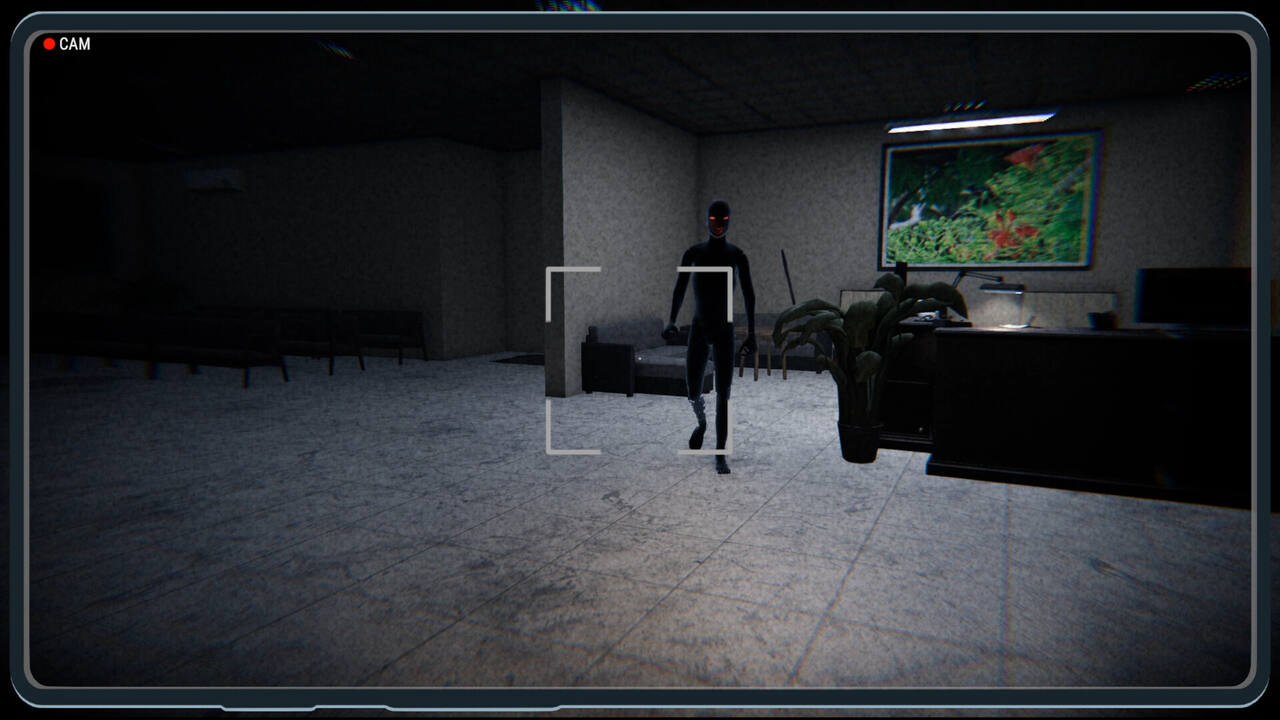
    Last Call gameplay screenshot
    Image courtesy of Two Sleepy Cats via Steam

    Every floor introduces its own distinct behavioral logic and visual hazards. On one level, you might be scanning file cabinets for subtle shape changes; on another, something unseen is actively watching or stalking your movement, demanding a fast and unconventional response. Objects move, multiply, disappear, or transform into uncanny shapes. Because the building refuses to behave the same way twice, you can never settle into a comfortable rhythm or trust your instincts from the previous floor.

    What the Players Are Saying

    With a unanimous 100% positive rating across its initial reviews, Last Call has clearly struck a chord with horror enthusiasts. Players consistently praise the game’s eerie ambiance, smooth performance, crisp visuals, and exceptionally tense sound design. A recurring highlight in user feedback is how effectively the game engages its players through text: even reviewers who usually skip in-game notes and readable archives report halting their progress to read every document, praising the environmental storytelling for pulling them deep into the building’s lore.

    The scares themselves hit hard. Players frequently cite specific, deeply unsettling encounters that break the quiet tension—most notably a terrifying green entity lurking on Floor G, and a heart-stopping moment on the ground floor where a figure suddenly sprints full speed toward the player. The subtle zoom levels and polished presentation also make the experience approachable for players who are usually sensitive to intense visual motion or motion sickness.

    Where players find minor friction—or where potential buyers should set expectations—is in the game’s structural brevity and reliance on sudden shocks. While the core experience relies on psychological dread and paranoid observation, Last Call isn’t afraid to deploy visual distortion and sudden jump scares when you least expect them. Traditionalists who prefer purely quiet, slow-burn psychological horror without loud, abrupt threats might find these spikes jarring. Additionally, at roughly one to three hours for a full run, it is a short, bite-sized experience—though many note it feels like a strong, promising foundation for future installments from the developer.

    The Verdict

    Last Call is a polished, deeply paranoid anomaly-spotting game that excels at making routine observation feel dangerous. It is tailored for players who love liminal spaces, psychological mind games, and the quiet thrill of scrutinizing a hallway until reality starts to buckle. If you enjoy games that respect your attention to detail and offer a genuinely creepy atmosphere without demanding a massive time investment, this $3.99 night shift is well worth taking.

    Key Facts

    • Developer: Two Sleepy Cats
    • Publisher: Two Sleepy Cats
    • Release Date: Sep 24, 2026
    • Price: $3.99
  • Protocol 86: Chernobyl: The Cold Terror of a Soviet Command Line

    Protocol 86: Chernobyl: The Cold Terror of a Soviet Command Line

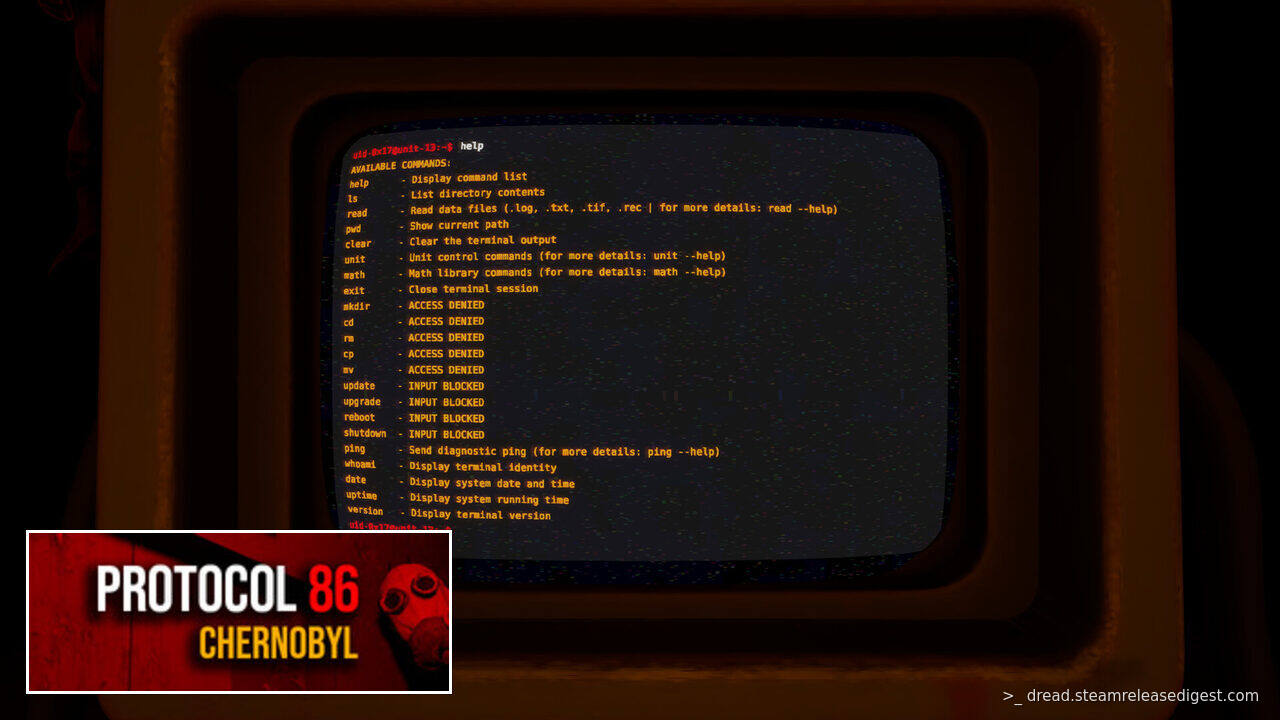
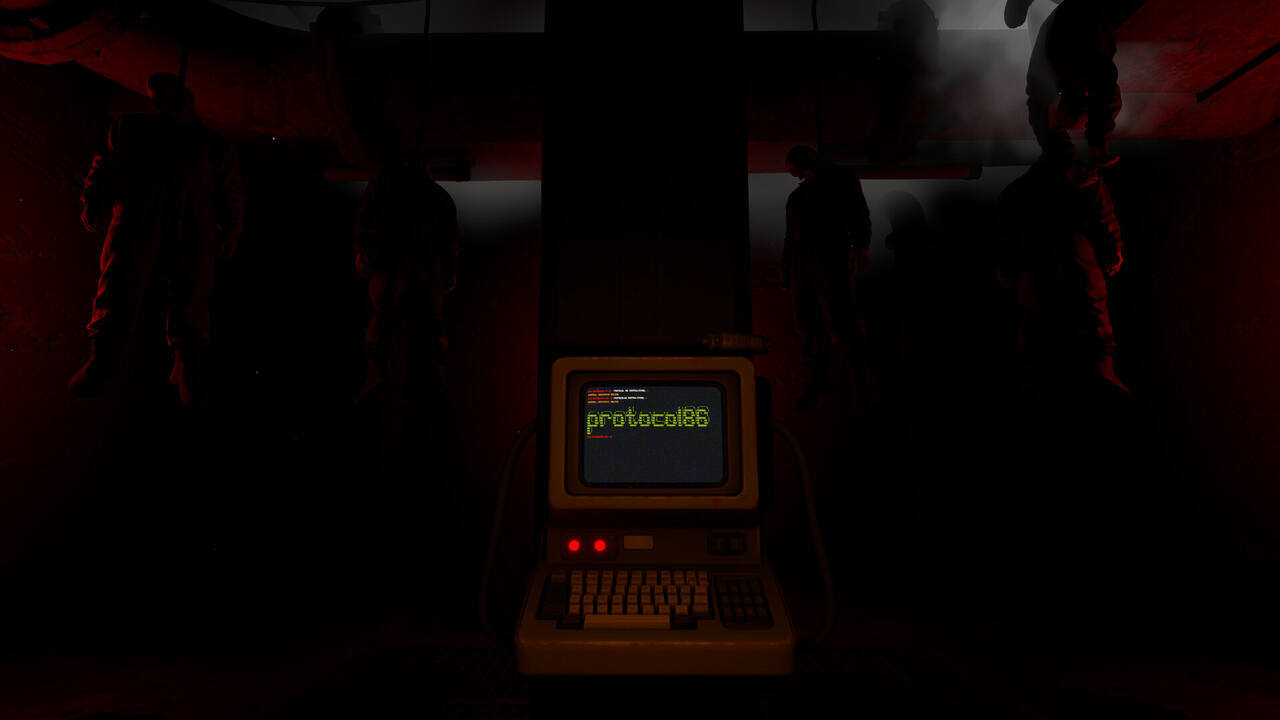
    Typing help into a flickering, monochromatic command line as the Geiger counter ticking behind the drywall grows louder is not how most post-Chernobyl games begin. Where standard shooter tropes offer an assault rifle and a radiation suit, Core Interactive’s Protocol 86: Chernobyl locks you in a chair deep inside TROYKA—a secret underground Soviet research facility—and gives you nothing but a terminal prompt to negotiate your survival. It trades twitch reflexes for command syntax, asking you to parse directory trees while armed men and stranger, quieter threats move through the concrete corridors outside your door.

    Set during the chaotic dissolution of the Soviet Union in late 1991, the game casts you as a trapped survivor hunting for an exit through procedurally shifting facility sectors. Gameplay unfolds entirely through a simulated, Linux-style command-line interface. You navigate file directories, read .txt emergency logs, view static-choked .png schematics, and play distorted .wav audio files left behind by doomed researchers. Progression isn’t about clearing a room of enemies; it’s about solving intricate system puzzles under ambient pressure, using file contents and hidden logs to deduce sector passcodes and override lockouts before your location is compromised.

    Protocol 86: Chernobyl gameplay screenshot
    Image courtesy of Core Interactive via Steam

    The core tension comes from the stark contrast between the sterile logic of the terminal and the eerie sensory environment leaking into your headphones. As you execute commands, the game relies heavily on dark sound design to build dread. You hear the heavy thud of military boots in adjacent hallways, distant screams echoing through concrete shafts, and the distinct, rising crackle of radiation leak warnings. The inclusion of authentic Russian voice acting grounds the setting in a palpable historical paranoia, making the underground facility feel like a buried tomb being violently erased from the state archives.

    Players who enjoy retro terminal interfaces have highlighted the game’s authentic mechanical feel. Rather than simplifying the system into a basic point-and-click menu disguised as a computer, the interface expects players to actually learn and enter commands. Thoughtful additions like a tab-autofill button prevent the typing from feeling tedious without stripping away the satisfaction of manual system navigation. The puzzles hit a satisfying middle ground—demanding logical deduction and careful reading—with enough hidden files and extra achievements scattered across the directories to reward thorough investigation during a three-to-four-hour run.

    However, the game’s design decisions create a sharp point of friction for some. The most vocal player complaint centers on its unforgiving lack of a save system. Protocol 86: Chernobyl operates on a strict permadeath model: a single mistake or an unexpected encounter with roaming hazards—such as a hostile, radioactive entity stalking the sectors—wipes your entire run and forces you to restart from the initial prompt. For a atmospheric puzzle game that requires slow, methodical reading of text files, losing several hours of progress to a sudden death can feel brutally punitive, turning tension into frustration for players caught in a repeat loop.

    Protocol 86: Chernobyl is a focused, niche experience tailored for players who find dread in isolation, command lines, and quiet retro-tech atmosphere. If your taste in horror skews toward the slow-burn, text-driven claustrophobia of games like Stories Untold or Duskers, this low-cost Soviet mystery delivers a distinct sense of place. It requires patience and a tolerance for ruthless restarts, but its oppressive, cold-war mood lingers well after you close the terminal.

    Key Facts

    • Developer: Core Interactive
    • Publisher: Core Interactive
    • Release Date: September 24, 2026
    • Price: $6.99
  • SilentDarkness and the Quiet Horror of the Liminal Pool

    SilentDarkness and the Quiet Horror of the Liminal Pool

    SilentDarkness forces you to decipher the unwritten rules of a suffocating poolscape through patient observation, tight movement, and repeated, trial-and-error deaths.

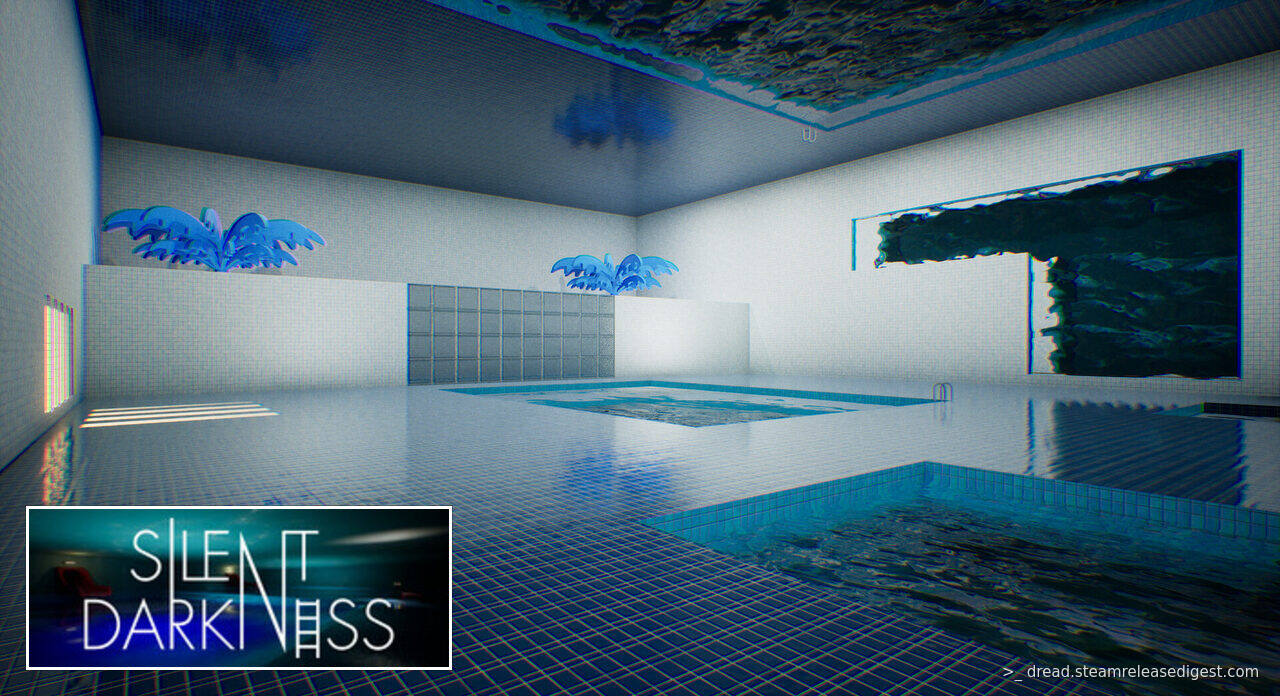
    Developed as a solo Unreal Engine 5 project by developer NURA under the banner NuraStudio, this first-person liminal escape game begins with a deceptive sense of tranquility. You start relaxing in a mountainside infinity pool under clear, sunlit skies, but the moment you submerge and surface from beneath the water, the peaceful outdoor world vanishes. In its place lies an endless, unsettling complex of tiled chambers, static water, and architecture that feels at once familiar and deeply wrong. There are no weapons to wield, no enemies to fight, and no sudden jump scares lurking around the corner. Instead, the game relies entirely on an oppressive atmosphere, quiet dread, and the lingering threat of the unknown.

    Deciphering the Poolrooms

    The core of the experience revolves around unguided exploration and mechanical discovery. Without explicit tutorial prompts, quest markers, or obvious HUD direction, your survival depends on your ability to observe environmental cues and experiment with movement. Progress in SilentDarkness is gated by hidden rules that can only be understood through careful spatial awareness and, frequently, failure. Every stage tests your timing, positioning, and patience, turning each new room into a quiet puzzle where the environment itself dictates how—and if—you can pass through it.

    SilentDarkness gameplay screenshot
    Image courtesy of NuraStudio via Steam

    By leaning heavily into the “poolrooms” aesthetic popularized by online liminal space media, the game creates a striking contrast between clean, brightly lit tilework and an overwhelming sense of isolation. Players navigate surreal environments ranging from shallow flooded corridors to towering indoor structures featuring elements like giant water slides. Powered by Unreal Engine 5 and utilizing stereo sound design, the environment hums with an uncanny stillness. Navigating these spaces requires managing your movement carefully, as any misstep or failure to understand an unseen rule results in a swift reset, forcing you to adapt your approach on the next attempt.

    Player Impressions and Community Feedback

    Holding an 85% positive review rating on Steam, SilentDarkness has found a receptive audience among players who seek tension through mood rather than loud shocks or gratuitous gore. Reviewers frequently highlight the game’s atmosphere as its strongest asset, praising how effectively the setting evokes a creepy, backrooms-style unease. The inclusion of unique level geometry—specifically the sprawling, surreal water slides—provides memorable set pieces that elevate the sense of spatial disorientation. Players who enjoy a rigorous spatial challenge have celebrated the satisfaction that comes from finally cracking a level’s internal logic through trial and error.

    At the same time, player feedback reveals clear areas of friction that prospective buyers should keep in mind before diving in. The primary mechanical criticism focuses on the game’s movement constraints—most notably a tight stamina meter that depletes far too quickly for some players’ liking. Combined with the steep trial-and-error difficulty curve, this limited stamina can turn traversal into an unforgiving exercise in execution. Because progress requires repeated deaths to map out hidden mechanics, players who prefer narrative-driven walking simulators or more forgiving checkpoint systems may find the trial-and-error loop frustrating.

    The Verdict

    SilentDarkness is a focused, 2-to-3-hour atmospheric escape game tailored specifically for horror enthusiasts who favor ambient dread over jump scares. It rewards patient observers who are willing to embrace trial-and-error design and learn through repeated failure. If you are drawn to the quiet, claustrophobic aesthetic of liminal spaces and don’t mind grappling with strict stamina limitations and hidden environmental logic, NURA’s solo effort offers a compelling, reasonably priced excursion into the uncanny.

    Key Facts

    • Developer: NuraStudio
    • Publisher: NuraStudio
    • Release Date: Sep 24, 2026
    • Price: $6.29
  • Project DeepWeb: Eternal Nightmare: The Late-Night Doomscroll That Turns Into Cosmic Dread

    Project DeepWeb: Eternal Nightmare: The Late-Night Doomscroll That Turns Into Cosmic Dread

    “My eyes hurt from all the txt files,” one player writes after seven hours spent sifting through encrypted servers, personal chat backups, and esoteric web forums. Another describes the experience as “cosmic horror of the internet type,” a late-night doomscroll through an unsettling, fictional Web 1.0 landscape where the deeper you click, the further you drift into the digital void. NightCat Studios has delivered a desktop simulator that presents itself as a nostalgic dive into early internet culture, but beneath its pale browser windows and strange operating system lies a sprawling, uncanny labyrinth that turns netstalking into pure, quiet dread.

    The Architecture of the Digital Abyss

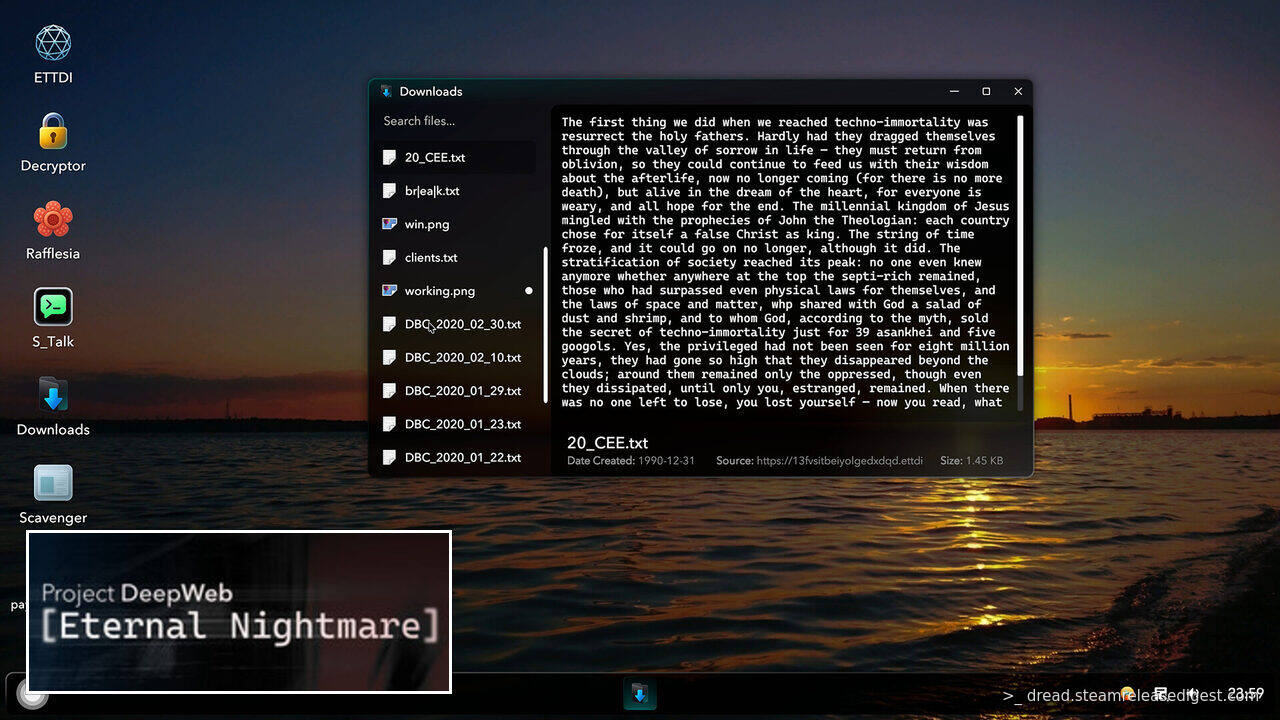
    The game’s narrative setup places you at the fracture point between the digital and physical worlds. You are trapped in a coma, stranded with nothing but a laptop running a surreal, unfamiliar operating system that serves as your sole lifeline for survival. To escape, you must dive headfirst into the Deep Internet, using a suite of default and collectible utilities to unlock encrypted directories, crack passwords, and piece together hidden website links.

    Gameplay is an exacting exercise in digital archaeology. Progress isn’t driven by reflexive combat or physical stealth, but by your willingness to read. You spend hours analyzing chat logs, site information, personal notes, and dark underworld forums. The horror here isn’t delivered through sudden monsters or screeching audio stingers; it stems entirely from the uncanny wrongness of what you uncover. Every weird site feels like a standalone piece of digital art, evoking the uncomfortable feeling of stumbling onto something on the web that was never meant for human eyes.

    Project DeepWeb: Eternal Nightmare gameplay screenshot
    Image courtesy of NightCat Studios via Steam

    Fried Brains, Steep Curves, and Total Isolation

    With a perfect 100% positive rating on Steam across its early player base, the game has clearly struck a nerve with sleuth-horror enthusiasts. Players are floored by the sheer scale of the experience; multiple reviewers note spending anywhere from 17 to nearly 40 hours exploring while feeling as though they’ve only touched the tip of the iceberg. For players who love detail-oriented investigation, the depth of the worldbuilding and the satisfaction of solving upper-medium to high-difficulty puzzles make it a rare, mind-boggling experience that few contemporary titles match.

    However, that same commitment to realism and complexity creates a sharp barrier to entry. Players freely admit there is a steep learning curve that can make you feel as if you are making “virtually no headway” for hours if you aren’t prepared to think like a developer or detective. The sheer volume of text is staggering—one reviewer noted their brain felt “fried” trying to process the endless threads of information required to progress. Minor quality-of-life snags also surface, particularly around the in-game note-taking tool, which lacks basic text formatting features like line breaks when pasting text. Compounding these challenges is a total lack of community guides or walkthroughs, leaving players entirely isolated in the dark to decipher its secrets alone.

    The Verdict

    This is a masterclass in slow-burn, text-heavy psychological horror that treats its audience with complete respect. If you miss the eerie isolation of the early web, love ARG-style sleuthing, and prefer a held breath to a cheap jump-scare, this game is an absolute steal at its price point. However, prospective buyers should take the community’s advice: play the original Project DeepWeb first to get your bearings, and enter this sequel expecting an intense, demanding investigation that requires real patience to yield its darkest secrets.

    Key Facts

    • Developer: NightCat Studios
    • Publisher: NightCat Studios
    • Release Date: Aug 17, 2026
    • Price: $6.99
  • An Odd Walk: Shinjuku Alley: A Cozy Twist on the Liminal Anomaly Formula

    An Odd Walk: Shinjuku Alley: A Cozy Twist on the Liminal Anomaly Formula

    An Odd Walk: Shinjuku Alley takes the paranoia-driven formula of liminal anomaly games and strips out the horror, replacing suffocating dread with a brief, surprisingly soothing stroll down a neon-lit Japanese side street.

    A Low-Stakes Stroll Through Shinjuku

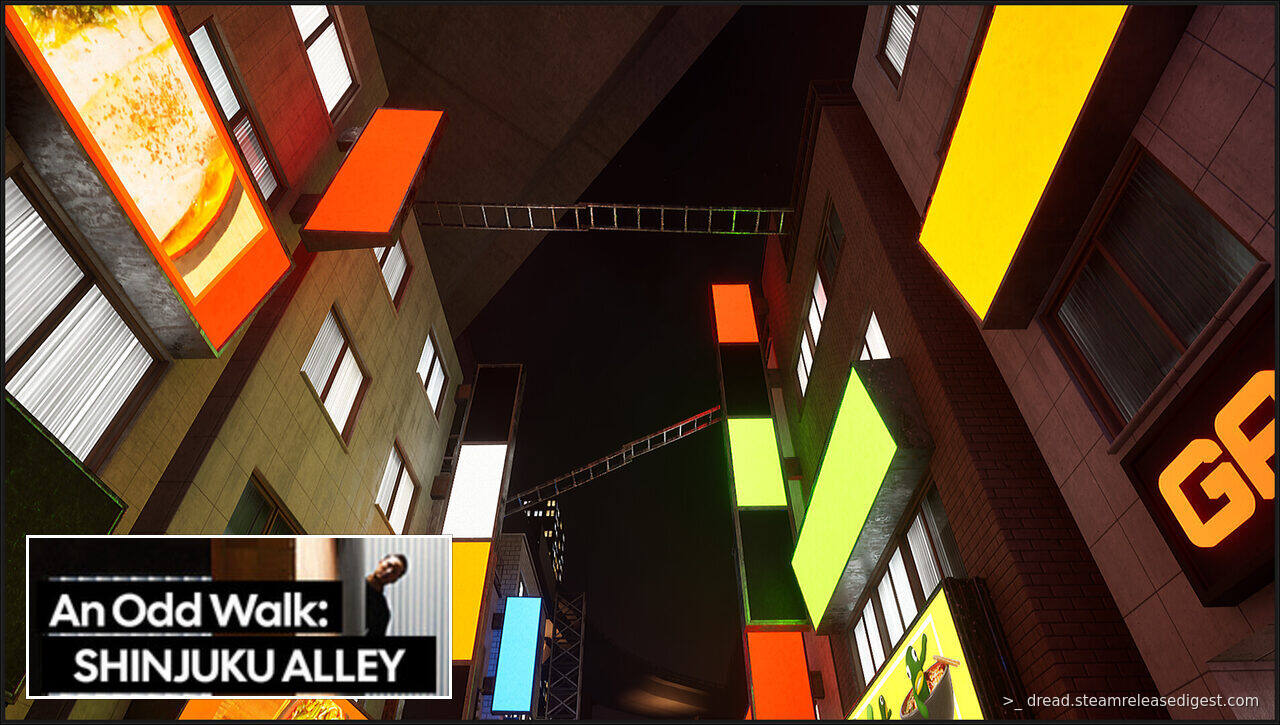
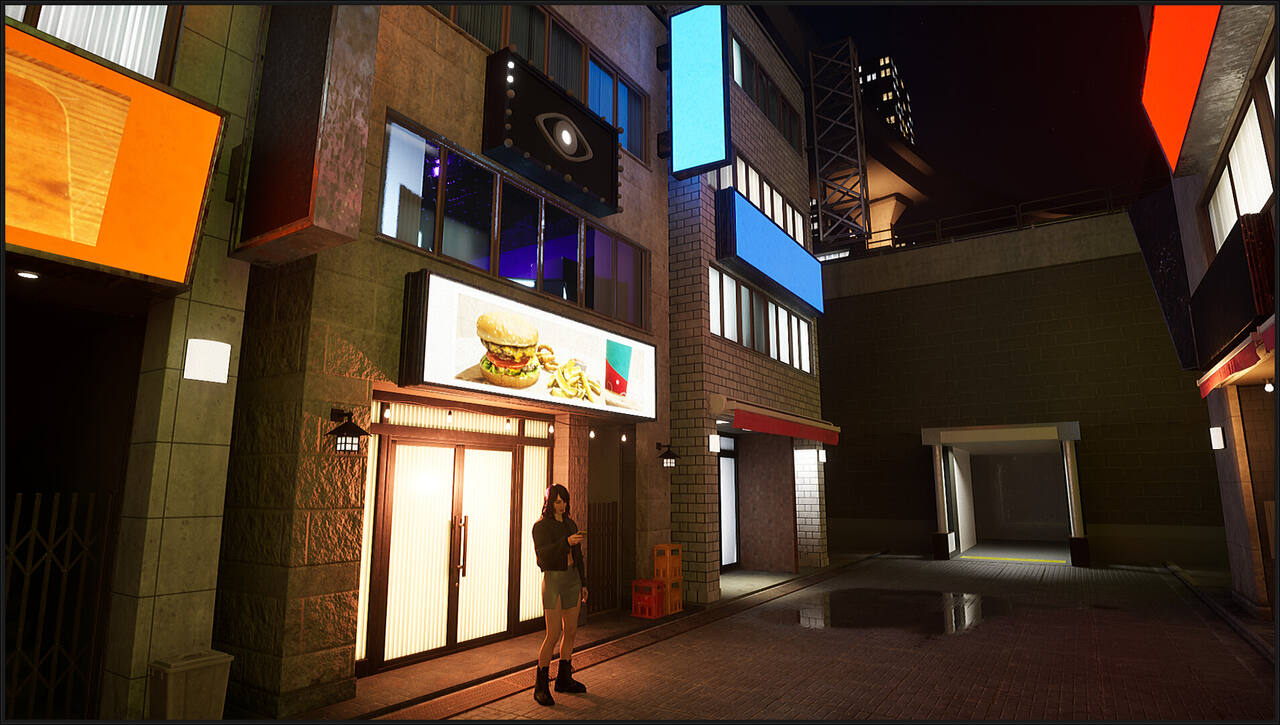
    In the wake of recent liminal walking simulators that turn repetitive hallways into gauntlets of psychological tension, BoxLoaf’s bite-sized entry borrows the structural bones of the subgenre but completely throws out the scare tactics. You find yourself walking down a looping urban alleyway in Tokyo’s bustling Shinjuku district, surrounded by glowing storefront signs, quiet vending machines, and tight side-passages. Your task is simple observation: study the alleyway on your initial walk down the street, and on every subsequent pass, determine whether anything in the environment has shifted.

    At the end of the alley sit two interactive buttons: green if the loop is clear, and red if you spot an anomaly. Successfully identifying the state of the street nine times in a row unlocks the exit and frees you from the loop. Make a single incorrect call, however, and your streak resets back to zero. While a few anomalies tilt slightly into the uncanny—such as subtle visual shifts or out-of-place objects—the tone remains strictly lighthearted throughout. The game actively assists the player with distinct audio cues for certain anomalies, ensuring that you are never left tearing your hair out over invisible visual glitches. (Note that higher graphics settings are recommended so environmental details render correctly.) A single successful escape takes roughly 15 to 30 minutes, though dedicated completionists will spend up to an hour hunting down every single anomaly to unlock a special second ending.

    An Odd Walk: Shinjuku Alley gameplay screenshot
    Image courtesy of BoxLoaf via Steam

    What the Players Are Saying

    Community response to this micro-indie title has been unanimously favorable, with players awarding it a rare 100% positive rating on Steam. Reviews consistently highlight how entertaining and well-constructed the game feels relative to its low $2.99 price tag. Multiple players noted that it served as an unexpectedly therapeutic experience, explicitly calling it one of the most relaxing anomaly games currently available on the platform. The clear rules, swift pacing, and lack of punitive design make it an easy title to pick up, finish, and thoroughly enjoy in a single brief sitting.

    That low barrier to entry, however, is also the source of its main point of friction among genre veterans. Players looking for a steep intellectual challenge or a genuine test of spatial memory found the anomalies a bit too obvious and easy to spot on a first pass. The prevailing feedback from players who enjoyed their time is a simple desire for more content: more complex anomalies, higher difficulty settings, and an expanded catalog of environmental shifts to make the observation loop more demanding over repeated playthroughs.

    The Verdict

    For our readers who tune in looking for oppressive atmospheres, psychological horror, and lingering dread, An Odd Walk: Shinjuku Alley is emphatically not that kind of game. It wears the mechanical aesthetic of an atmospheric thriller, but underneath sits a gentle, low-stress spot-the-difference puzzle. It does not attempt to terrify you, telegraph cheap jump-scares, or cultivate a slow-burn sense of wrongness.

    Instead, this title is best suited for players who love the liminal aesthetic of Japanese backstreets and want a quick, dirt-cheap palette cleanser between heavier horror titles. If you want a zero-stress observation game that lets you soak in a Tokyo alleyway without a creature waiting around the corner, BoxLoaf delivers a tidy, charming 30-minute detour.

    Key Facts

    • Developer: BoxLoaf
    • Publisher: BoxLoaf
    • Release Date: Jun 4, 2026
    • Price: $2.99
  • Uno God: A Macabre Tabletop Spin on a Family Classic

    Uno God: A Macabre Tabletop Spin on a Family Classic

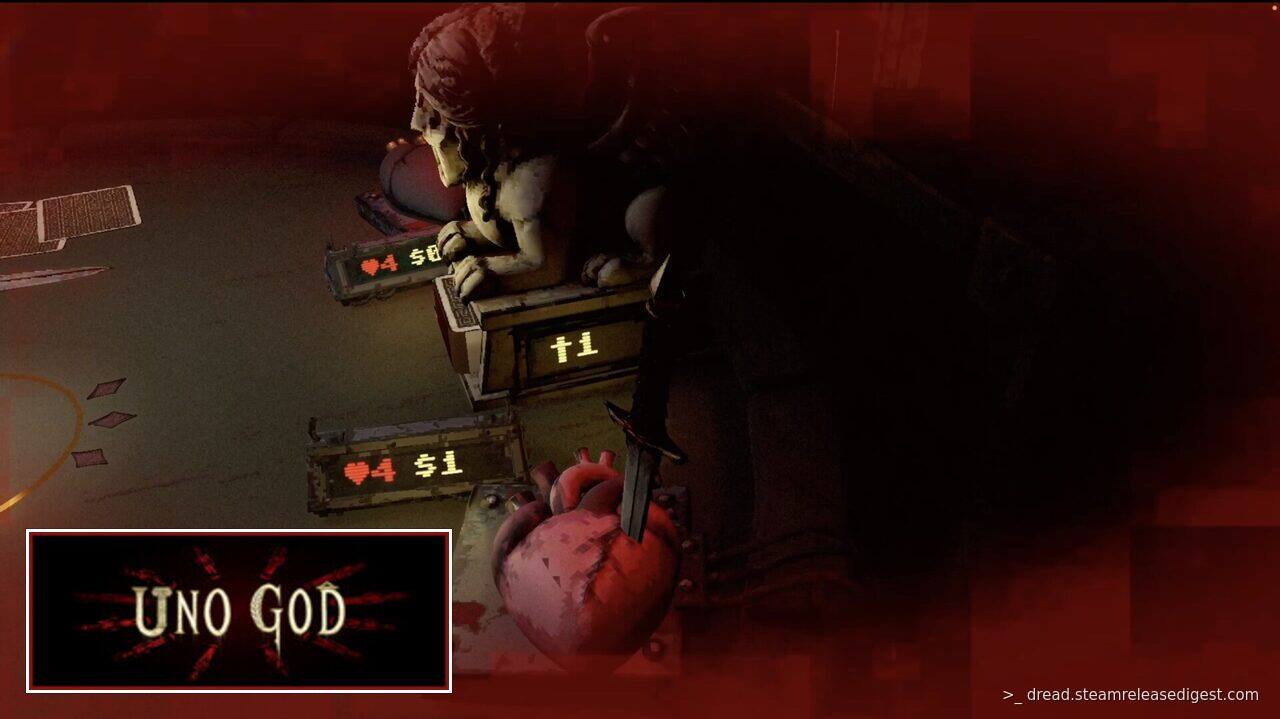
    A dim card table sitting across from immortal deities, a wager where human hearts are stacked on the felt, and a prompt promising death to the loser sound like the blueprint for a grim, suffocating horror experience. Players stepping into this budget-priced indie release expecting the oppressive, sweat-inducing claustrophobia of games like Buckshot Roulette or Inscryption, however, are met with an intriguing contradiction. Beneath its dark mythic flavor and high-stakes death-match framing lies a surprisingly breezy, deeply addictive card game that plays less like a psychological nightmare and more like a high-velocity, relic-infused match of house-rules shedding cards.

    Solo developer JaSan explicitly warns on the store page that this is not a deck-building roguelike, and that distinction is crucial to understanding how the experience actually operates. Rather than building complex synergetic decks across branching map nodes over an hour-long run, the core loop takes the universal, low-barrier rules of standard family shedding games—matching colors, numbers, and forced draw actions—and overlays them with powerful tabletop relics. You sit down directly opposite figures from ancient Greek mythology, wagering your life-force on the turn of a card while manipulating the state of the table using divine artifacts.

    The mechanics are designed to keep the friction near zero. Matches are fast and immediately readable, allowing players to jump in without wading through lengthy rulebooks or sprawling tutorial screens. The tension does not stem from managing intricate math, but from tactical relic timing. Sitting across from an Olympian who is down to their final card, you might trigger a relic to swap hands, force heavy card draws, or flip the turn order entirely. It turns the familiar rhythm of a casual card game into a tense, high-stakes tug-of-war where a single misplay forfeits your wagered heart.

    Uno God gameplay screenshot
    Image courtesy of JaSan via Steam

    Player sentiment across early reviews is unanimously enthusiastic, though it paints a specific picture of what the game actually provides. Reviewers consistently highlight its uncanny ability to hook the player, describing it as a “grownup version” of classic shedding card games that is almost impossible to put down once a session begins. The aesthetic surrounding the Greek gods receives frequent praise for giving the card table a distinct, brooding character, and players point out that even in its current single-player state, the progression mechanics and active item interactions punch well above the game’s modest price point.

    At the same time, readers searching for pure dread or oppressive psychological horror should calibrate their expectations accordingly. Multiple reviews explicitly point out that despite its macabre wager system, the gameplay itself is surprisingly relaxing, casual, and low-stress. It does not attempt to terrify you with psychological tricks or elaborate narrative twists; it relies on the quiet charm of a stylized tabletop game played against lethal opponents. Furthermore, while the current release is single-player only, the developer has laid out a clear roadmap promising a full four-player online PvP mode, collectible card backs, balancing passes, and new relics in upcoming free updates.

    As an entry in the high-stakes tabletop micro-genre, the title succeeds by keeping its scope tight and its execution clean. It recognizes the inherent appeal of sitting at a dimly lit table to gamble against unnatural entities, but chooses to channel that energy into an accessible, fast-moving card battler rather than a punishing survival trial. It respects the player’s time, asking for minimal setup while delivering immediate, mechanical satisfaction.

    The Verdict

    This release is best suited for players who love the dark aesthetic and high-stakes framing of games like Buckshot Roulette, but want a casual, highly replayable card game to unwind with between heavier horror experiences. If you are looking for an impulse-priced distraction that blends familiar card mechanics with mythic flair and zero barrier to entry, pulling up a chair to this divine wager is an easy decision.

    Key Facts

    • Developer: JaSan
    • Publisher: JaSan
    • Release Date: Jun 3, 2026
    • Price: $2.59
  • BALLSKIN and the Surreal Dread of the Low-Poly Infinite Climb

    BALLSKIN and the Surreal Dread of the Low-Poly Infinite Climb

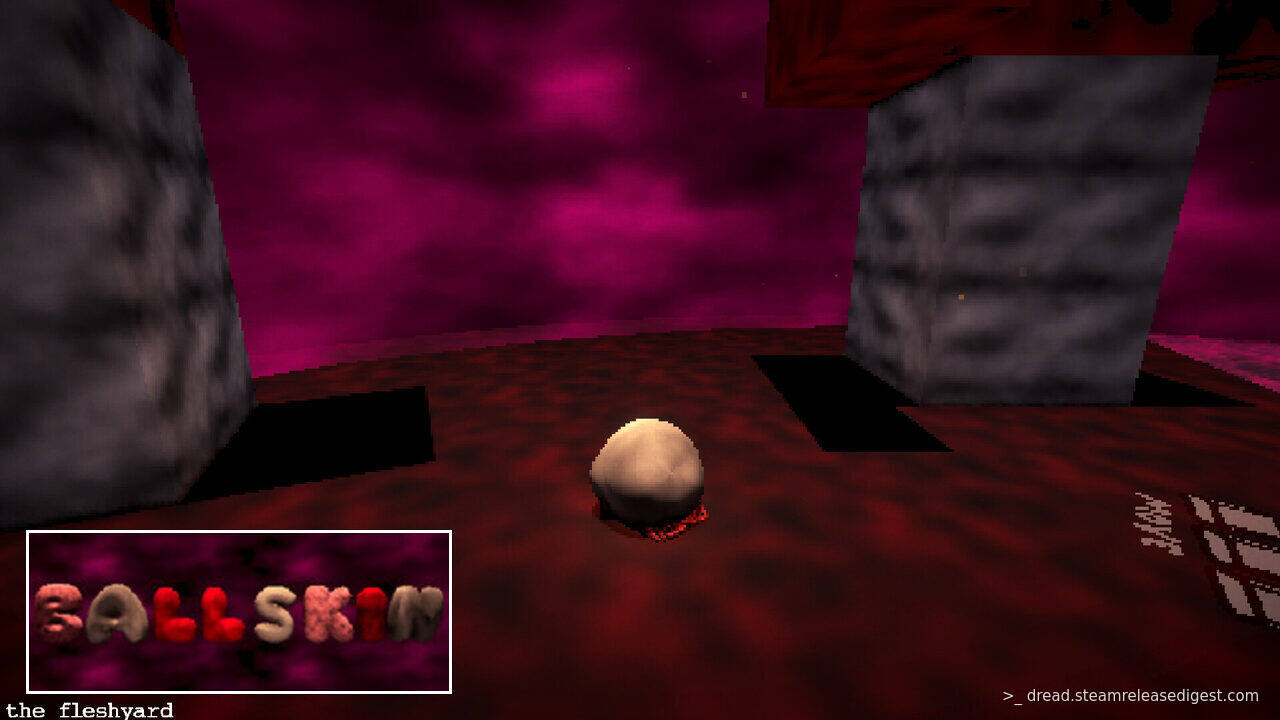
    Spending eighty minutes scaling a vertical gauntlet of low-poly flesh only to get stuck on the final leap, falling back into the abyss, and pleading for release is a very specific brand of psychological torture. In the lo-fi, surrealist landscape of BALLSKIN, this despair is both the hook and the horror. Developed by dus, this micro-indie title positions itself at the bizarre intersection of “Foddian” climbing games and late-90s nostalgia, transforming the physical dread of falling into an atmospheric, flesh-toned purgatory.

    The Agony of the Fling

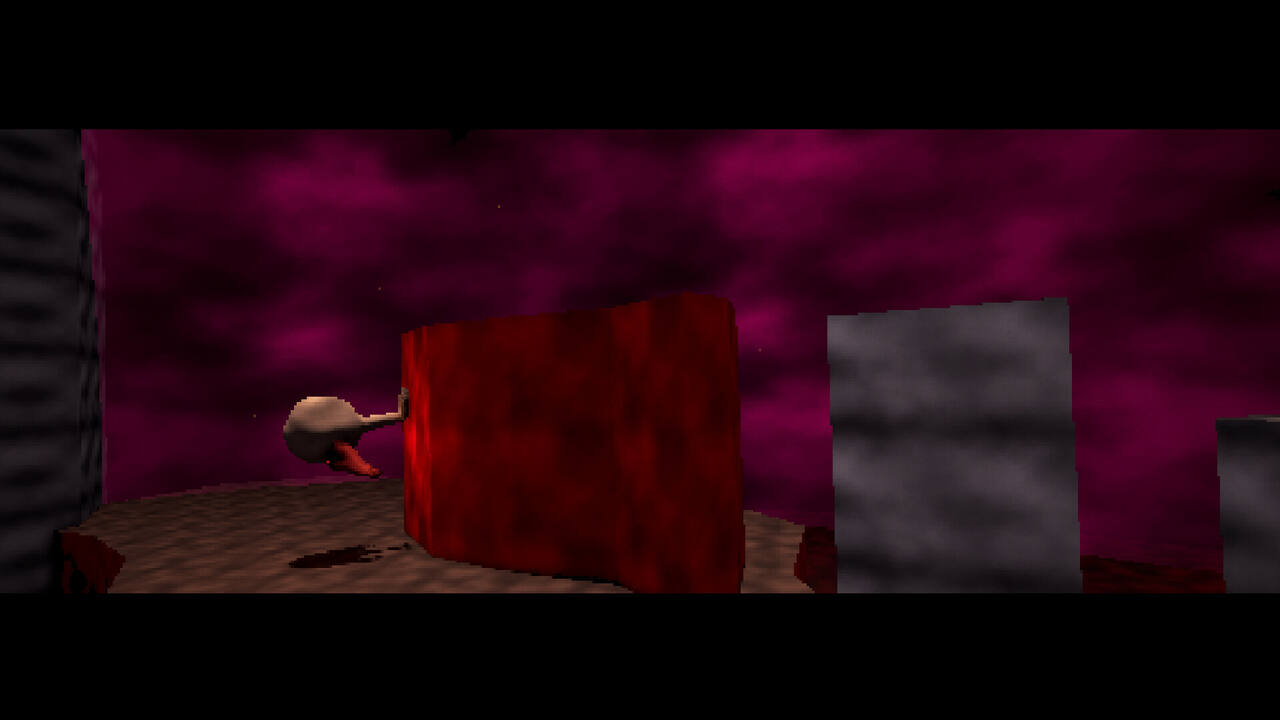
    At its core, the game adopts a vertical progression template made famous by titles like Getting Over It with Bennett Foddy, where every inch of progress is hard-won and instantly revocable. You are tasked with navigating a highly vertical, deeply strange environment where a single miscalculation can send you plummeting back to the very beginning. What sets this apart from its peers is its momentum-based movement. Rather than traditional platforming, you rely on a physics-heavy mechanic that players have compared to the Pokio bird from Super Mario Odyssey: you are constantly grabbing onto surfaces and flinging your body upward to the next precarious ledge.

    Every single jump in this game is an absolute commitment. There are no mid-air corrections, no safety nets, and no forgiving ledge-grabs. You must carefully calculate your angles and tension before letting go. The level design emphasizes this tension by pairing tight, mechanical challenges with wide-open vertical drops. The further up you climb, the more the background elements fade into a hazy, dreamlike void, amplifying the isolation of your ascent.

    BALLSKIN gameplay screenshot
    Image courtesy of dus via Steam

    A Nostalgic, Unsettling Purgatory

    While the Steam tags hint at a “goofy” vibe, the actual atmosphere taps into a quieter, more unsettling aesthetic: N64-era lo-fi surrealism. It is reminiscent of the barren, liminal spaces of early 3D shareware—worlds that felt slightly wrong, quiet, and empty. The soundtrack is an off-kilter, repetitive companion to your struggle, punctuated by squishy sound effects that make the “skinball” theme feel uncomfortably tactile.

    The horror here isn’t delivered via jump-scares or monsters lurking in the dark. Instead, it is the psychological dread of the void below you. When you look down and see the platforms you conquered thirty minutes ago shrinking into the misty, low-resolution distance, the game achieves a genuine sense of scale and vulnerability. It is the horror of gravity, wrapped in the texture of a dusty, forgotten cartridge.

    What the Climbing Community Thinks

    With a pristine, albeit small, 100% positive rating on Steam, player sentiment highlights both the addictive nature of the gameplay and the sheer mental toll it takes. One reviewer humorously invoked classical mythology, noting that “one must imagine Sisyphus’ left testicle happy,” capturing the repetitive, self-inflicted nature of the challenge. Another admitted to spending nearly an hour and a half reaching the very last jump of the game, only to spend the rest of their play session trapped in a cycle of failing that final leap, ending their review with a simple, desperate “release me.”

    Players praise the responsiveness of the flinging mechanics, noting that it “feels good, looks good, sounds good.” However, the community is also realistic about the game’s brutal barrier to entry. As one player honestly remarked, they had to step away simply because they are “quick to quit,” pointing out that these highly punishing “Only Up” games are designed specifically to test a player’s psychological breaking point.

    The Verdict

    This is not a traditional horror game, nor is it a mindless joke. It is a highly focused, deeply frustrating, and wonderfully atmospheric physics platformer that uses lo-fi aesthetics to build a quiet sense of surreal isolation. If you have a high tolerance for progress loss and appreciate the uncanny, liminal feeling of N64-era graphics, this strange journey into skinball purgatory is well worth its tiny price tag. Just be prepared to watch your hard work vanish in a single, tragic slip.

    Key Facts

    • Developer: dus
    • Publisher: dus
    • Release Date: Aug 17, 2026
    • Price: $2.99
  • Project Looking Glass: Navigating the Beautiful, Static-Drenched Grief of the Astral Plane

    Project Looking Glass: Navigating the Beautiful, Static-Drenched Grief of the Astral Plane

    To step into the cold, cathode-ray glow of 1963’s Project Looking Glass is to step into a beautifully fragmented nightmare where your primary means of navigation is stepping directly into TV static. One player described the experience simply as “absolute cinema,” a testament to how this low-poly, retro-futuristic horror game punches far above its weight class. It avoids the cheap jumps and loud noises of contemporary streaming bait, choosing instead to anchor its terror in the quiet, deeply unsettling silence of the astral plane and the heavy weight of a mother’s grief.

    The Cathode-Ray Corridor

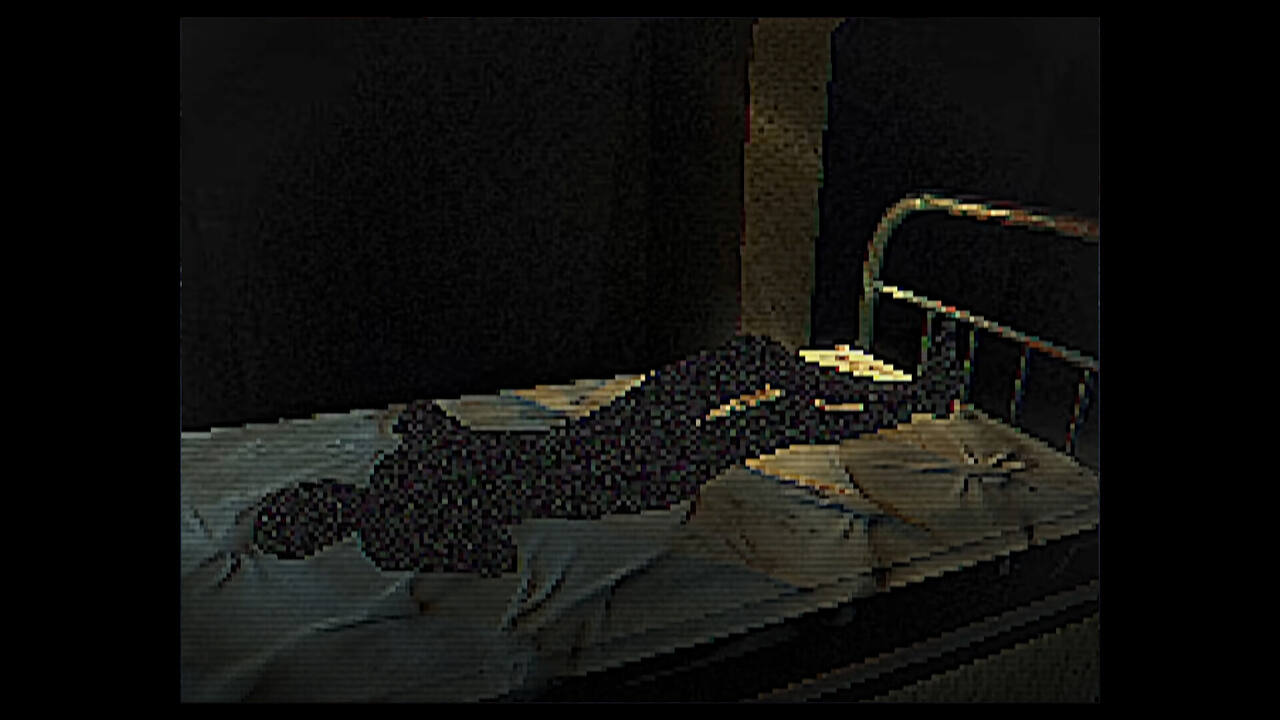
    You play as Subject 7, a grieving woman recruited by a secretive Cold War government agency. The premise is fascinating: you project your consciousness into the astral realm, experiencing surreal, shifting dreamscapes displayed entirely through a retro CRT monitor interface. The core loop involves navigating these projections—strange, liminal spaces that blend domestic tragedy with governmental rot—and piecing together your own history through audio logs, memos, and environmental clues.

    What makes it mechanically striking is its non-linear structure. You find and travel through various televisions scattered across the game world. Because of how the story is constructed, it does not matter which TV you choose to dive into first; the narrative shifts and reshapes itself around your exploration, allowing the player to piece together the tragedy in whatever order they stumble upon it. Visually, the game leans heavily into its inspirations. You can feel the DNA of cult classics like LSD Dream Emulator, Petscop, and My house.wad vibrating through the CRT scanlines and VHS glitching effects. It uses a screen-locked texture style and low-poly environments that could easily feel cheap in lesser hands, but here, the low fidelity acts as a veil. It forces the player’s mind to fill in the dark, empty spaces, transforming a simple hallway or a quiet room into a breeding ground for dread.

    Project Looking Glass gameplay screenshot
    Image courtesy of MORPH via Steam

    Unravelling the Signal

    The game currently enjoys a pristine 100% positive rating on Steam, and reading through player accounts, it is clear why. The community has rallied around the game’s immaculate vibes and its refusal to hold the player’s hand. Players are consistently charmed by the puzzle design, which offers a satisfying level of challenge without devolving into frustrating moon-logic.

    However, Project Looking Glass is not without its friction points. The game’s commitment to minimal hand-holding means that players can easily find themselves disoriented in its shifting, surreal architecture. Several players noted that they wandered aimlessly for a while before realizing the game actually features an in-game map, which dramatically opens up the experience once found. Others mentioned getting temporarily stuck on specific puzzles or feeling that, despite the innovative non-linear delivery, the core narrative itself wraps up in a somewhat predictable fashion. It is also quite a brief journey—most players reached the credits in under four hours—meaning the experience is more of a sharp, concentrated shock to the system than a sprawling, drawn-out campaign.

    The Verdict

    For those who appreciate the quiet, uncanny terror of analog horror and the unsettling emptiness of liminal spaces, Project Looking Glass is an essential play. It is a game designed for players who want to be dropped into a strange world, left to decipher its rules and its history on their own terms. If you prefer your horror to linger in your mind like screen burn-in rather than startle you with a sudden shriek, this retro-scientific tragedy is worth every penny.

    Key Facts

    • Developer: MORPH
    • Publisher: MORPH
    • Release Date: Aug 11, 2026
    • Price: $4.99
  • Homeostasis: The Shivering Paranoia of Isolation and Failing Engines

    Homeostasis: The Shivering Paranoia of Isolation and Failing Engines

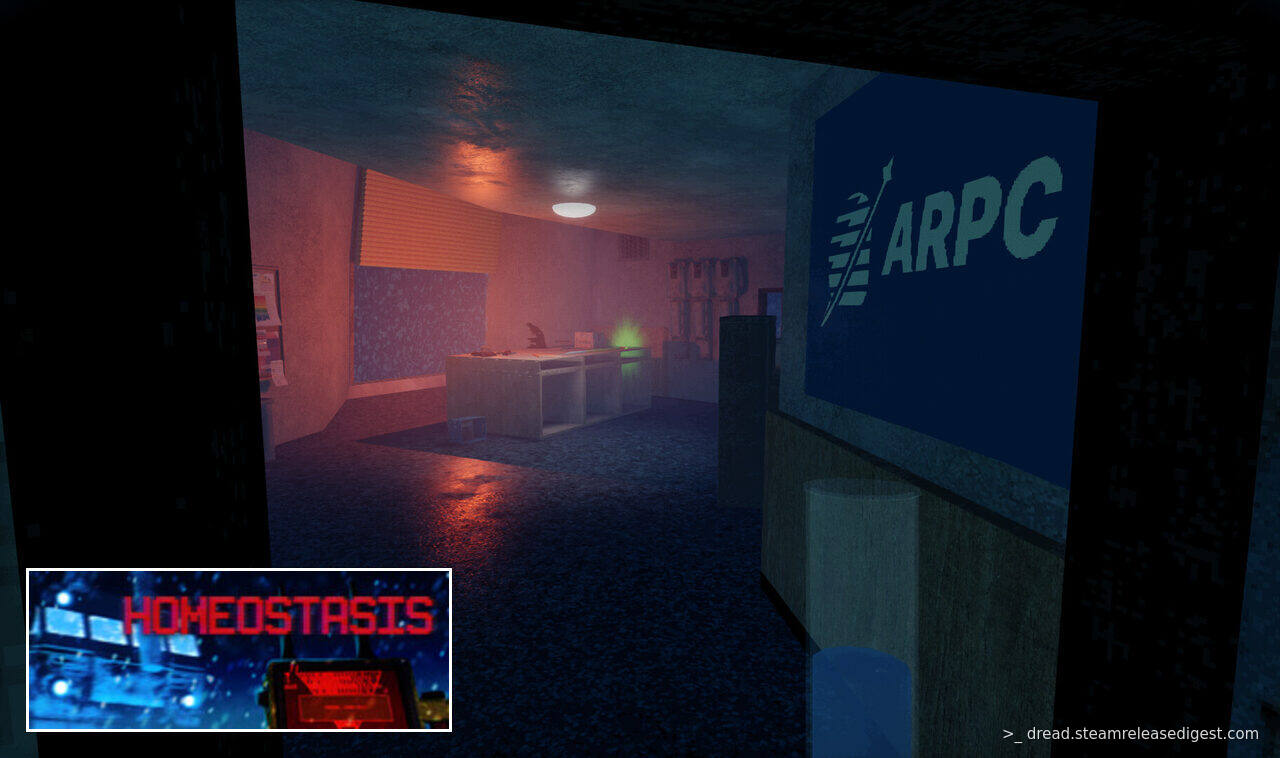
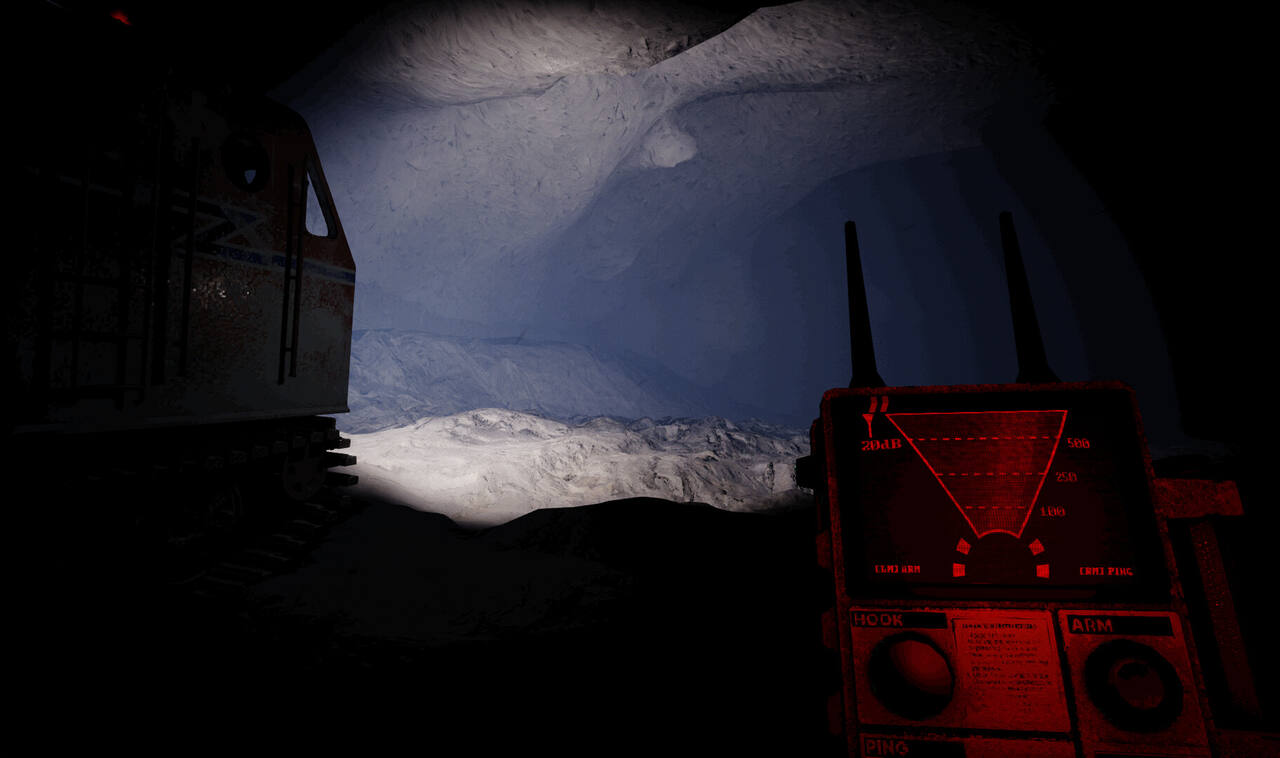
    The dashboard of your retrofitted off-road vehicle is a fragile, buzzing barrier against a freezing Antarctic night where the stars above simply do not look right. There is no grand cinematic introduction here, and no comfort to be found. From the moment you turn the key, you are enveloped in the low-fi hum of your cabin heater and the blinding white of an endless blizzard. In this short, retro-styled survival horror experience, your primary enemy isn’t a slasher lurking in the dark, but the relentless decline of your fuel gauge and the creeping cold that waits just beyond your windshield.

    The core gameplay is a tense exercise in mechanical maintenance and navigation. Outfitted with a clunky mechanical arm and vital instrumentation, your vehicle is your only lifeline. You are tasked with traversing a desolate snowscape to recover data from decommissioned research stations. This means managing a delicate, constantly shifting balance between fuel, cabin heat, and engine power. Turn the heater up to survive the sub-zero temperatures, and you risk overheating the engine. Keep the engine running constantly, and you will quickly drain your limited fuel reserves. Navigation is equally tactile; you must rely on your onboard compass, map, and dials to find your way through the whiteout, occasionally using the vehicle’s mechanical arm to interact with the frozen environment.

    Homeostasis gameplay screenshot
    Image courtesy of Gasimo, Saas via Steam

    What makes the game tick is the sheer, suffocating atmosphere of isolation. It masterfully taps into a quiet, psychological dread, drawing praise from players who appreciate horror that avoids cheap jump-scares and predictable cliches. The sound design plays a massive role here—the rhythmic chug of your engine provides a false sense of security, making the silence incredibly loud whenever you are forced to shut it down. The terror lies in the uncanny space of the unknown, where you are left entirely alone with your thoughts and the feeling that something out in the frozen wastes is watching your headlights.

    Yet, this highly atmospheric approach has polarized some players. Scattered documents throughout the research stations hint at corporate greed, strange new planets, and mysterious lifeforms. For many, this narrative breadcrumb trail is a brilliant exercise in paranoia, keeping them on the edge of their seats. For others, the discovery that there is no physical monster to encounter feels like a narrative letdown—a design choice some labeled as a cheap tactic to manufacture tension without a gameplay payoff. If you require a physical beast to run from, the psychological tricks here might leave you feeling cold.

    The physical environment itself also presents significant hurdles, both intentional and frustrating. When you are forced to leave the safety of your cabin to explore the dark, maze-like interiors of the research stations, the game’s visibility drops dramatically. Several players have voiced frustration over these indoor segments, noting that the primary light source is a dim red bulb that illuminates almost nothing, turning simple exploration into a tedious chore. Additionally, the driving mechanics require patience; getting lost or accidentally steering over a cliff is easy to do in the blinding snow. A few technical bugs, such as clipping errors and engines refusing to restart even after cooling down, can occasionally disrupt the flow, though a recent update introducing save slots has made these setbacks much more manageable.

    Ultimately, this is a highly specialized horror experience. It is not for players seeking visceral combat, elaborate puzzles, or loud, high-octane thrills. Instead, it is a beautifully crafted, bite-sized nightmare for those who find dread in the quiet, methodical panic of failing machinery and pitch-black expanses. If you enjoy the claustrophobic, low-fi tension of managing dials under extreme pressure, this freezing journey into the unknown is well worth the trip.

    Key Facts

    • Developer: Gasimo, Saas
    • Publisher: Gasimo
    • Release Date: Aug 10, 2026
    • Price: $8.99
  • Touch of Madness: Why This Minimalist, Dual-Protagonist Nightmare Gets Under the Skin

    Touch of Madness: Why This Minimalist, Dual-Protagonist Nightmare Gets Under the Skin

    Survival in this lo-fi psychological thriller hinges on a jarring, constant perspective shift: while one protagonist fights through waves of inner demons with a firearm and infinite ammo, the other must navigate the exact same shifting environments unarmed, relying entirely on stealth and evasion to save him.

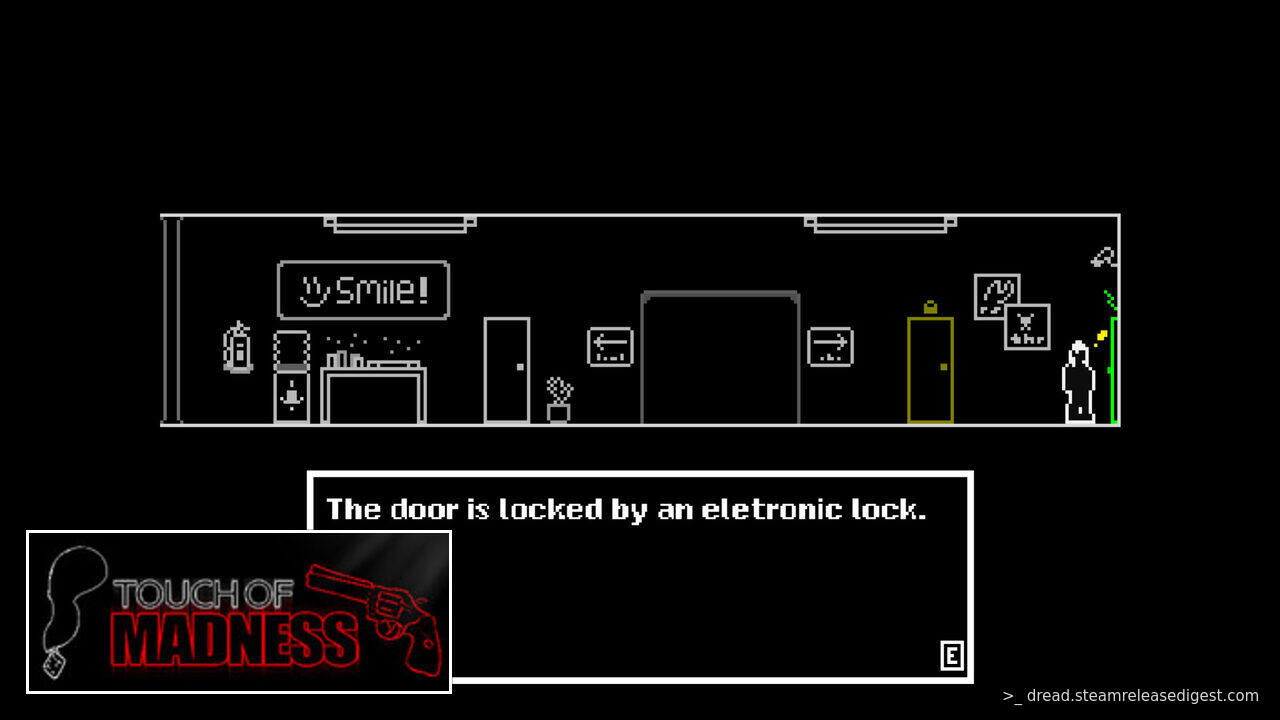
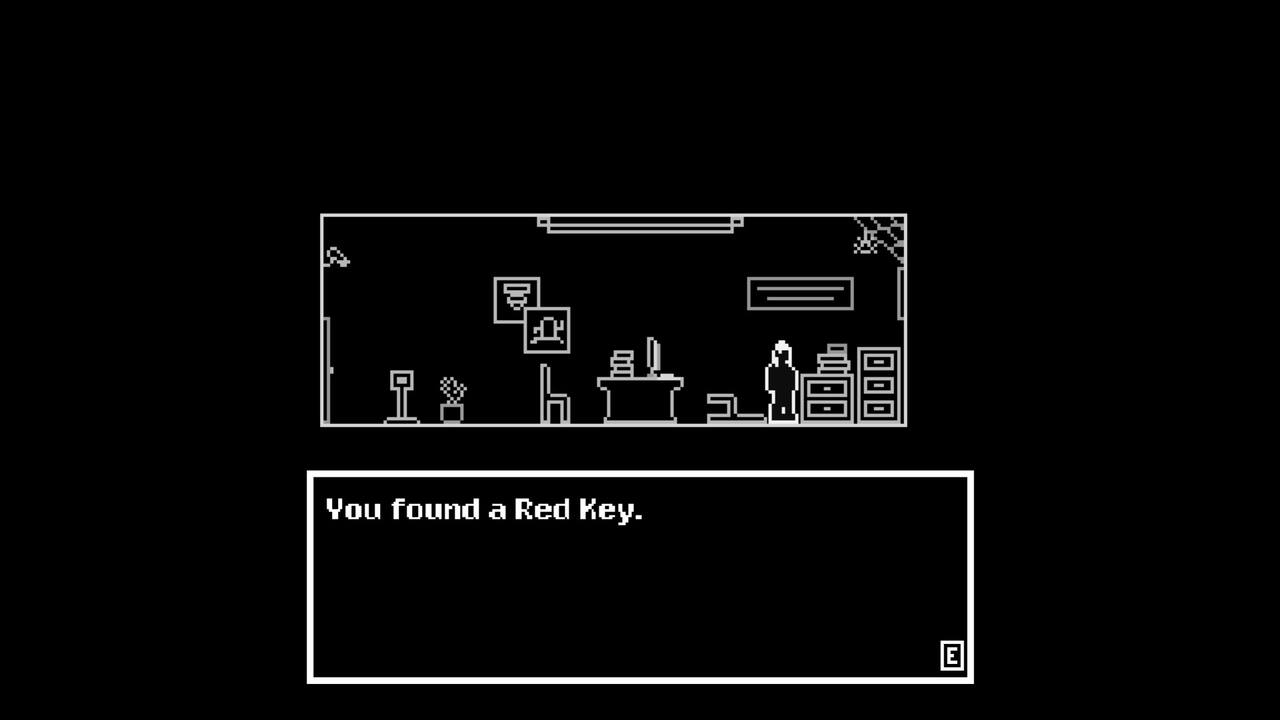
    This dual-character dynamic forms the spine of NLT Productions’ debut title. On one side of the mental divide is Neo, a man trapped inside a suffocating, looping nightmare of his own making. Neo’s segments are loud, desperate, and action-oriented. Armed with weapons that never run out of bullets, he represents the violent, externalized struggle against the manifestations of his own guilt. On the other side is Lavina, a loyal friend who ventures into Neo’s fractured subconscious to pull him back from the edge. Playing as Lavina transforms the experience instantly. Gone is the safety of firepower; instead, you are left vulnerable, forced to slip into the shadows, hide behind the geometry of the rooms, and quietly evade the very monstrosities Neo is busy blasting apart.

    A Fractured World in Few Colors

    The developer uses a highly restricted, minimalist color palette that immediately evokes the dread-soaked, 8-bit aesthetic of retro classics like FAITH: The Unholy Trinity. By stripping away modern visual clutter, the game forces you to focus on the stark, oppressive geometry of its environments. This minimalist approach extends directly to the storytelling, which relies on hand-drawn cutscenes and abstract, subliminal imagery to paint a portrait of self-hatred, guilt, and the grueling process of moving on from past mistakes. Rather than relying on sudden, ear-splitting jump scares, the atmosphere is built through a heavy, lingering sense of wrongness. You are constantly traversing the same locations across different, deteriorating realities, creating a disorienting sensation that you are walking through a mind that is actively eating itself.

    Touch of Madness gameplay screenshot
    Image courtesy of NLT Productions via Steam

    This atmosphere is heavily elevated by its sound design, which manages to feel both retro and deeply atmospheric. The soundtrack is a frequent point of praise, seamlessly shifting from low, droning, unsettling ambient tracks during tense exploration sequences to unexpectedly upbeat, funky rhythms in a surreal club segment. It’s a sonic juxtaposition that perfectly mirrors the unstable mental state of its protagonist, keeping you perpetually off-balance.

    What Players Love and What Grates

    For a debut project, player reception has been remarkably warm, with players praising the balance and rhythm of its combat. The boss battles, in particular, avoid the cheap, frustrating difficulty spikes common in low-budget indie horror. Instead of bullet-sponge enemies that drag on, the bosses feature creative, highly readable attack patterns that reward observation. Once you figure out their rhythm, the fights feel incredibly satisfying and fair, offering a solid mechanical payoff to the tension built up during the exploration phases.

    However, the game’s minimalist ambition does occasionally run into minor structural friction. Because the visual style relies so heavily on a limited color palette, players bad with directions have noted that the looping hallway sections can become confusingly homogenous, leading to moments of aimless wandering in identical-looking corridors. Furthermore, while the game successfully juggles stealth, action, and light exploration, the puzzles themselves are rather rudimentary. Players looking for deep, cerebral environmental puzzles may find themselves wishing the developer had pushed the mechanical complexity just a bit further. A few players have also noted that the narrative can feel slightly text-heavy in its delivery, though the emotional weight of its “motivation scenes” and the ultimate message of redemption generally carry the weight of those wordier stretches.

    The Verdict

    This is a bite-sized, highly focused piece of psychological horror that respects your time. Running at a lean one to two hours, it doesn’t overstay its welcome or pad its runtime with tedious backtracking. It is a game designed to be absorbed in a single, focused sitting on a dark evening.

    If you are looking for a sprawling, systems-heavy survival simulator, you won’t find it here. But if you have a soft spot for the eerie, low-resolution dread of retro indie horror, abstract narratives that trust your intelligence to piece together their subliminal messages, and a stellar soundtrack that knows exactly when to unnerve you, this quiet descent into a broken mind is an absolute steal.

    Key Facts

    • Developer: NLT Productions
    • Publisher: NLT Productions
    • Release Date: Aug 10, 2026
    • Price: $3.99