Author: sitemill

  • BCKSPCE: Why This Cheap Retro Desktop Is One of the Year’s Most Uncomfortable Secrets

    BCKSPCE: Why This Cheap Retro Desktop Is One of the Year’s Most Uncomfortable Secrets

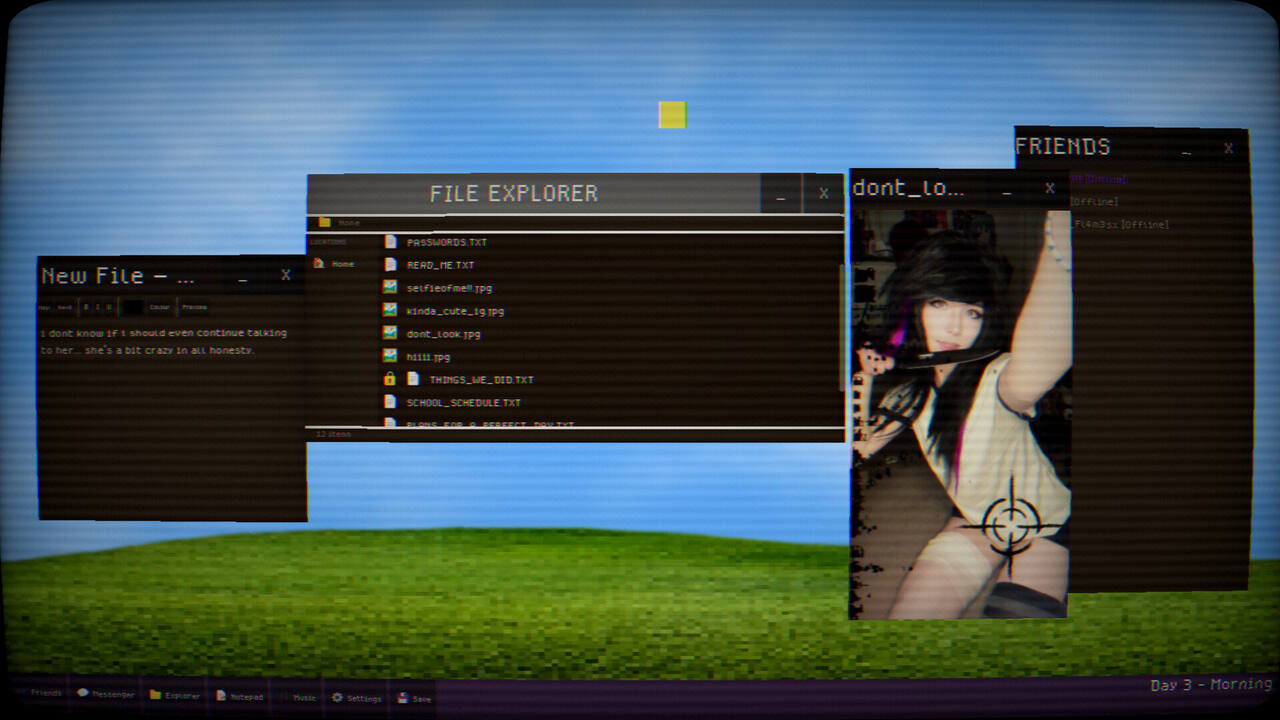
    The phosphor hum of a simulated CRT monitor glows in the dark, casting a pale green light over a desktop environment that should have been decommissioned years ago. This is SPECTRE OS, an abandoned operating system resurrected by your close friend, Stella. She has dragged you into this digital playground for a week of exploration, eager to show you what the old system can do. But as you click through the folders, a quiet wrongness begins to seep through the scanlines. Your character’s memory is hazy, Stella’s enthusiasm feels increasingly fragile, and the system directories hold secrets that feel less like forgotten data and more like deeply personal, unresolved traumas.

    Inside the SPECTRE OS

    At its core, BCKSPCE is an interface-driven psychological horror game. Rather than exploring physical corridors with a flashlight, you navigate a fully realized, retro-styled virtual desktop. The gameplay loop consists of opening files, solving puzzle-like system directories—such as cracking a stubborn password-protected archive named “birthday.zip”—and playing simple, system-native minigames. It is an experience of digital isolation, where the narrative unfolds chronologically over a week. The game relies heavily on its aesthetic to build tension; the customizable CRT filter and color-palette sliders aren’t just cosmetic options, but tools that trap you in a specific, claustrophobic era of technology. It is a slow-burn mystery that trusts the player to pay attention to the subtle shifts in the desktop’s layout and the creeping changes in Stella’s messages.
    BCKSPCE gameplay screenshot
    Image courtesy of Lunavia, Oxiqa via Steam

    Where the Terror Connects and Where It Fails

    Player sentiment reveals a game that punches well above its tiny $2.99 price tag, though it is not a smooth ride for everyone. On a narrative level, the game is a resounding success for fans of quiet, character-driven dread. Players heavily praise the writing for its restraint, noting that BCKSPCE refuses to spoon-feed its plot. Instead, it relies on implication and subtle behavioral shifts to show Stella’s unraveling. This slow building of tension culminates in an emotional, heavy ending that multiple players compared to the meta-narrative shifts of Doki Doki Literature Club.

    However, the game’s descent into psychological distress includes some incredibly sharp edges. BCKSPCE deals with highly sensitive themes, specifically self-harm, which some players found intensely uncomfortable—to the point of needing to physically remove their headsets to take a break. The sound design, while effective at building atmosphere, occasionally oversteps; a segment involving an unexpected voice call is reportedly so loud that it shatters the established tension with raw sensory assault rather than earned dread.

    Mechanically, the game also shows its indie seams. A fast-paced “virus minigame” has proven to be a major frustration point, with players getting stuck due to demanding click-speeds and a lack of clarity regarding what score is actually required to progress. Others have noted minor technical headaches, such as an unreliable text-skipping function, tiny fonts that remain difficult to read even after adjusting the CRT filter, and system events that trigger repeatedly and confusingly when clicking on already-opened programs.

    The Verdict

    BCKSPCE is a highly specific breed of psychological horror designed for players who prefer the quiet, uncanny terror of interface-based storytelling over kinetic action. If you enjoy piecing together a tragic, emotional mystery through files and text boxes—and you do not mind some mechanical jank and very heavy thematic content—this is an exceptionally rewarding way to spend a quiet evening. It is a brief, intense, and deeply personal passion project that proves you do not need a massive budget to create a lingering sense of unease.

    Key Facts

    • Developer: Lunavia, Oxiqa
    • Publisher: Lunavia, Team INNERMINDS
    • Release Date: Jun 6, 2026
    • Price: $2.99
  • Recursive Riftfall: Finding Quiet Liminal Dread in the Shadow of Giants

    Recursive Riftfall: Finding Quiet Liminal Dread in the Shadow of Giants

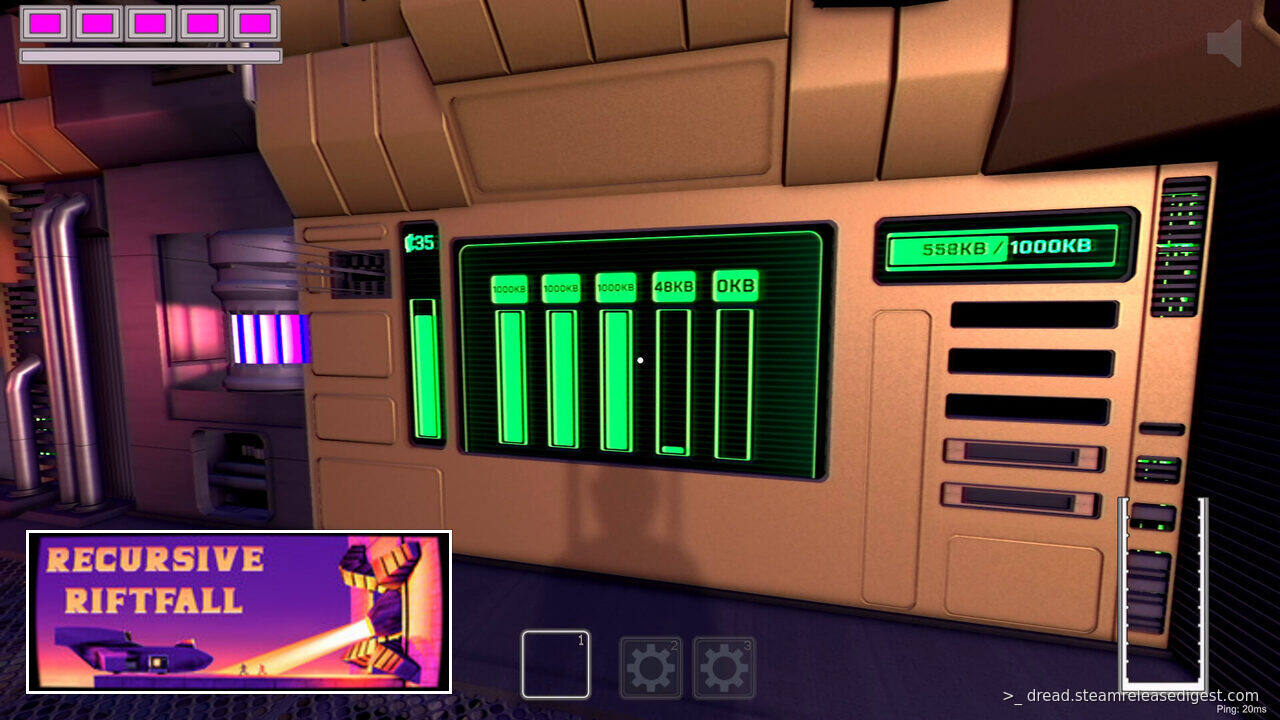
    You wake up inside a silent hub with no AI companion to greet you, no tutorial to explain your purpose, and no clear direction on where to step next. In the opening moments of the game, the silence is immediate and absolute. Rather than holding your hand through a cinematic sequence, it drops you straight into the deep end of an interdimensional salvage mission. Left with nothing but the clothes on your back, you are tasked with harvesting data cartridges from shifting, liminal corridors under the watchful, demanding eyes of unseen “benefactors” who will abandon you to the void the moment you fail to meet your quota.

    At its core, the experience is a co-op looter that wears its “quota horror” influences on its sleeve. You and your crew step through rifts into empty, unsettling structures to retrieve data. Success earns you credits to buy tools like teleporters, radios, and cloaking devices to evade the exotic entities patrolling the halls; failure means being left permanently stranded between dimensions. What sets this apart from its contemporaries is its lack of a player cap. Whether you go in alone, in a standard squad of four, or with a massive, chaotic horde of players, the game adapts its difficulty on the fly, supported by a seamless drop-in system that lets friends join mid-run without resetting the lobby.

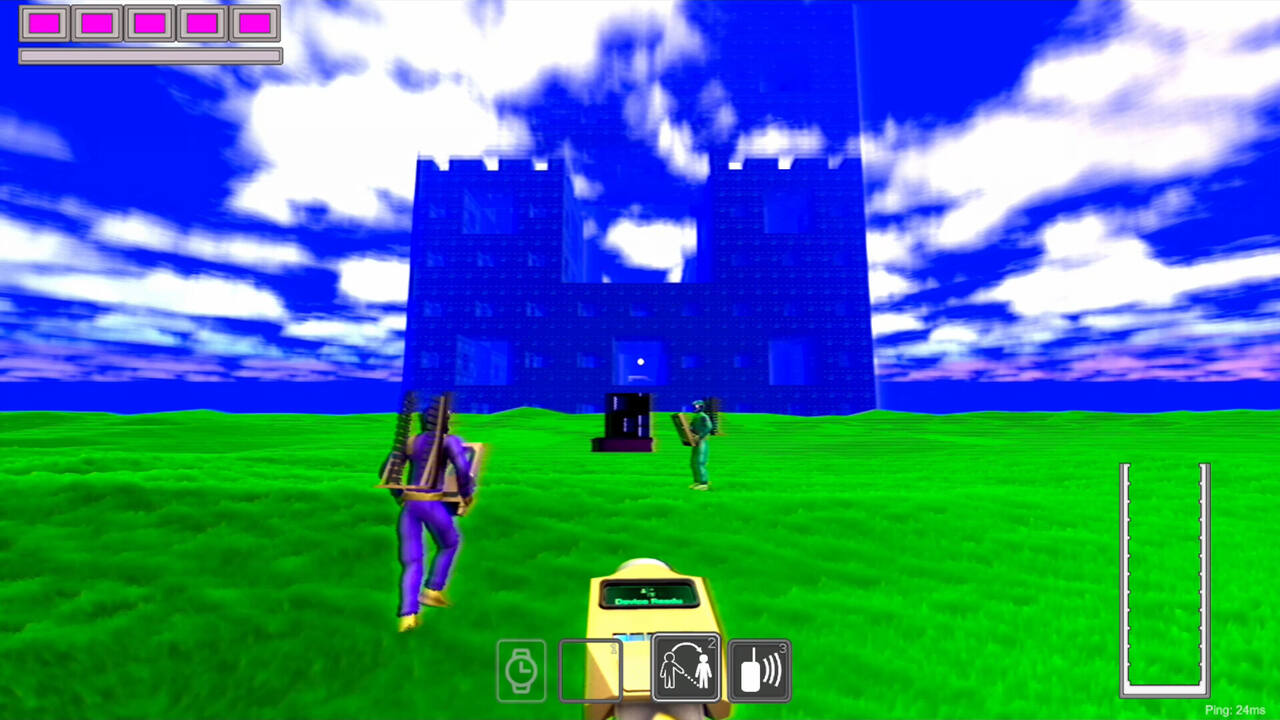
    The lack of a player cap changes the horror dynamic entirely. In a standard four-player setup, proximity chat creates a tight, tense loop of checking in on your partners. In a larger lobby, however, the game becomes a strange, sprawling expedition. You might hear the distant, echoed screams of your teammates reverberating down a concrete hallway three floors below you, their voices suddenly cut short by an unseen entity, leaving you to decide whether to investigate or push deeper into the silence for more loot.

    Recursive Riftfall gameplay screenshot
    Image courtesy of ZanderK via Steam

    However, players are divided on whether this open-ended structure works in its favor. Some find the absolute lack of onboarding a barrier to entry, noting that starting a lobby feels confusingly empty without a brief summary or an onboard AI to set the stage. There is a fine line between deliberate, atmospheric mystery and a simple lack of polish, and the game frequently walks that line. One player highlighted a bizarre visual quirk in the level design: rooms flooded with bright, multicolored light that seemed to emanate from nowhere, creating a surreal “rainbow” effect without a visible light source like a lamp or a window. While this unrefined lighting design can break immersion for some, for others, it adds to the uncanny, dreamlike wrongness of exploring spaces that simply shouldn’t exist. In a dimension-hopping horror game, light that originates from nothingness fits the theme of quiet wrongness perfectly, even if it feels a bit rough around the edges.

    The comparisons to genre giants are inevitable. Dissatisfied players have pointed out that the game can feel like a direct attempt to merge the resource-management panic of Lethal Company with the aesthetics of the Backrooms, occasionally falling short of both. In its current state, it can feel mechanically thin and lacking in variety, requiring more monster types and environmental hazards to keep the tension from evaporating after the first couple of hours. Yet, those who appreciate quiet exploration have praised its distinct vibes. When the proximity chat fades and you find yourself separated from your group in a sprawling, silent corridor, the game captures a very specific, lonely brand of dread.

    So, who is this for? At a modest five-dollar price point, it is an easy recommendation for co-op groups who have exhausted other horror titles and want a low-stress, atmospheric sandbox to explore. It is not a polished masterpiece, nor does it deliver high-intensity, choreographed scares. Instead, it offers a rough-edged, liminal playground where the terror comes less from what is chasing you, and more from the vast, empty quiet of the rifts themselves.

    Key Facts

    • Developer: ZanderK
    • Publisher: ZanderK
    • Release Date: Jun 1, 2026
    • Price: $4.99
  • What Happened At Sugar Hill?: Chore-Sim Drudgery Meets Campy Psychological Dread

    What Happened At Sugar Hill?: Chore-Sim Drudgery Meets Campy Psychological Dread

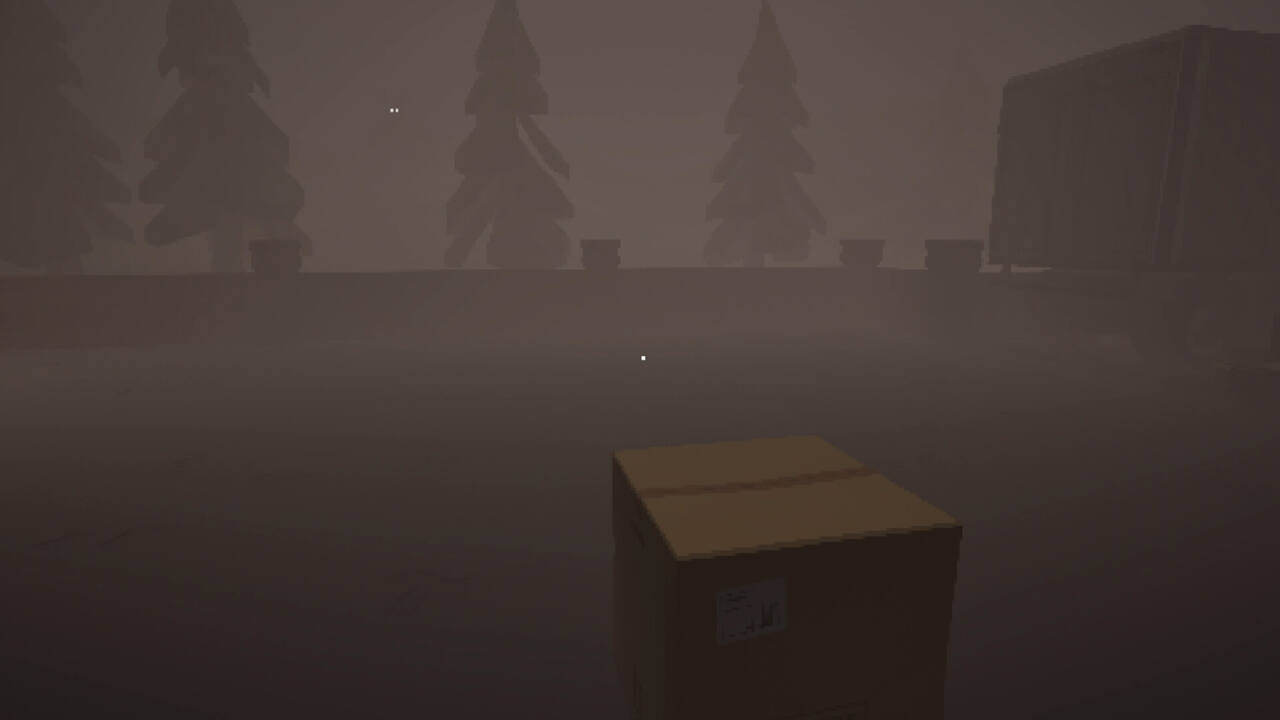
    In the quiet, fog-choked spaces of this indie gem, you piece together the downfall of a small town by stepping into the shoes of its working-class residents, performing their mundane daily chores—sorting mail, feeding livestock, scrubbing windows—right up until the moment the nightmare takes them.

    The Horror of the Everyday

    The game frames its anthology of terror through Tony, a world-famous detective who arrives in the aftermath of a sudden, choking fog that has blanketed the fictional town of Sugar Hill. Huddled inside the local police station with a handful of shell-shocked survivors, Tony begins his interrogation. As each survivor speaks, the game shifts perspective, dropping you directly into their playable memories. You aren’t playing a heavily armed hero; you are Phil the farmer watering his crops, Martha the postal worker sorting letters, and John the gas station clerk wiping down dirty glass.

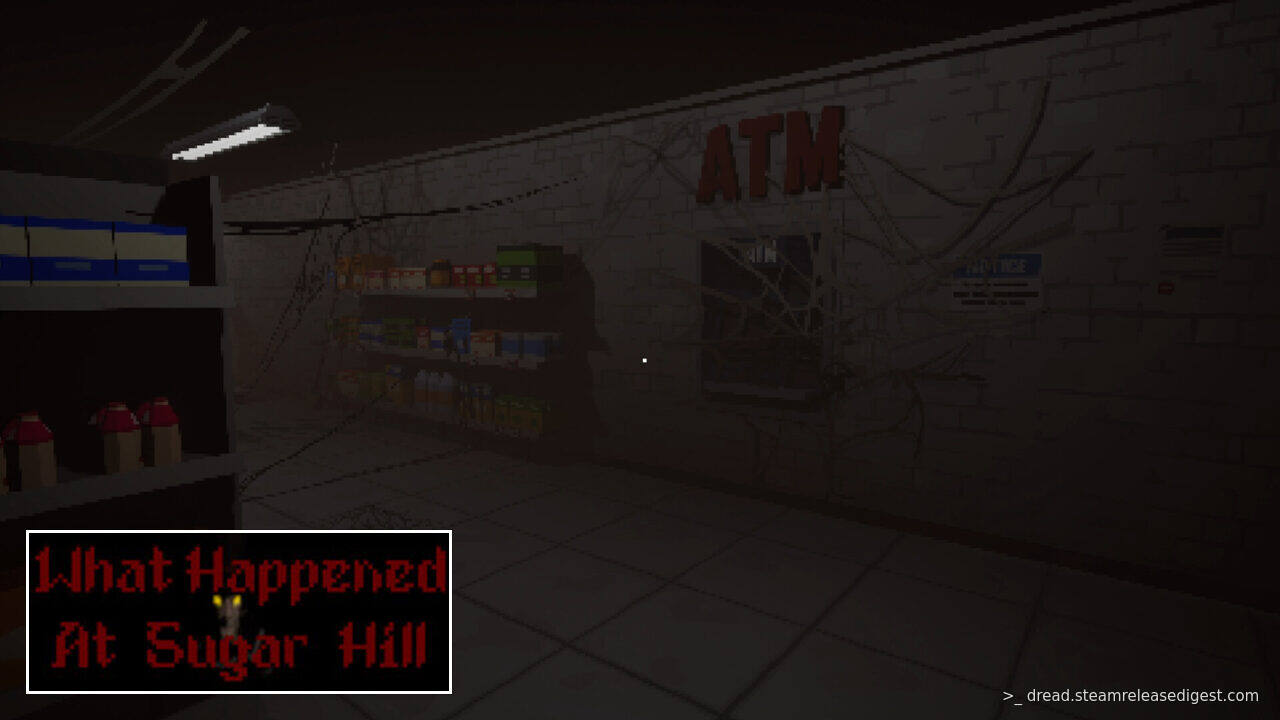
    This reliance on mundane, blue-collar simulator tasks is where the game builds its quietest, most effective tension. There is a psychological vulnerability in being forced to look down at a counter to restock shelves or focus on sorting mail when you know, with absolute certainty, that something is watching you from the edge of the screen. By occupying your hands and your immediate attention with domestic labor, the game masterfully primes you for the uncanny. The silence of the town is heavy, punctuated only by the low hum of fluorescent lights or the rustle of dry feed, leaving you to dread the inevitable interruption of your routine.

    What Happened At Sugar Hill? gameplay screenshot
    Image courtesy of ADirtyDan Games via Steam

    A Sudden Shift in the Darkness

    Community response highlights this contrast between the ordinary and the terrifying, though it notes that the game takes a moment to find its stride. Early on, the jump scares can feel somewhat formulaic—the standard fare of low-budget indie walking simulators. However, players agree that once the narrative shifts away from the initial chores and moves toward the local asylum, the gloves come off. The scare design pivots from predictable to masterfully timed, leaving even seasoned horror fans admitted to being thoroughly startled by unexpected sequences, with several reviews singling out a specific entity named “Lisa” for delivering the game’s best frights.

    There is also a distinct vein of B-movie camp and dark humor running through the experience. What Happened At Sugar Hill? doesn’t take itself entirely seriously, and players have noted that you might find yourself chuckling at a bizarre bit of dialogue or a goofy character model right before the game pulls the rug out and sends you leaping out of your chair. This blend of camp and genuine creepiness gives the game a distinct personality that sets it apart from more self-serious, sterile horror titles.

    Short, Sharp, and Budget-Friendly

    If there is a caveat to be found in the player feedback, it is the game’s brief runtime. Clocking in at a lean one to two hours, this is a fleeting experience that doesn’t overstay its welcome, but might feel too brief for those looking for a deep, mechanical odyssey. The simulator elements are light and served purely as a vehicle for the atmosphere rather than a complex management loop. Some players might also find the shift from dry, chore-based tension to sudden, loud scares a bit jarring, especially if they prefer a purely psychological, slow-burn haunting over active startle-reflex triggers.

    Yet, for its modest price point, the game overdelivers on atmosphere. It understands that the best way to make a monster scary is to make the world around it feel ordinary, grounding its supernatural threat in the sweat and boredom of everyday work before tearing the veil away.

    The Verdict

    This is a game for players who love short, punchy indie horror, low-fi aesthetics, and the emerging subgenre of “chore horror” seen in games like The Mortuary Assistant or Night Shift. If you have two hours to spare on a dark, rainy evening and want a campy, creepy, and surprisingly effective trip into a fog-shrouded nightmare, this weird little town is well worth the visit.

    Key Facts

    • Developer: ADirtyDan Games
    • Publisher: ADirtyDan Games
    • Release Date: Jun 4, 2026
    • Price: $5.99
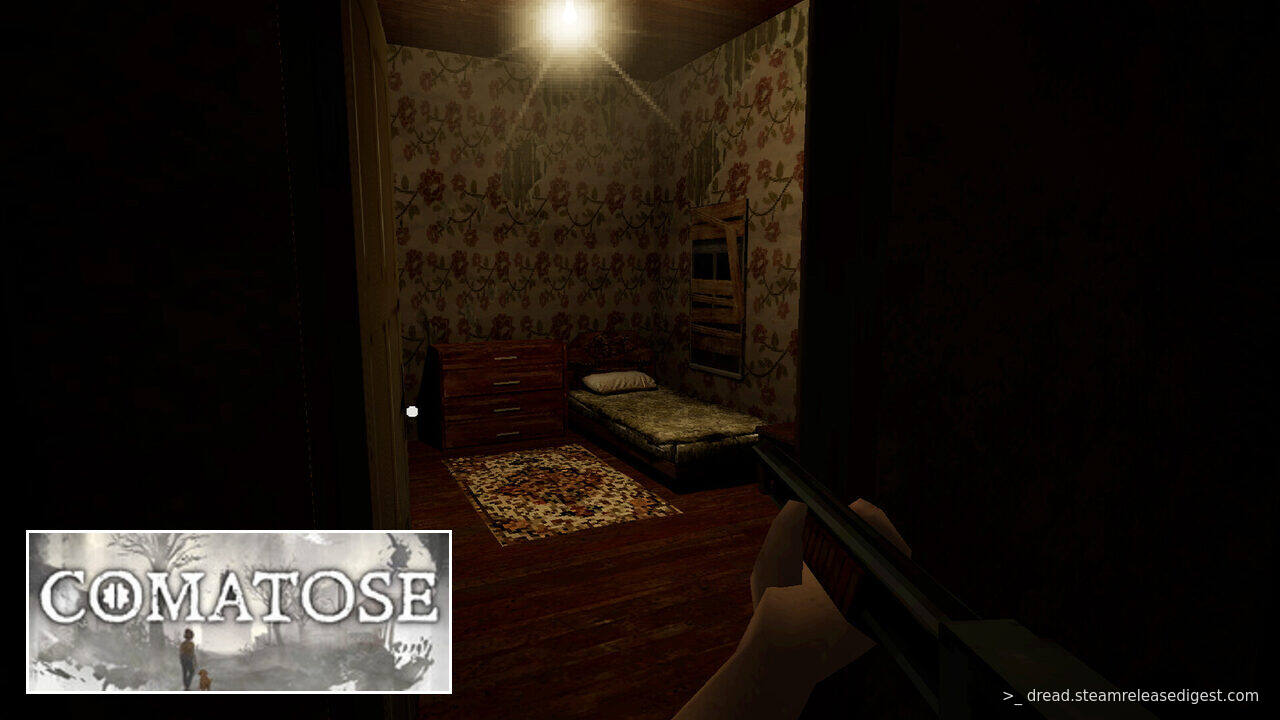
  • Comatose: A Strikingly Unsettling FPS Love Letter to Silent Hill

    Comatose: A Strikingly Unsettling FPS Love Letter to Silent Hill

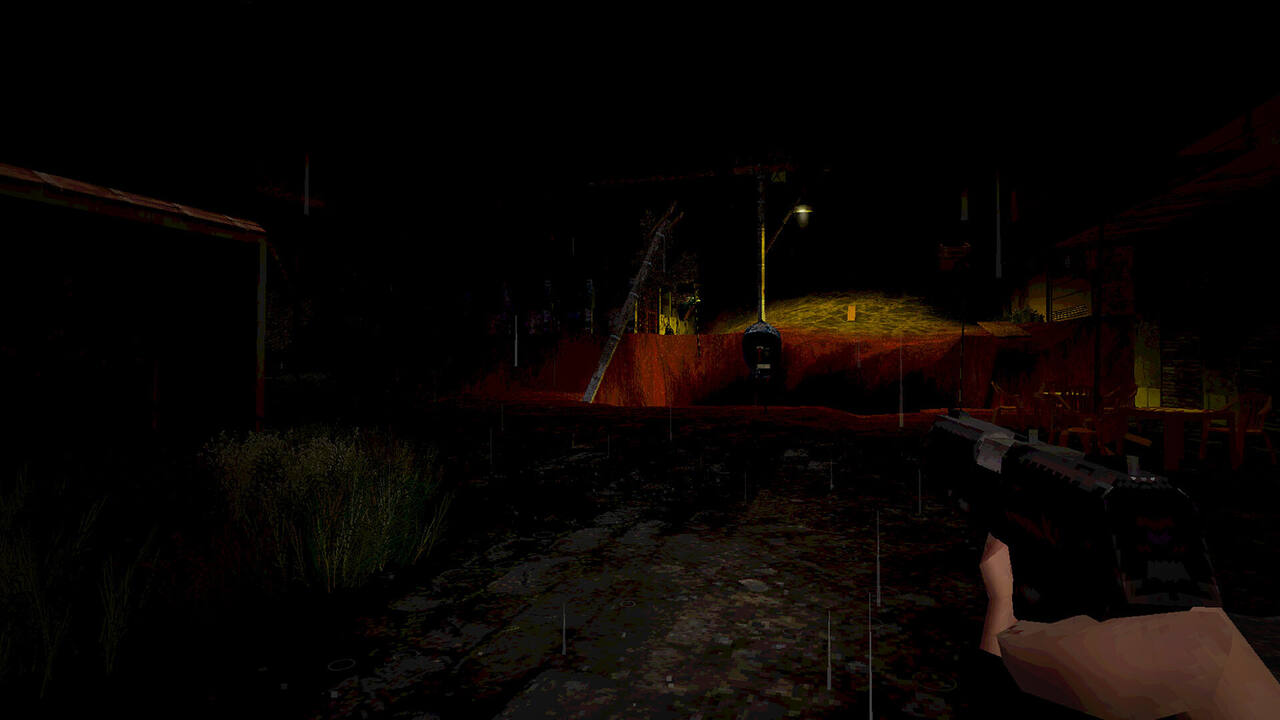
    The moment you step into one of the game’s safe rooms, the oppressive, fog-choked silence of its nightmare world yields to a soft, melancholy melody. Here, illuminated by the low-poly glow of a CRT monitor, you can catch your breath, manage your scarce inventory, and bolt upgrades onto your firearms at a dusty workbench. It is a classic survival horror loop, but rendered in a chunky, PS1-style aesthetic that makes the decaying streets outside feel less like a retro playground and more like a deeply personal, rotting psychological prison.

    Surviving the Subconscious

    In this story-driven retro experience, you play as Laura, a protagonist trapped in the deteriorating labyrinth of her own unconscious mind. To wake up, you must navigate a desolate, fog-shrouded town that physically corrupts and shifts as you unearth buried trauma. Unlike the deluge of passive “walking simulators” that dominate the modern indie horror landscape, action and survival are central mechanics here. This is a first-person shooter where resource management is paramount, puzzles require you to piece together fragmented memories, and the entities roaming the dark are physical threats you must either outsmart or put down with precious ammunition.

    Comatose gameplay screenshot
    Image courtesy of Lucky Dart via Steam

    The Echoes of Classic Dread

    With an impressive 92% positive rating on Steam, player sentiment confirms that developer Lucky Dart has captured something rare: the elusive, dread-soaked mood of early Silent Hill and Resident Evil games without relying purely on cheap nostalgia. Players are highly praising the game’s thick, suffocating atmosphere, excellent sound design, and the compelling pacing of its puzzle design. There is a satisfying, incremental momentum to the exploration; solving one environmental riddle immediately sparks the urge to push further into the dark to see what happens next. The story, even in its early stages, has already prompted players to construct elaborate theories about Laura’s past, proving that the psychological mystery at its core is genuinely gripping.

    The Friction in the Fog

    However, the game is not without the friction typical of early-stage indie releases. Currently in Early Access with only its first chapter available—offering roughly three to four hours of gameplay—players have pointed out some mechanical rough patches. While the visual design of the symbolic monsters is highly praised, their AI behavior can be underwhelming. Boss fights, in particular, often devolve into the uninspired tactic of walking backward while firing. Some smaller enemies, like a headcrab-adjacent creature, strike some players as more silly than scary. Furthermore, certain encounter designs can feel frustratingly archaic, such as an underground segment involving a one-hit-kill monster that suffers from clunky pathfinding and vague puzzle logic.

    The Verdict

    For those who prioritize thick, retro-styled atmosphere and clever environmental puzzles over hyper-polished shooter mechanics, this is an easy recommendation. It is a slow-burn, psychological nightmare that understands horror is built through isolation, sound, and space, rather than cheap jump scares or endless gore. If you can forgive some stiff combat AI and the brief runtime of an Early Access debut, this is a journey into the subconscious well worth taking.

    Key Facts

    • Developer: Lucky Dart
    • Publisher: The Bueno Interactive
    • Release Date: Jun 4, 2026
    • Price: $12.99
  • Barnacle and the Shivering Dread of a Dead Multiplayer Server

    Barnacle and the Shivering Dread of a Dead Multiplayer Server

    You navigate the silent, blocky carcass of a deserted, retro multiplayer server, hunting for cryptic notes and hidden items while the digital geometry begins to warp and watch your every step.

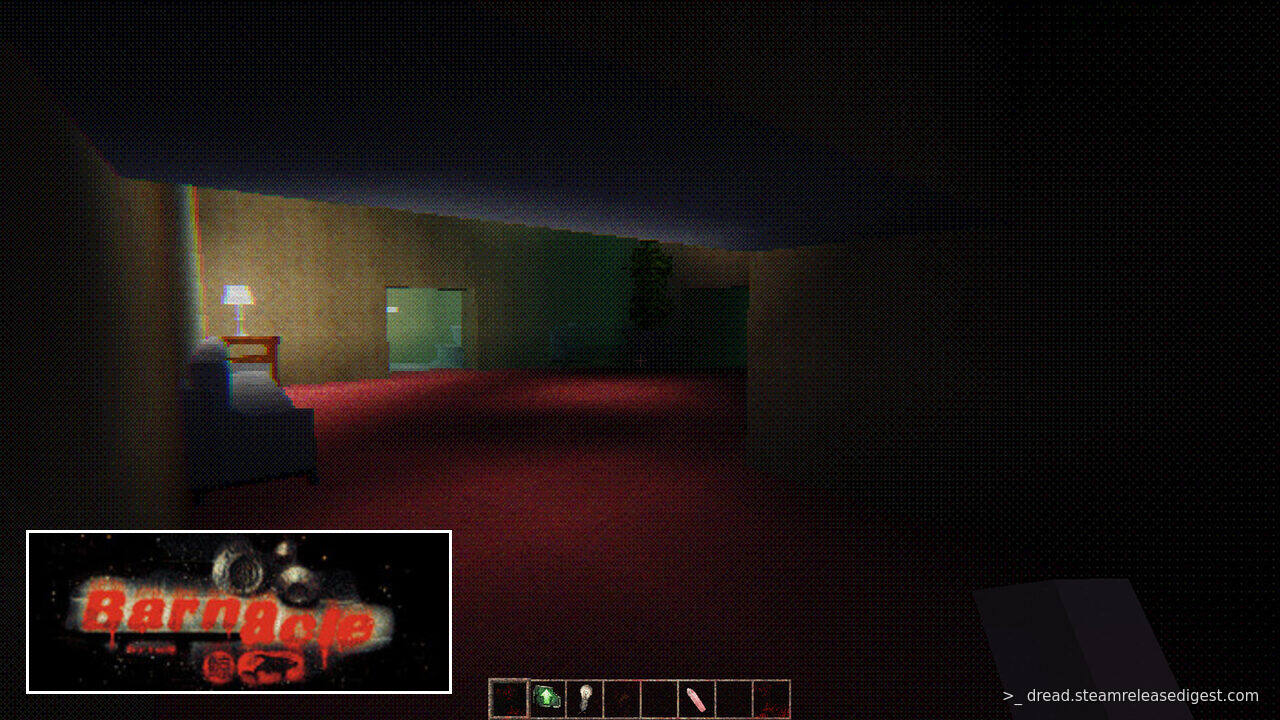
    There is a very particular flavor of unease reserved for digital spaces that have been left to rot. Anyone who spent their formative years playing early sandbox or survival multiplayer games knows the feeling of logging into a server that was once bustling with digital life, only to find it completely empty and frozen under an artificial sky. This is the exact vein of liminal dread that Barnacle taps into, presenting players with an abandoned server that has curdled into something deeply wrong. It is a walking simulator that trades in the quiet, analog horror aesthetic of early internet mysteries, stripping away HUDs, quest markers, and hand-holding to leave you entirely to your own devices in the dark.

    The Terror of the Empty Lobby

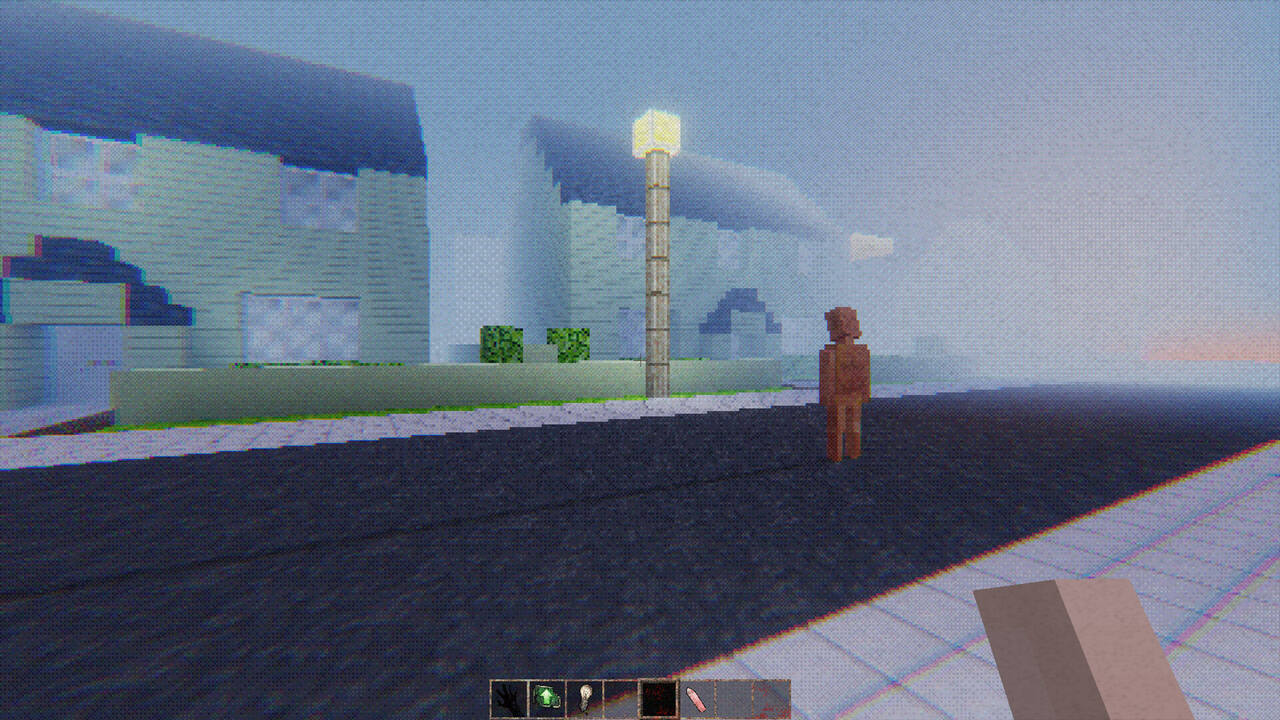
    The core of the experience is built around exploration and slowly unravelling a digital ghost story. You wander through low-poly, blocky worlds that look like a corrupted Minecraft build or a lost alpha build from 2011. What once felt familiar now feels distorted. The game captures that specific aesthetic of blocky, player-made architecture—the kind of crude castles, cobblestone towers, and half-finished projects that used to dot early online servers—and bathes it in a heavy, unnatural silence. There are no other players typing in the chat, no ambient wildlife sounds, just the hollow echo of your own footsteps.

    Barnacle gameplay screenshot
    Image courtesy of LuN via Steam

    As you descend deeper into the server’s architecture, the spaces begin to betray their own rules. Corridors loop back on themselves, environments shift behind your back, and the unsettling realization sets in that you are not as alone as the empty player list suggests. What makes this journey genuinely chilling is its sound design and pacing. Composer Nate Sassoon has hand-crafted a soundtrack that gives every single zone its own distinct sonic identity. In one area, the music might be a melancholy, dusty synth track that makes you mourn the community that once built these structures; in another, it dissolves into a low, metallic drone that triggers a visceral fight-or-flight response. The horror in Barnacle is not about monsters popping out of closets to scream in your face; it is about the agonizing tension of walking down a pixelated hallway, hearing a sound that shouldn’t exist, and realizing the world itself is reacting to your presence.

    A Double-Edged Sword of Isolation

    While players have overwhelmingly praised the game for its rich, Yume Nikki-esque atmosphere, this hands-off approach is a double-edged sword. On one hand, players who love getting lost find the experience incredibly rewarding. There is a profound sense of satisfaction when you finally piece together the layout of a massive, intricate map and figure out how to progress without a single tutorial message telling you what to do. The sheer lack of hand-holding makes every secret discovered feel like a genuine, hard-won breakthrough. It requires you to pay close attention to your surroundings, using the limited slots of your empty inventory to collect fragments of the past.

    On the other hand, that same design ethos can lead to immense frustration. Because the game is so opaque, it is incredibly easy to find yourself completely directionless. Some players report wandering for hours after opening every door, wracking their brains to figure out what tiny trigger or hidden nook they might have missed. Furthermore, there is a specific segment—known as the “chapel thread”—that introduces unforgiving, high-stakes platforming. Falling here does not just mean a quick restart; it can mean losing up to thirty minutes of tedious parkour progress, forcing you to repeat clumsy jumps over and over. For a game that thrives on psychological tension, forcing the player to repeatedly master clunky platforming physics is a jarring, immersion-breaking stumble that threatens to snap the delicate atmosphere.

    The Verdict

    Despite these frustrating bottlenecks, Barnacle is an absolute must-play for a very specific type of horror enthusiast. If you are someone who spent hours reading internet creepypastas about haunted game files, or if you find the empty lobbies of old source engine games more frightening than any modern blockbuster monster, this is your holy grail. It is a slow, deeply atmospheric, and hauntingly beautiful exploration of digital isolation that respects your intelligence—even if it occasionally tests your patience with its platforming.

    Key Facts

    • Developer: LuN
    • Publisher: LuN
    • Release Date: Jun 1, 2026
    • Price: $6.99
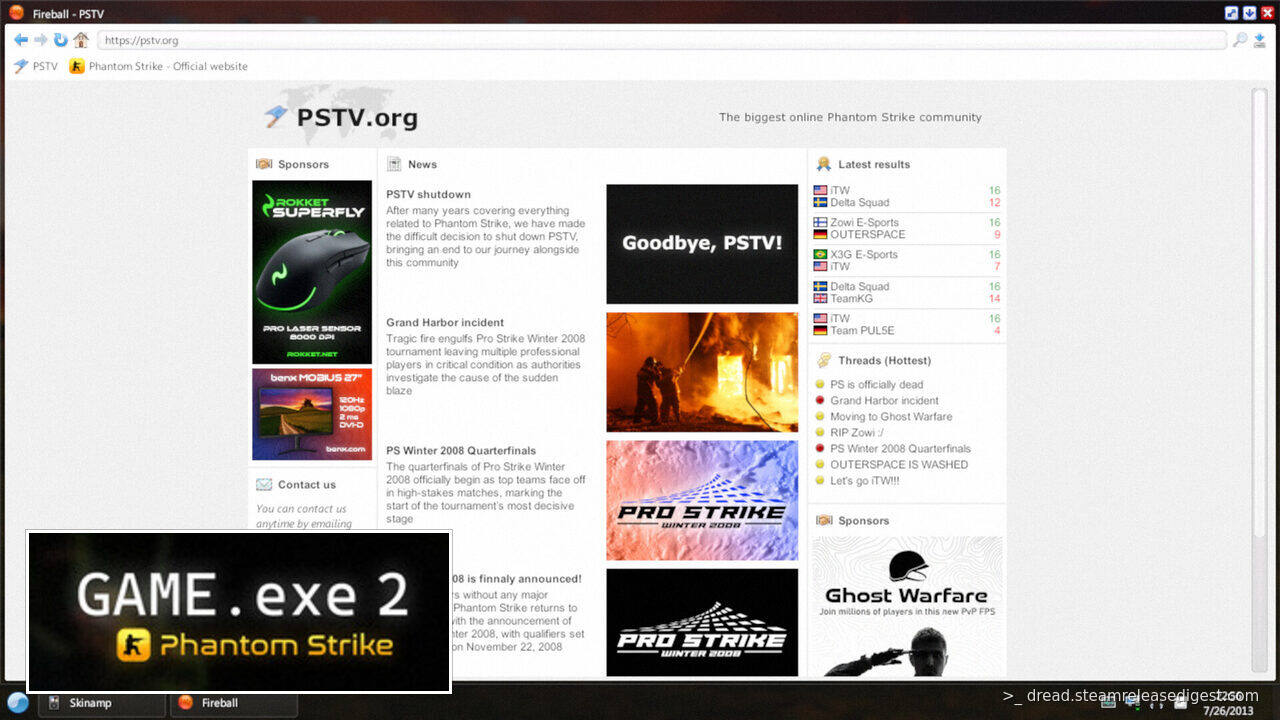
  • The Quiet Horror of an Abandoned Counter-Strike Clone: GAME.exe 2 – Phantom Strike

    The Quiet Horror of an Abandoned Counter-Strike Clone: GAME.exe 2 – Phantom Strike

    You are standing on a low-poly recreation of a classic tactical shooter map—a dusty, sun-bleached corridor that looks suspiciously like Counter-Strike’s de_dust2—but there is no gunfire, no tactical chatter, and no footsteps. The scoreboard shows a match that has been running for nearly two decades, yet your teammates are silent specters who never spawn, leaving you alone in a frozen digital graveyard. The only other entity in this forgotten server is an unseen administrator, a hostile creator who watches your every move from behind the curtain, possessing the power to rewrite your settings, crash your machine, or ban you from the server entirely.

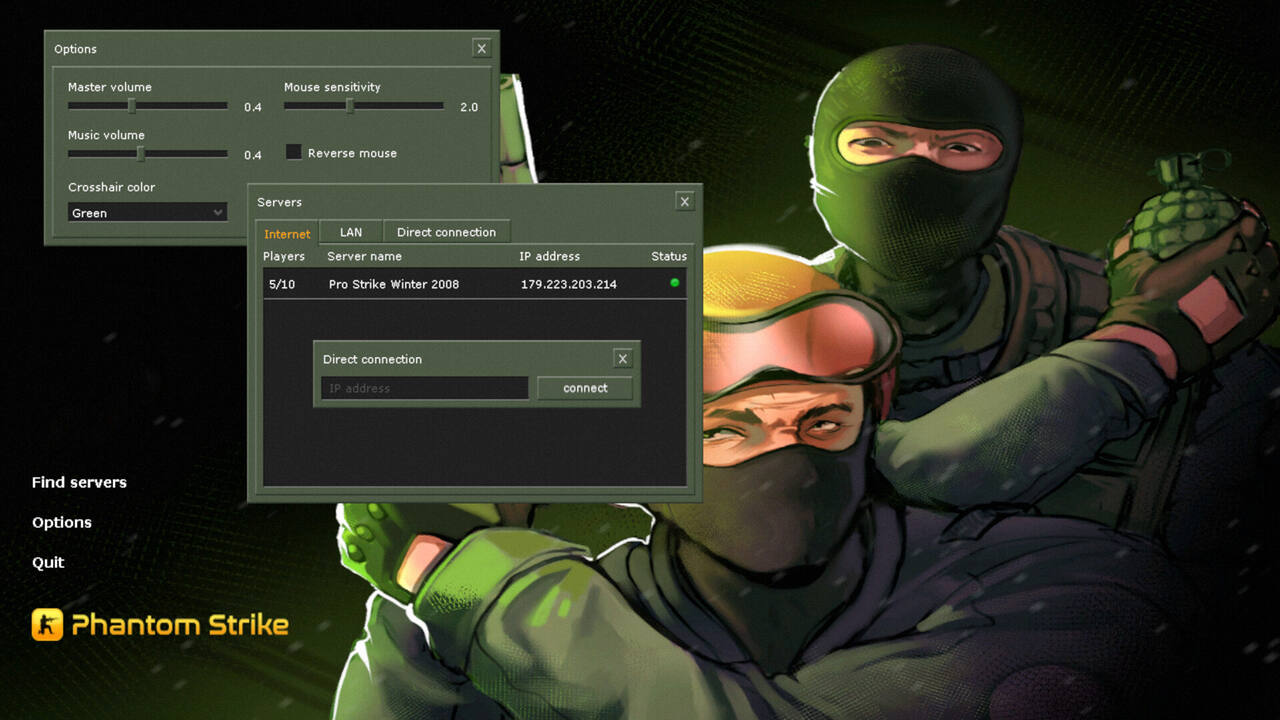
    This is the dual-layered reality of Punx Studios’ latest release. The game acts as a portal to a bygone era of the internet, simulating a stylized, early-2000s operating system called Microfast Winbox 7. It is an aesthetic feast of “Frutiger Aero” design, complete with translucent blue windows, glossy buttons, and crisp synthetic click sounds that instantly transport you back to the age of dial-up and desktop customization. Underneath this nostalgia, however, lies a deeply unsettling digital mystery.

    The Desktop and the Dust

    The core of the experience is split between two distinct modes of play. On one hand, you are a digital archaeologist, digging through old emails, recovering corrupted files, and searching the Winbox 7 desktop for clues to reconstruct what happened to this abandoned software. On the other hand, you occasionally boot up the titular shooter, stepping into its empty maps to push a match toward its long-overdue conclusion. The horror here is not born of jump-scares or viscera; it is the specific, hollow dread of “dead internet theory.” It is the eerie realization that these virtual spaces, once bustling with noisy teenagers and competitive energy, are now cold, rotting, and inhabited only by whatever digital ghosts have been left behind in the code.

    GAME.exe 2 - Phantom Strike gameplay screenshot
    Image courtesy of Punx Studios via Steam

    As you dig deeper, the desktop itself becomes a battleground. The creator of the software begins to actively sabotage your investigation. Windows will close unexpectedly, errors will cascade across your screen, and files will shift. It creates a wonderfully claustrophobic tension, turning a mundane operating system interface into a haunted house where clicking the wrong icon feels like opening a door to a dark cellar.

    What the Players Say

    Steam reviews are overwhelmingly positive, with players praising the game as a massive upgrade over its predecessor. The atmosphere and the execution of the retro-OS concept are major highlights. Players love the depth of detail hidden within the simulated desktop files and the way the narrative unfolds naturally through exploration. Additionally, the developer has earned goodwill by including a clever, non-intrusive “help” button. Rather than offering outright spoilers, this feature helps players bypass UI friction—such as finding a specific, tiny icon needed to progress—without ruining the satisfaction of solving the game’s actual puzzles.

    However, the community is equally vocal about two major drawbacks. First, the experience is incredibly brief. Most players reached one of the multiple endings in one to three hours, leaving many wishing for more depth and additional content to flesh out the mystery. Second, some players noted an imbalance between the game’s two halves. You will spend far more time reading emails and solving desktop-interface puzzles than actually walking around the low-poly shooter maps. For those who bought the game hoping for a more robust, haunted-shooter experience, the heavy emphasis on desktop navigation was a minor disappointment.

    Our Verdict

    This is a bite-sized, atmospheric gem designed for those who find peace—and terror—in the quiet corners of the old web. It is a game for people who remember the specific, eerie loneliness of joining an empty multiplayer server late at night in 2008, waiting for players who would never arrive. If you are looking for a sprawling, action-packed horror shooter, you won’t find it here. But if you want to spend a rainy evening digging through simulated digital trash while a ghostly presence watches you from the code, this $5.99 trip down memory lane is well worth your time.

    Key Facts

    • Developer: Punx Studios
    • Publisher: Punx Studios
    • Release Date: Jun 1, 2026
    • Price: $5.99
  • Crow Country and the Nostalgic Ache of Retro Dread

    Crow Country and the Nostalgic Ache of Retro Dread

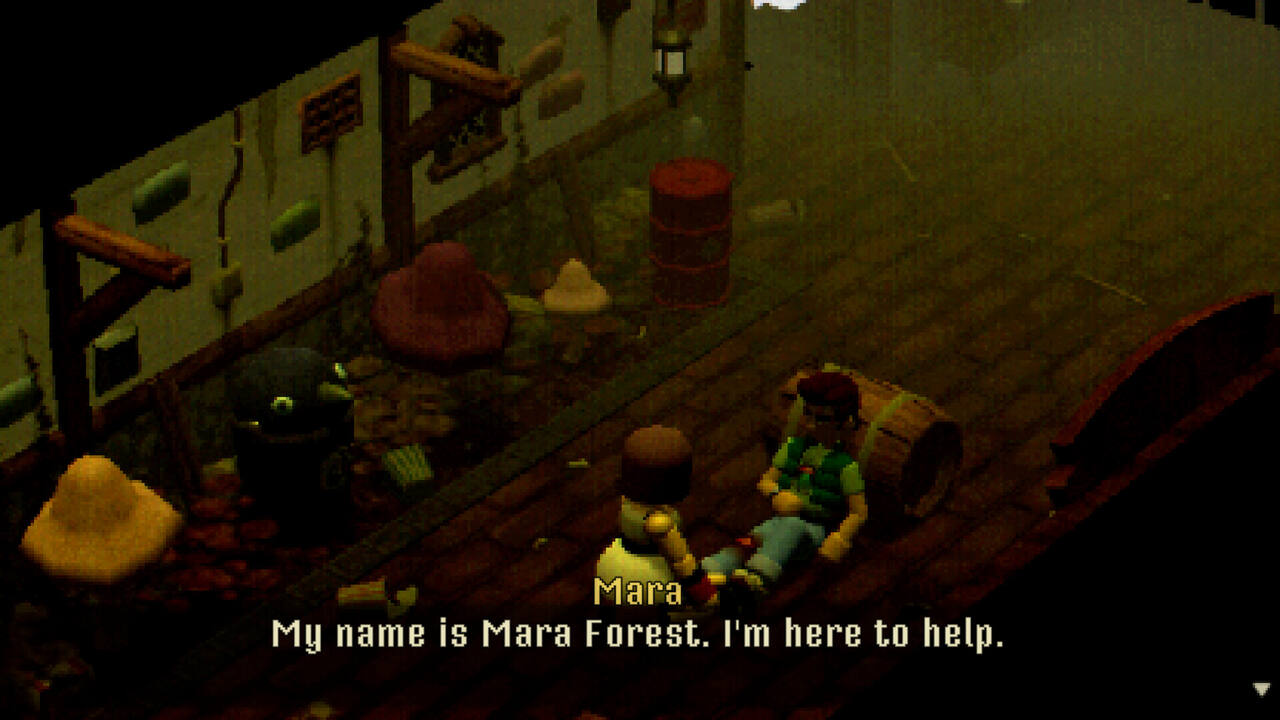
    The low-poly face of a discarded mascot rotting in a deserted amusement park has a very specific kind of sadness—a quiet, plastic decay that SFB Games’ Crow Country weaponizes from its opening frame. Set in 1990, two years after the sudden closure of the park and the disappearance of its eccentric owner, Edward Crow, the game drops you into the shoes of Mara Forest. You are not there to marvel at the defunct attractions; you are there to untangle a web of corporate hubris and find out what is slithering through the abandoned fairgrounds. It is a slow-burn mystery where the primary threat is not just the monsters in the shadows, but the heavy, melancholic atmosphere of a place designed for joy that has curdled into something deeply wrong.

    Chunky Polygons and Modern Comforts

    At its core, Crow Country is a meticulous love letter to late-90s survival horror. You navigate the park’s interconnected zones, backtracking to unlock rusted gates, managing a tight inventory, and solving environmental riddles. What sets the game apart is how it respects the player’s time and accessibility without stripping away the tension. For those who crave the authentic, slightly clumsy friction of the 32-bit era, the game offers classic D-pad tank controls. If you prefer modern fluidity, you can opt for analogue movement and tactile, trigger-based aiming. There is even an “Exploration Mode” that removes monster attacks entirely, allowing players to treat the game as a pure, atmospheric detective story. It is a brilliant acknowledgment that the game’s greatest asset is its sense of place, not just its combat.

    Crow Country gameplay screenshot
    Image courtesy of SFB Games via Steam

    What the Crow Found: Player Reflections

    With an overwhelmingly positive reception on Steam, players have flooded the reviews with praise for how beautifully the game captures the specific textures of classic PlayStation horror. Many celebrate it as a highly optimized experience that runs flawlessly on older hardware—what one reviewer affectionately called their “potato PC.” The game’s puzzles are widely lauded for being logical and satisfying, rarely requiring players to tab out to a guide, and the narrative has been praised for delivering genuinely intriguing story beats that wrap up in a tight, punchy runtime. One player lamented, “I wish I could lose my memory just to play this game again.”

    However, the community is also honest about where the ride stumbles. While the visual aesthetic—complete with a thick, nostalgic CRT style—is beloved by most, some players found the heavy screen grain so distracting that they uninstalled the game. Others noted that the puzzles, while clever, sometimes suffer from hand-holding. For instance, the game has a habit of revealing solutions simply by panning the camera to a hidden corner of the room, prompting one reviewer to beg the developers to “have some confidence in gamers.” There are also minor frustrations with a specific mushroom puzzle, a lack of memorable boss fights, and a climax that some players felt was a bit too abrupt and lacked a dramatic punch.

    The Verdict

    Crow Country is not a terrifying, adrenaline-fueled gauntlet designed to make you jump out of your seat. Instead, it is a cozy, atmospheric nightmare. It is a game for players who want to wrap themselves in the nostalgic, fog-drenched blanket of classic survival horror without fighting frustrating, outdated camera angles. If you are a genre veteran looking for a punishingly difficult challenge, you might find the 4-to-8-hour journey a bit too gentle and the ending slightly quiet. But if you value rich art design, evocative sound, and the uneasy pleasure of exploring a space where something is “awfully wrong,” this abandoned theme park is well worth the admission price.

    Key Facts

    • Developer: SFB Games
    • Publisher: SFB Games
    • Release Date: May 9, 2024
    • Price: $9.99
  • Ib: Reopening the Doors to the Quietest, Most Dangerous Art Gallery on Steam

    Ib: Reopening the Doors to the Quietest, Most Dangerous Art Gallery on Steam

    A young girl is handed a simple lace handkerchief by her mother, told to keep it safe in her pocket, and then left to wander the quiet, pixelated halls of an art exhibition—only to find herself, mere moments later, offering her literal life-force in the form of a delicate rose to a painting that promptly devours it. This is the deceptive, fragile world of Ib, a remake of the legendary 2012 freeware RPG Maker horror classic that understands dread is best built not through roaring monsters or cheap jump-scares, but through the quiet distortion of things that should be beautiful.

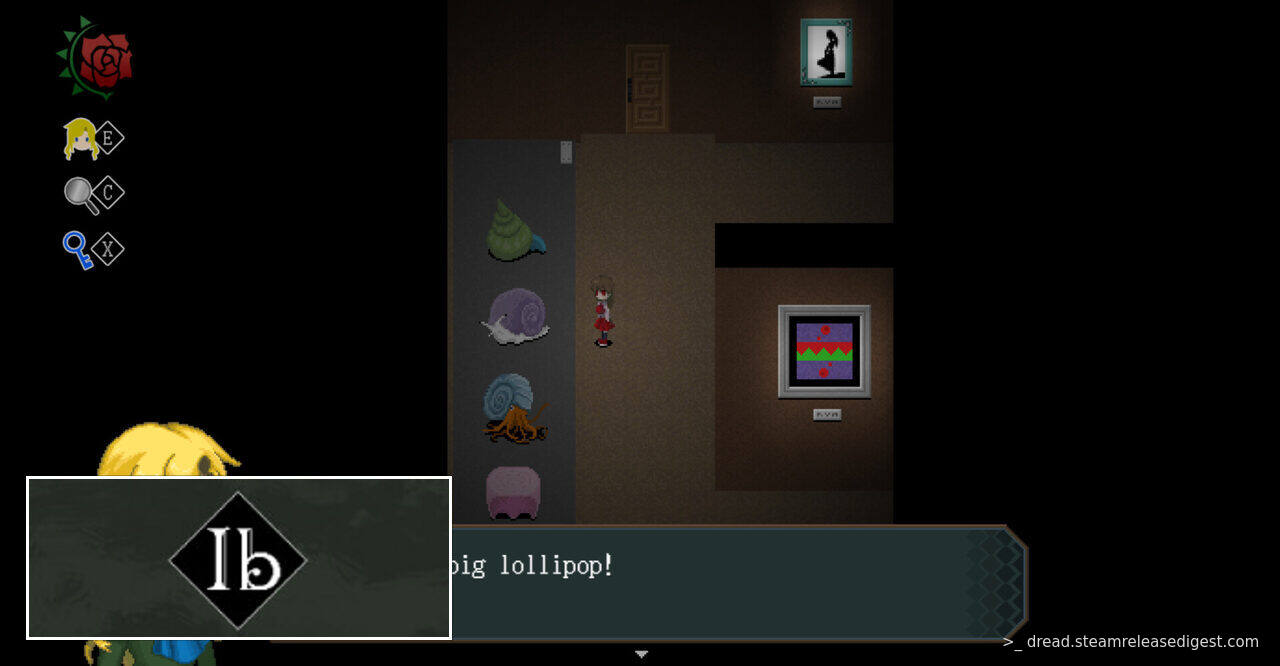
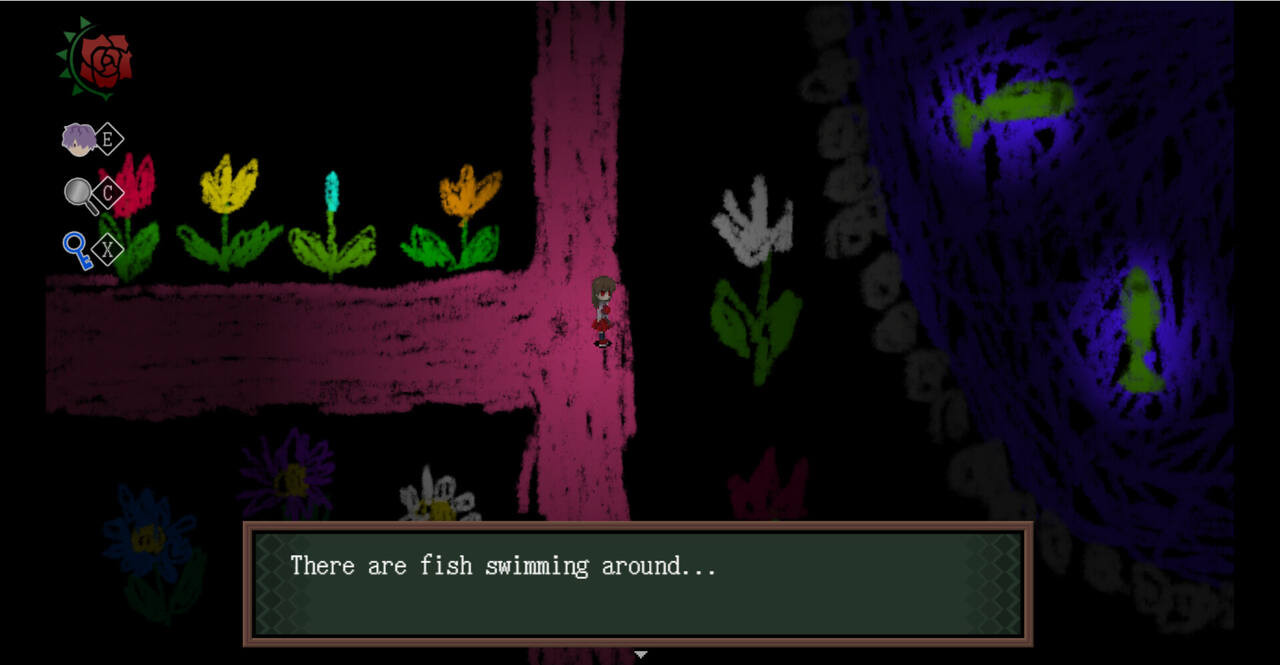
    At its core, Ib is a 2D psychological exploration game set in the surreal, shifting museum of a fictional artist named Guertena. What begins as a mundane family outing quickly dissolves into isolating terror. The lights dim, the other patrons vanish, and the artwork on the walls begins to bleed, crawl, and speak. Your only tools are your feet, an interact button, and whatever companions you manage to pick up along the way. The game relies entirely on its atmosphere, forcing you to step close to unsettling canvases and sculpture displays to find a way out, all while dodging traps that target your fragile health bar, which is represented by a physical rose.

    The remake, released in 2022 by developer kouri and publisher PLAYISM, isn’t a radical departure from the original, but rather a meticulous restoration. The game’s puzzle design has been smoothed out, offering challenges that feel deeply integrated into the museum’s bizarre logic rather than arbitrary roadblocks. The addition of “Zoom Mode” allows players to lean in and inspect the pixelated brushstrokes of Guertena’s unsettling portfolio, making the environment feel like a physical, dangerous space. Meanwhile, a newly implemented conversation system lets you speak with companions like the enigmatic Garry, offering subtle hints and adding emotional weight to a story that can branch into seven vastly different endings.

    Ib gameplay screenshot
    Image courtesy of kouri via Steam

    The Art of Tension: What Players Think

    With an incredibly high 99% positive rating on Steam, player sentiment is overwhelmingly affectionate, though not without nuance. For veterans of the original RPG Maker era, this version is a triumphant return. Players widely praise the upgraded presentation, noting that the new character sprites, snappier animations, and re-recorded soundtrack enhance the game’s uncanny vibe without sacrificing the minimalist charm of the 2012 release. The puzzles receive high marks for being creepy and clever without inducing the hair-pulling frustration common to the genre. Playing in the dark with headphones, as multiple reviewers suggest, transforms the retro aesthetic into a deeply immersive, claustrophobic experience.

    However, the transition from a famous freeware title to a $12.99 Steam release has raised some minor critiques. A few returning players have pointed out that while the mechanical improvements and visual overhauls are excellent, there isn’t quite enough entirely “new” narrative content to justify the price if you are already intimately familiar with the original game. Others have noted subjective visual gripes, such as slight disagreements with redesigned character sprites like Garry’s, though they admit these designs still fit the game’s overall melancholic style perfectly.

    The Verdict

    Ib is a masterful reminder that horror does not need a massive budget or photorealistic gore to get under your skin. It is a game of quiet, artistic malice where the threat is often a painting that won’t stop staring or a statue that moves when your back is turned. If you are looking for visceral thrills or a fast-paced action-horror experience, you will not find it here.

    Instead, this is a title for the patient horror enthusiast. It is for those who appreciate the uncanny valley of RPG Maker classics, who love solving environmental puzzles, and who want to experience a beautifully tragic story where your choices genuinely dictate who survives the gallery. Whether you are returning to pay your respects to a childhood classic or stepping into Guertena’s museum for the very first time, Ib remains an essential piece of atmospheric horror.

    Key Facts

    • Developer: kouri
    • Publisher: PLAYISM
    • Release Date: Apr 11, 2022
    • Price: $12.99
  • Unlucky Mummy and the Agonizing Horror of the Quantum Gamble

    Unlucky Mummy and the Agonizing Horror of the Quantum Gamble

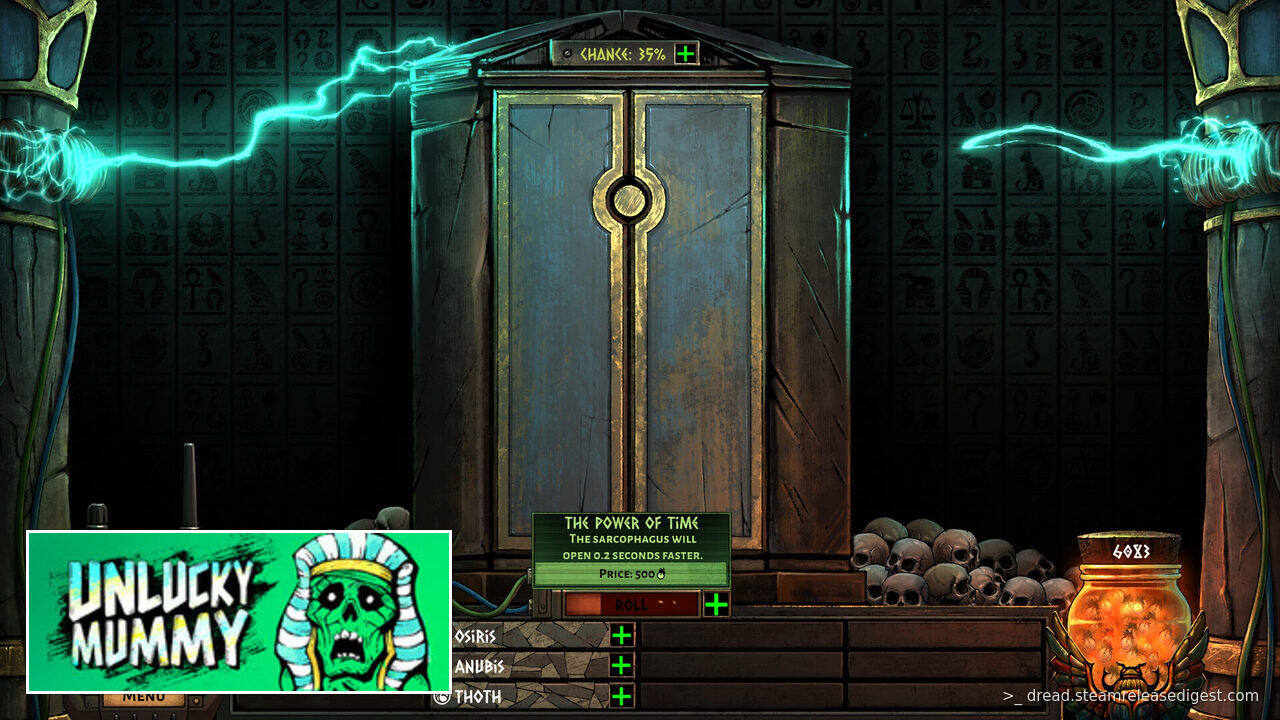
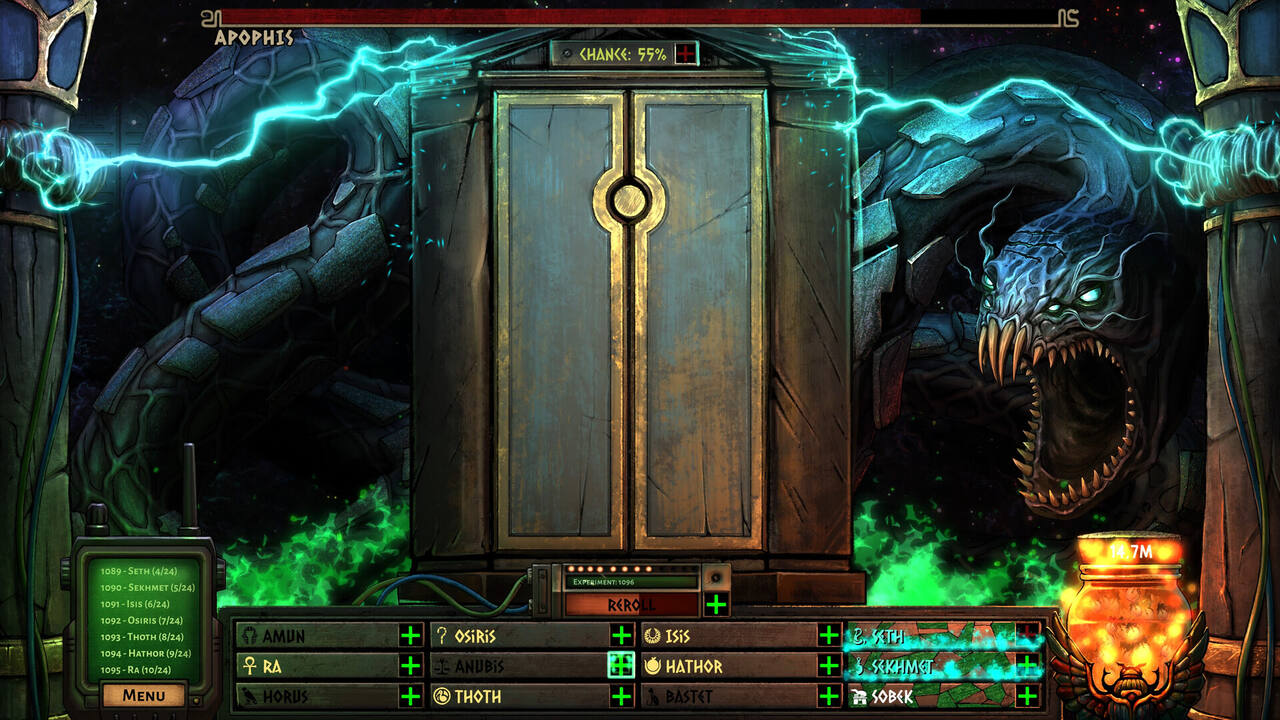
    The mathematical reality of Unlucky Mummy is a cold, uncaring nightmare: a one in 16,777,216 chance of success. Before you sits a closed sarcophagus, and to resurrect the entity trapped inside, you must pull twelve ancient relics from its depths, back-to-back, without a single misstep. At its default state, you have a meager 25% chance of finding a relic on any given pull. The other 75% of the time, the sarcophagus is empty, and the curse triggers, instantly vaporizing every single relic you have managed to accumulate on that run. It is a premise built not on lurking monsters or scripted jumps, but on the quiet, agonizing friction of risk assessment and the devastating weight of a single, catastrophic mouse click.

    At its core, Unlucky Mummy is an incremental clicker that reframes the genre’s classic Skinner-box mechanics as an exercise in psychological endurance. Drawing thematic inspiration from quantum superposition, the game posits that the twelve relics both exist and do not exist simultaneously until the lid is lifted. Each successful pull rewards you with golden scarabs, which serve as your currency to slowly tilt the cosmic scales in your favor. You can invest these scarabs into upgrading your base success rate, speeding up the lid-opening animation, or boosting the payout of your discoveries. As you push deeper, you can unlock six unique endings, each granting a permanent, run-altering Glyph designed to change how you interact with the game’s brutal mathematics.

    Unlucky Mummy gameplay screenshot
    Image courtesy of Karaclan via Steam

    Because our beat at the Digest is atmospheric dread, we must be entirely transparent: this is not a traditional survival horror game. There are no dark corridors to explore, and no puzzles to solve beyond the management of your own patience. Yet, the psychological toll it inflicts on players is undeniably real. It functions as a sterile, hypnotic gambling simulator where the “monster” is your own inability to walk away. The presentation leans heavily into this uncanny allure, featuring highly polished, smooth animations of a surprisingly seductive mummy whose bouncy physics and striking character design act as a strange, distracting siren song to keep you clicking.

    Player sentiment reveals a community deeply divided by the game’s uncompromising randomness. On one hand, players praise the game’s slick visual style, the surprisingly atmospheric voice work, and clever narrative Easter eggs, including a nod to the mind-bending German sci-fi horror series Dark. When a run goes well—especially if you manage to unlock a powerful meta-progression item early, like the coveted Marie Curie glyph—the loop becomes incredibly addictive.

    On the other hand, the game’s absolute reliance on raw probability has driven more than a few players to frustration. Because there is no active automation, you must manually click through every single attempt, making the grind feel intensely personal. Players have reported the sheer agony of raising their success chance to an overwhelming 94%, only to watch the game fail four times in a row, wiping out hours of progress. This swingy RNG, paired with an uneven balance among the permanent glyphs—where some are uselessly weak and others are game-breakingly strong—means that a new run doesn’t always feel easier or more rewarding than the last. It is a design that tests self-control, sometimes leaving players feeling trapped in a cycle of digital masochism.

    Unlucky Mummy is a hyper-specific title designed for a very particular kind of player. If you are looking for deep narrative exploration, active stealth, or traditional atmospheric tension, you will find this sarcophagus incredibly empty. However, if you are fascinated by the psychology of risk, enjoy the slow-burn grind of incremental games, and want to experience the genuine, stomach-dropping dread of watching a 90% success rate crumble into dust, this $2.99 experiment in quantum cruelty might just hold you captive.

    Key Facts

    • Developer: Karaclan
    • Publisher: Karaclan
    • Release Date: Jun 2, 2026
    • Price: $2.99
  • Remorses: A Suffocating Descent Into Westbrook Mansion

    Remorses: A Suffocating Descent Into Westbrook Mansion

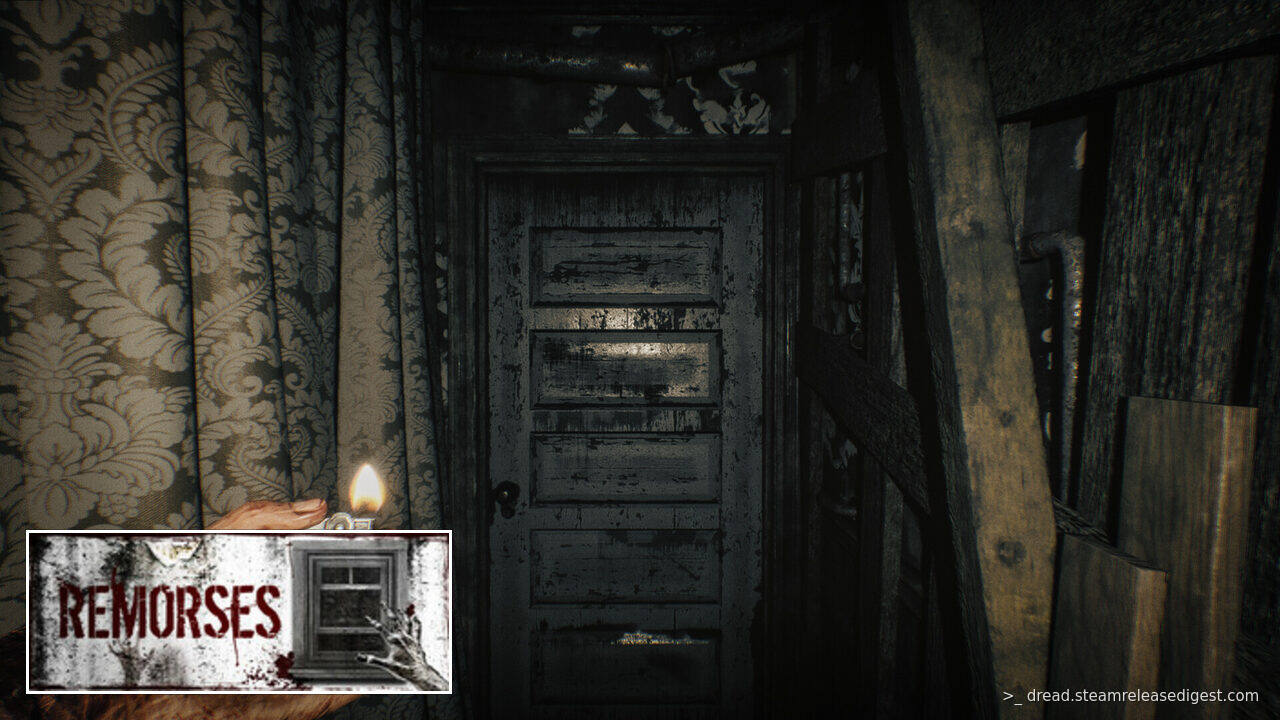
    In the damp, decaying halls of Westbrook Mansion, the air itself is your enemy. You aren’t just managing a flashlight battery or a stamina bar in Twistedline Games’ psychological horror title; you are managing the very breath in investigator Jake Lepistow’s lungs. Step into a room with closed windows for too long, and the atmosphere begins to choke you, unraveling Jake’s sanity and distorting your vision. Survival in this game hinges on a remarkably simple, tactile action: finding a window and flinging it open to let the cold, 1991 Rivervalley air rush in.

    Set in the Lakota Territory during the autumn of 1991, the game casts you as a smug supernatural investigator who has spent his career chasing folklore without ever facing real danger. That changes when Jake investigates Westbrook Mansion, a historic estate shrouded in recent witchcraft rumors and disappearances. What follows is a slow-burning, intensely atmospheric investigation that blends classic adventure game logic with modern psychological dread.

    The core gameplay loop centers on tension-filled exploration and puzzle-solving. To combat the witchcraft consuming the mansion, you must hunt for ingredients to brew a counter-agent. This isn’t a simple fetch-quest; the environments are dense, and the puzzles require active logical, visual, and auditory deduction. One moment you might be deciphering a cryptic note, and the next, you are paralyzed with paranoia as surveillance cameras in an empty room begin clicking on and off by themselves. Crucially, the game allows you to save at any time, a merciful feature that offsets the crushing weight of its oppressive atmosphere.

    Remorses gameplay screenshot
    Image courtesy of Twistedline Games via Steam

    What elevates the dread from a cheap thrill to a lingering shudder is the game’s audio design. Featuring a soundscape crafted by the sound designer of Outlast and the composer of Visage, the audio profile is masterfully realized. Creaking floorboards, the low rattle of wind against loose glass, and the sudden, sharp silence of an empty room are weaponized to make you feel as though someone—or something—is constantly standing right behind you.

    Community reception reveals a fascinating division. While the game boasts highly positive reviews from those who finish it, early players frequently clashed with its uncompromising design. Remorses strictly refuses to hold your hand. There are no quest markers, no glowing trails, and very little explicit guidance. For puzzle purists, this is a triumph; they point to highly creative, mind-bending puzzles that respect the player’s intelligence. For others, the complete lack of direction leads to moments of frustrating stagnation where the path forward feels needlessly obscure.

    Furthermore, players have noted that the sanity system can feel mechanically vague at times, leaving you wondering exactly how close you are to the brink. Technical polish is generally high, with players reporting a smooth, bug-free experience, though those with high-end setups may find the graphics options frustratingly bare-bones, occasionally requiring manual tweaks to configuration files to unlock higher resolutions. Lastly, while the journey is widely praised as a masterclass in tension, a few players felt the narrative payoff at the ending was somewhat abrupt, leaving certain threads feeling slightly unfinished.

    Ultimately, Remorses is a love letter to the golden era of uncompromising psychological horror. It shares its DNA with atmospheric giants like Visage and MADiSON, trading cheap jump-scares for a persistent, suffocating sense of wrongness. If you require clear objective markers and straightforward puzzles, the halls of Westbrook Mansion may only offer frustration. But if you hunger for a horror game that trusts your intellect, wraps you in a terrifyingly detailed soundscape, and makes the simple act of breathing feel like a hard-won victory, this is a quiet corner of Steam you cannot afford to overlook.

    Key Facts

    • Developer: Twistedline Games
    • Publisher: Twistedline Games
    • Release Date: Jun 2, 2026
    • Price: $14.99