Author: sitemill

  • Hunt Asylum Together: A Budget-Priced Guilt Trip Best Taken With Friends

    Hunt Asylum Together: A Budget-Priced Guilt Trip Best Taken With Friends

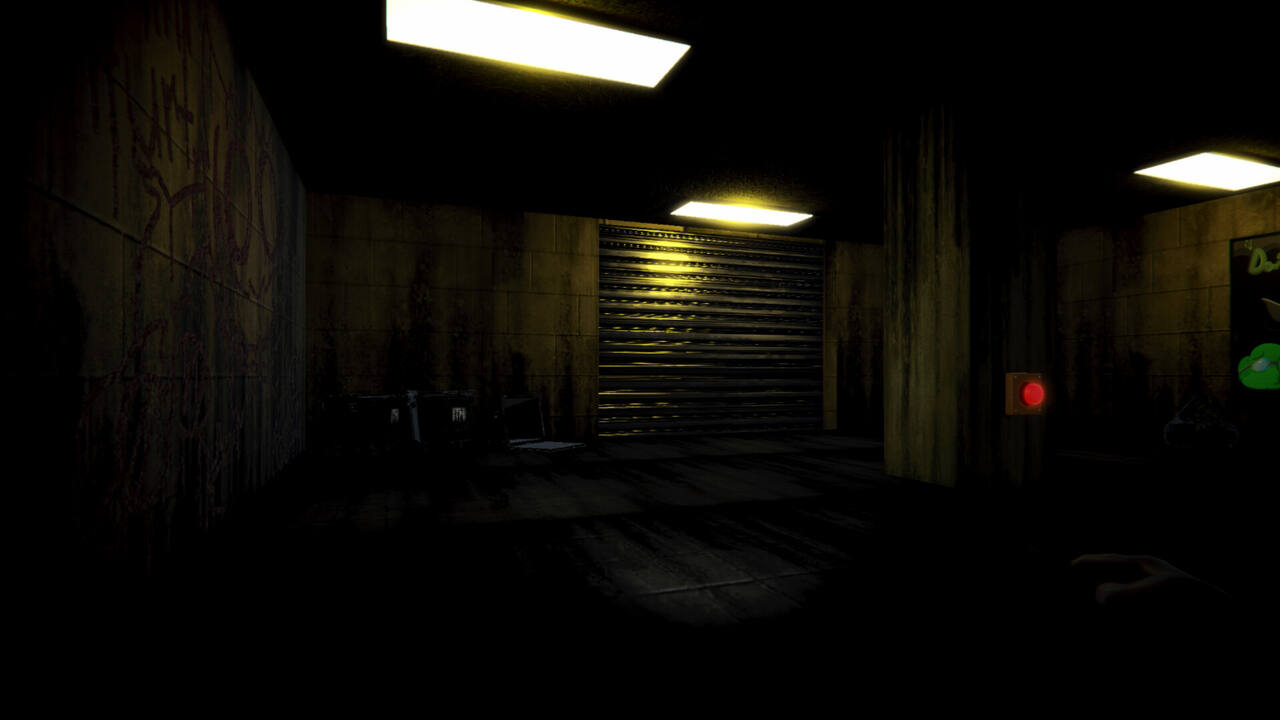
    Returning to the sterile, shadow-drenched corridors of an abandoned psychiatric facility where you once tortured patients is a grim setup for a horror game. But doing so while your friends scream over voice chat as their flashlights flicker out turns a dark psychological premise into a beautifully chaotic group activity. This raw, budget-friendly multiplayer experience asks a simple but deeply unsettling question: how do you survive when the very people you experimented on rise from the dead to reclaim their pound of flesh?

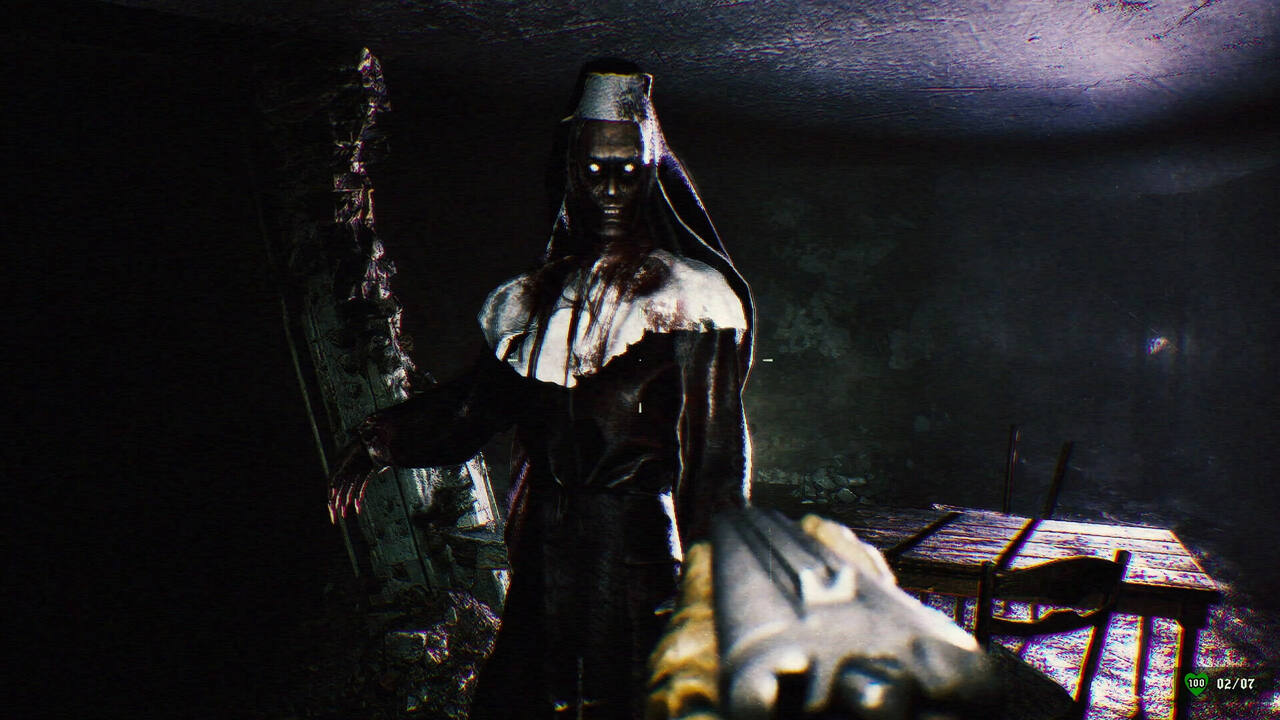
    The core gameplay loop centers on a desperate scavenger hunt. Players step into the shoes of former doctors returning to the scene of their medical atrocities, tasked with finding and destroying cursed books scattered throughout the dark wards. Armed with limited ammunition, a flashlight, and a signal radar, your team must coordinate to survive. The tension is built on a division of labor: while one player stares down at the rhythmic, frantic blinking of the radar to track the books, the others must act as bodyguards, scanning the dark corners for movement.

    The visual language of the game is defined by claustrophobic corridors and a heavy reliance on shadow. You are not superhuman heroes; you are deeply compromised survivors. When your firearms inevitably run out of bullets, you are forced to rely on frantic melee attacks and literal fistfights to push back the manifestation of your past sins. There is a desperate, tactile panic to punching your way out of a dark corner because you mismanaged your resources, and this mechanical desperation is where the game finds its most genuine horror.
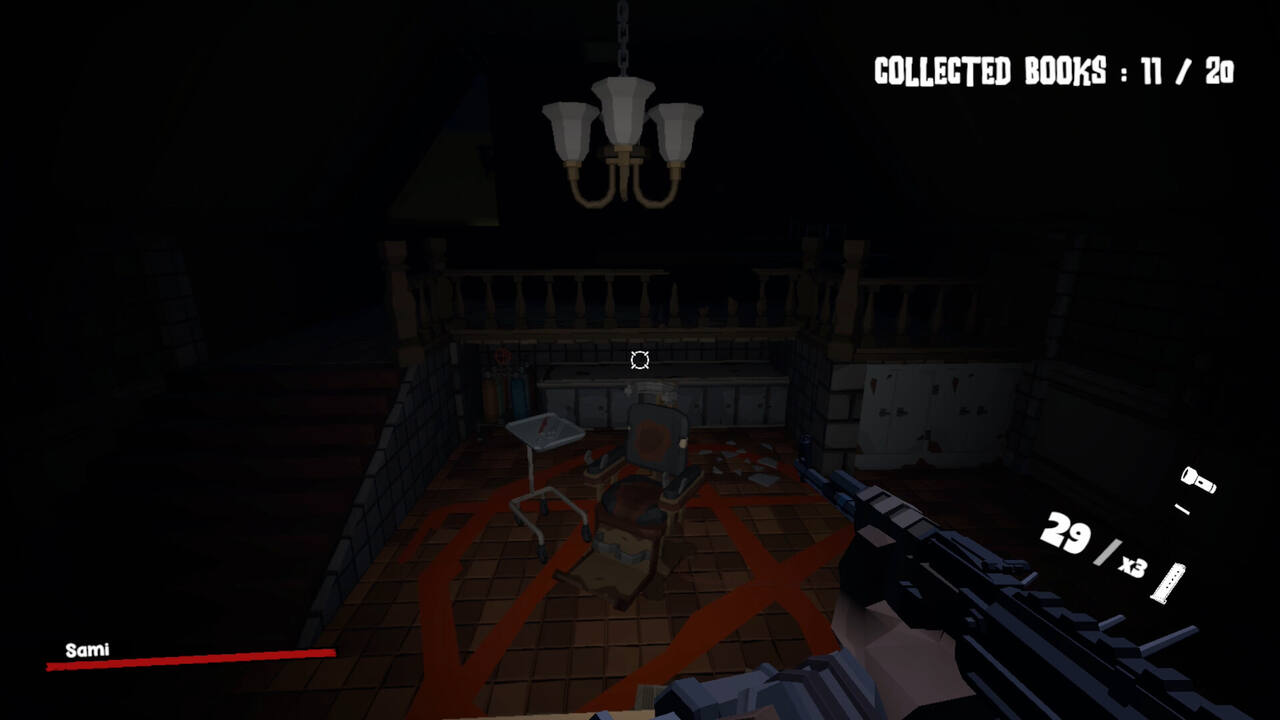
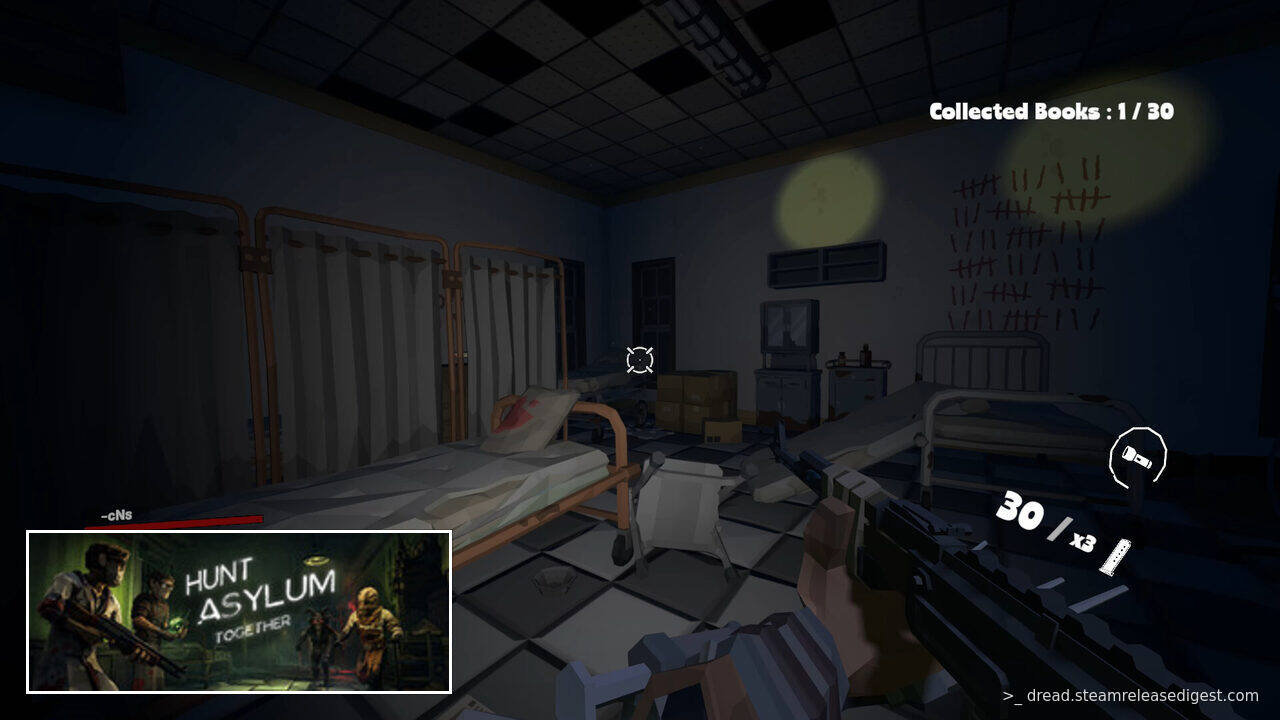
    Hunt Asylum Together gameplay screenshot
    Image courtesy of cnsgames via Steam

    Early player reception highlights the game’s surprising focus on atmosphere over cheap parlor tricks. Those who have spent time with the game praise its ability to avoid traditional, loud jump scares in favor of an overwhelming sense of dread. The objective-based gameplay rewards careful exploration and communication, making it an incredibly addictive “beer and pretzels” horror experience for a Friday night group. For a price point under a dollar, it offers a refreshing alternative to over-engineered, hyper-polished mainstream horror titles.

    However, this budget nightmare is not without its rough edges, and the player base is honest about the technical seams showing. Steam reviews warn that the game suffers from severe performance issues, particularly when players transition indoors. Stuttering, frame rate drops, and multiplayer optimization issues can occasionally turn a high-stakes escape into a frustrating slideshow. Additionally, while the initial hook is highly entertaining, the game lacks the mechanical depth or variety to sustain long-term play. Many positive reviews are left by players with very low playtimes, suggesting it is a game best enjoyed in short, intense bursts rather than as a new lifestyle title.

    This is not a polished, high-art psychological masterpiece designed to linger in your thoughts for weeks. Instead, it is a highly cooperative, wonderfully tense B-movie simulator. If you have a regular game night crew, a spare dollar, and a high tolerance for indie jank, this asylum crawl offers a surprisingly atmospheric playground of guilt, panic, and desperate hallway sprints. It respects your time, asks very little of your wallet, and delivers exactly the kind of unpolished, frantic dread that makes independent PC horror so uniquely memorable.

    Key Facts

    • Developer: cnsgames
    • Publisher: cnsgames
    • Release Date: Jun 4, 2026
    • Price: $0.99
  • WE ARE SO DEAD: The Terrifying Friction of Asymmetric Afterlife Communication

    WE ARE SO DEAD: The Terrifying Friction of Asymmetric Afterlife Communication

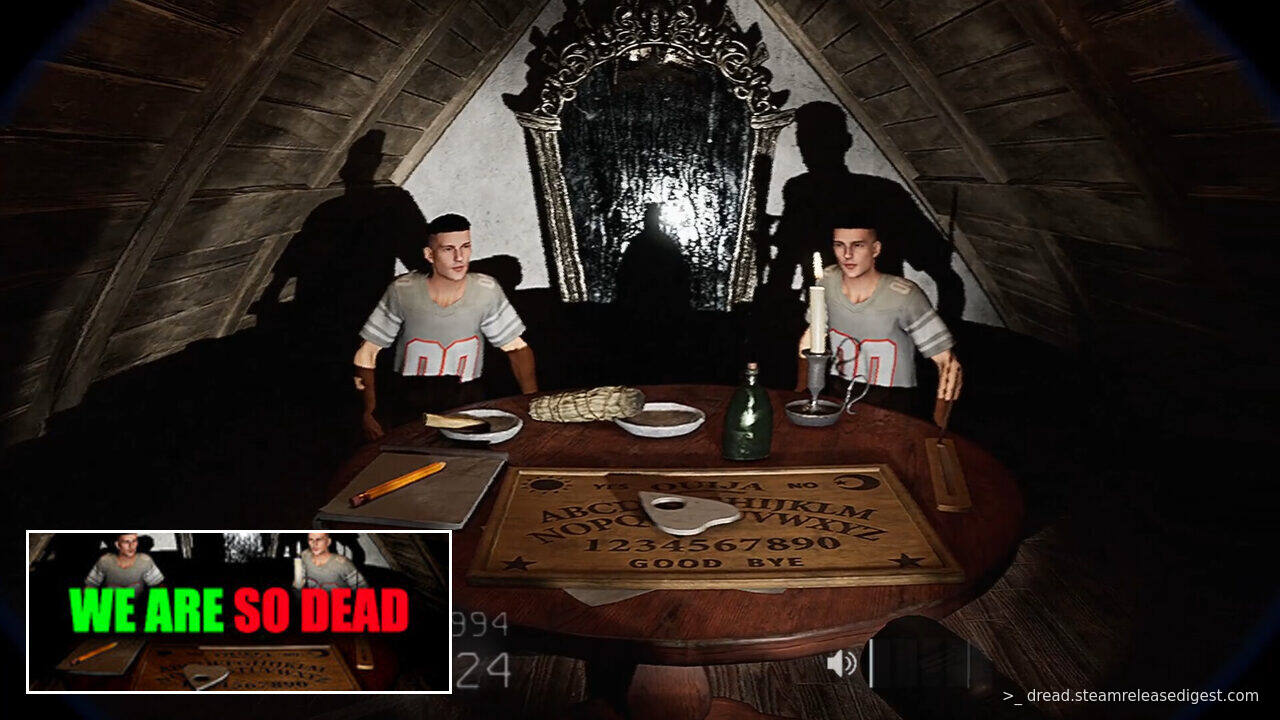
    There is a specific, suffocating brand of panic that occurs when you are dead, invisible, and forced to watch your best friend walk directly into the jaws of a lurking shadow because they misread the letter “B” on a Ouija board. This is the heart of WE ARE SO DEAD, an asymmetric co-op horror game that takes the classic ghost-hunting formula and splits the player base across the veil of mortality right from the start of the match.

    The premise is brilliantly simple. You and your friends (supporting two to six players) must descend through nine increasingly hostile floors of a haunted house to banish a shifting demon before sunrise. The catch is that one of you starts the game already dead. As the ghost, you are the only one who can see the layout of the floor, the location of the vital ritual relics, the invisible hazards, and the shifting form of the demon hunting your living companions. But you cannot speak to them, and you cannot touch the physical world. Your primary tool for guidance is a clunky, physics-based Ouija board, accompanied by minor supernatural parlor tricks like flickering lights, slamming doors, or a desperate, muffled scream if the living players are quiet enough to hear it.

    This design creates a beautiful, agonizing friction. While the living are stumbling through the dark, blind to the dangers around them, the dead player is screaming silently, desperately trying to nudge a wooden planchette to spell out instructions under extreme duress. The dread in WE ARE SO DEAD does not come from hyper-detailed gore or elaborate monster designs; it comes from the sheer vulnerability of isolation and the breakdown of communication. It is a slow-burn puzzle of interpretation played out while a timer ticks down and a monster stalks the halls.

    WE ARE SO DEAD gameplay screenshot
    Image courtesy of REAL PLAYERS via Steam

    Community reception highlights this unique loop as a breath of fresh air in a genre increasingly crowded with generic co-op “friend slop.” Players note that the game intentionally lacks a hand-holding tutorial, forcing groups to spend their first few rounds in a state of chaotic trial-and-error. Rather than frustrating players, this omission has fostered a unique metagame. Groups report having to devise their own customized “codes” and shorthand systems in the lobby between runs to translate the ghost’s cryptic Ouija movements. When a plan finally comes together and a room is cleared, the sense of collective relief and achievement is immensely satisfying.

    However, the game’s Early Access roots do show through the floorboards. While many players defend the sluggish, heavy feel of the Ouija board controls as a thematic representation of a spirit struggling to interact with the physical world, others find that the interface can cross the line from tense to tedious—especially on the brutal eighth and ninth floors, where the communication restrictions can feel more like a mechanical bottleneck than a scary obstacle. Some users also report bugs, such as instant-death glitches when timers expire regardless of correct puzzle solutions, and a reliance on incredibly loud jump-scares that shock the ears more than they chill the spine. Additionally, once a group “solves” the communication puzzle, some of the tension inevitably evaporates, leaving the game with limited long-term replayability unless played with new groups.

    Despite these rough edges, WE ARE SO DEAD is an incredibly clever slice of indie horror. For its modest price of $4.95, it offers an atmospheric, communication-driven puzzle box that prioritizes psychological coordination over mindless action. If you have a dedicated group of friends who prefer the quiet, mounting panic of a failing seance over loud, cheap thrills, this is a haunting well worth entering.

    Key Facts

    • Developer: REAL PLAYERS
    • Publisher: REAL PLAYERS
    • Release Date: Aug 17, 2026
    • Price: $4.95
  • GUTTED: Infested Crypts and the Raw Panic of Retro Action-Horror

    GUTTED: Infested Crypts and the Raw Panic of Retro Action-Horror

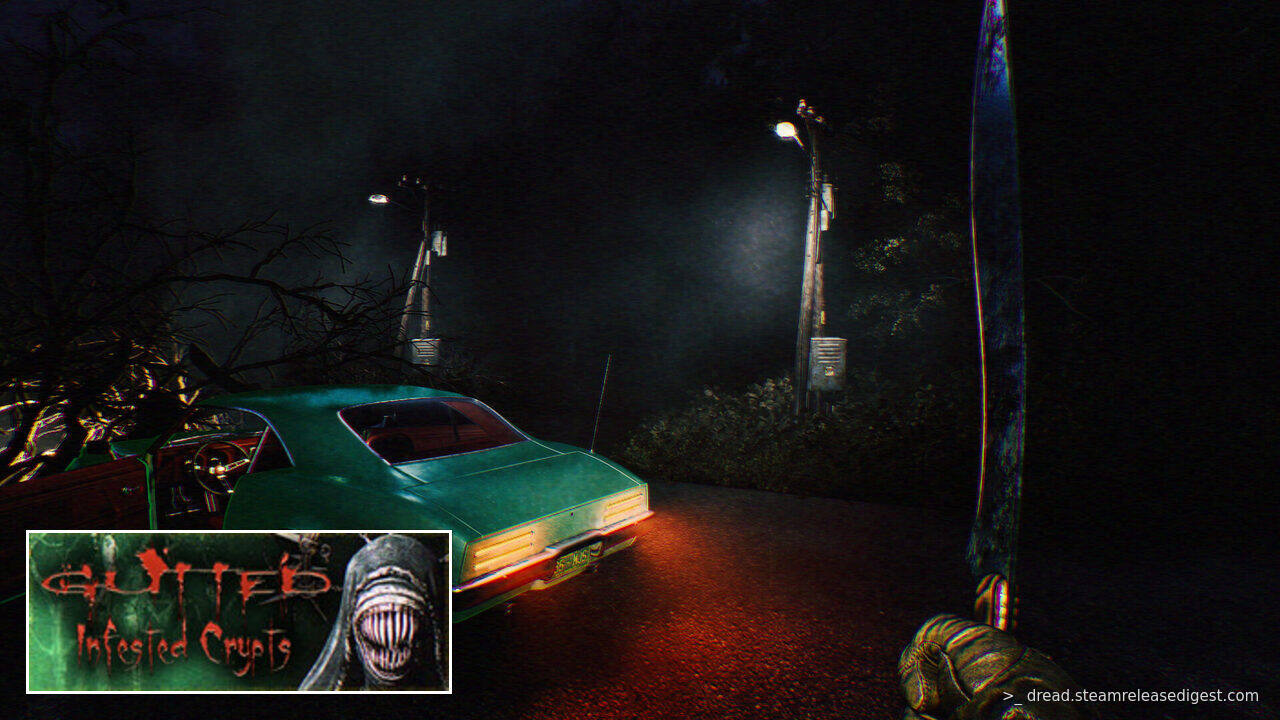
    A wet, frantic skittering echoes down a stone corridor so dark your flashlight barely cuts through the gloom. Suddenly, a silhouette catches the edge of your beam: a grotesque, four-legged mutant dog. As it charges, it unnervingly shifts its weight and rises onto two legs, sprinting at you like a warped human. In SLAM AWAY GAMES’ GUTTED: Infested Crypts, dread is not built on slow-burn psychological metaphors. Instead, it thrives in the immediate, claustrophobic panic of being trapped in a pitch-black labyrinth where the things hunting you move entirely wrong, and your only defense is a handful of heavy, thumping lead.

    The Anatomy of the Descent

    At its core, GUTTED: Infested Crypts is a claustrophobic, first-person action-horror game that feels like a direct transmission from the early 2000s. Dropped into a cursed cemetery with no hand-holding, no clear narrative motivation, and only a dying flashlight, you are forced to descend into decaying subterranean vaults. The loop is simple: navigate the dark, manage your scarce visibility, and survive the swarms of insects and flesh-monsters that call the rot their home.

    What prevents this from being a brainless shooter is how physical the combat feels. This is a game of space management. Your character moves with an intentional, slightly ungainly weight, making panic-induced backtracking feel clumsy and desperate. When you do pull the trigger or swing your machete, the feedback is intensely tactile. Weapons feel remarkably heavy, and the game’s localized damage system means you can shoot limbs off approaching threats to slow them down, turning the frantic gore into a survival mechanic rather than just mindless decoration.

    GUTTED: Infested Crypts gameplay screenshot
    Image courtesy of SLAM AWAY GAMES via Steam

    What the Community Thinks: Visceral Thrills vs. Short Runtimes

    Players who have descended into the crypts are highly enthusiastic about the game’s oppressive, old-school atmosphere. Many praise the sheer kinetic satisfaction of the gunplay, noting that the “thump” of the firearms and the detailed mutilation physics could easily stand alongside much larger horror titles. The sound design does heavy lifting here; the wet crunch of bones and the distant, unseen screeches keep players constantly checking their flanks. Additionally, Steam Deck users report that the game runs beautifully on handheld, making it an excellent choice for a quick, portable nightmare.

    However, the game is not without its rough edges. The most common critique centers on its brevity. Clocking in at around 90 minutes to two hours, GUTTED: Infested Crypts is a brief experience that leaves some players wishing for more variety in both environments and enemy types. Others have pointed out a reliance on “monster closets”—triggers where enemies suddenly burst from the walls—which can make the scares feel predictable on a first playthrough. For players looking for a deep, narrative-driven psychological experience, the game’s lack of story and occasionally confusing, directionless level design can lean too close to “gore-slop” territory.

    The Verdict

    GUTTED: Infested Crypts is not trying to reinvent the wheel, nor is it trying to sell you on a complex psychological mystery. It is a focused, highly atmospheric piece of B-movie horror. It is specifically designed for players who miss the tactile, dark, and unforgiving action-horror games of the early Xbox and PS2 era. If you are looking for a quick, intense, and deeply satisfying crawl through a pitch-black nightmare where every shotgun blast feels like a desperate bid for survival, this is well worth your time—especially at its budget-friendly price point.

    Key Facts

    • Developer: SLAM AWAY GAMES
    • Publisher: SLAM AWAY GAMES
    • Release Date: Aug 17, 2026
    • Price: $8.99
  • The Sinking City 2 and the Claustrophobic Dread of a Drowning Arkham

    The Sinking City 2 and the Claustrophobic Dread of a Drowning Arkham

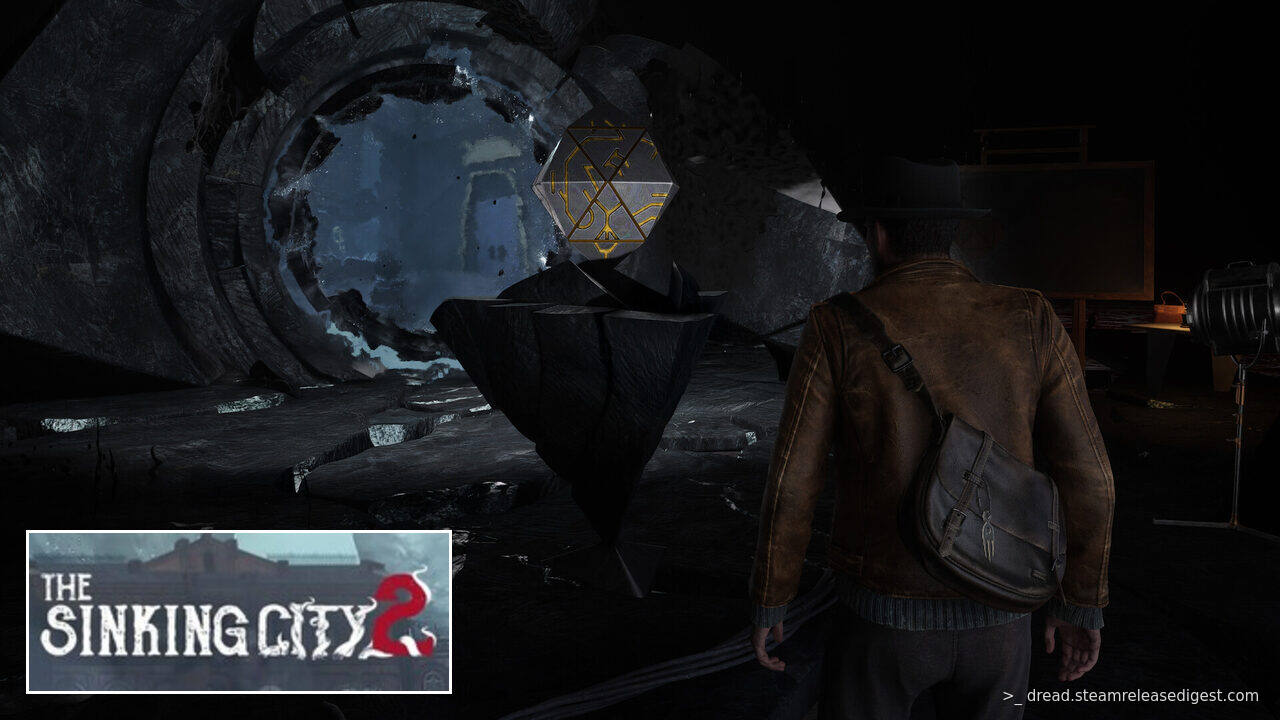
    In the tide-stained alleyways of Frogwares’ latest title, you navigate a half-submerged 1920s metropolis by foot and skiff, rationing scarce ammunition while solving optional occult mysteries to unlock vital shortcuts and survival-saving gear.

    Unlike its predecessor, which often got lost in the vast, open-ended weeds of investigation, this sequel leans fully into the claustrophobic, resource-starved tradition of classic survival horror. You play as a protagonist tracking the fading presence of a loved one whose soul has been trapped in the Dreamlands by a ritual gone horribly wrong. To reach her, you must push through Arkham, a port city buckling under a supernatural deluge where Art Deco architecture is slowly reclaiming its place at the bottom of the sea. The atmosphere is thick with wet, rotting decay; you will creep through dark, abandoned speakeasies, navigate a hospital where science hides its face, and explore a fish market where the catches of the day are actively hostile.

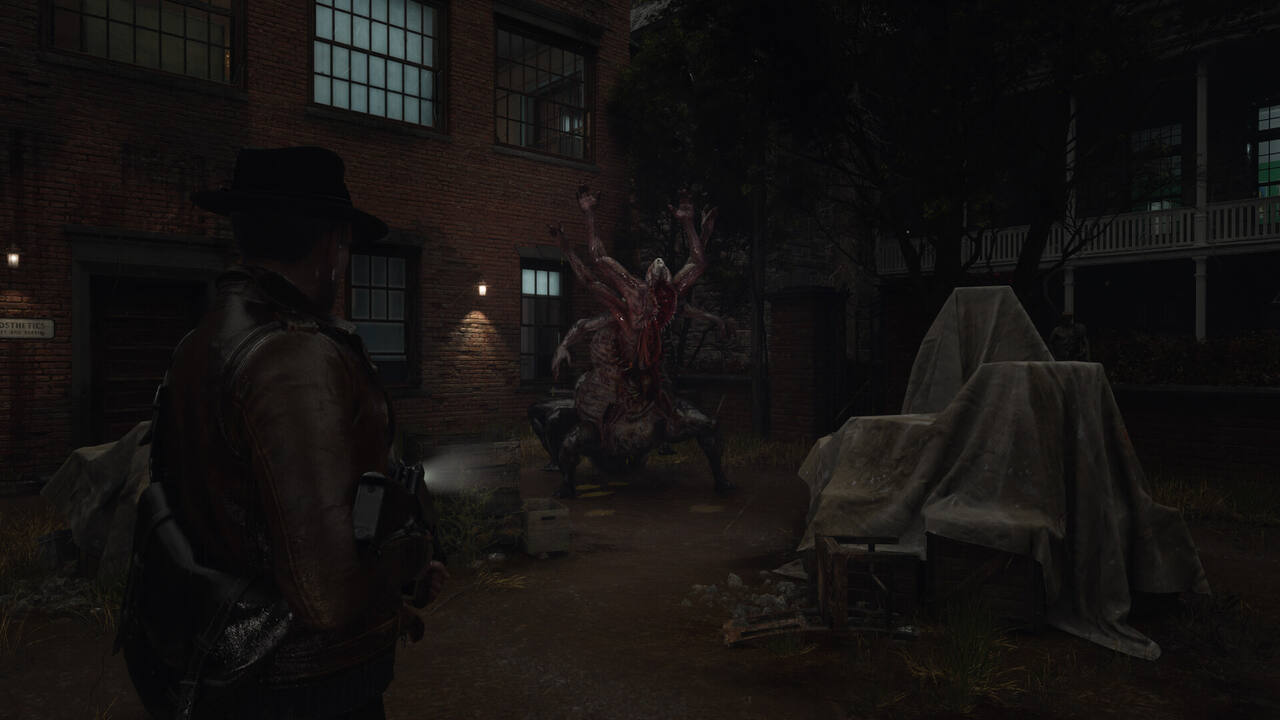
    The core loop is built around a heavy sense of vulnerability and deliberate choice. You are constantly balancing the risk of direct combat against the necessity of retreat, knowing that every bullet spent on the shambling Slither or the Deep Ones surging from the black water is a bullet you might desperately need later. The game refuses to hold your hand through this drowning labyrinth. While you can follow the main path to progress, the game rewards those who slow down. By choosing to decode forbidden journals, sift through ritual residues, and pursue optional side cases, you bypass dangerous areas and secure weapon upgrades that turn the tide against space-bending shadows. It’s a design that uses exploration not as a distraction, but as a vital currency for staying alive.

    The Sinking City 2 gameplay screenshot
    Image courtesy of Frogwares via Steam

    For players who have spent years navigating Frogwares’ historically stiff control schemes, the response to this shift in design is overwhelmingly positive. Steam users have widely praised the slick character movement, noting it feels leaps and bounds ahead of the developer’s previous Sherlock Holmes games, even if it does not quite reach the absolute mechanical polish of modern survival horror titans. The sound design is a particular standout; players wearing headphones report a masterclass in atmospheric audio, where the groaning of water-logged timber and the wet slither of unseen horrors in the dark keep tension wound incredibly tight. It is a focused, personal experience that captures the grim, apocalyptic pulp of Lovecraft’s mythos far better than its sprawling predecessor, celebrating the centennial of the writing of The Call of Cthulhu with genuine stylistic reverence.

    However, the drowning streets of Arkham are currently plagued by some glaring technical blockages. A significant portion of the player base is reporting severe performance issues, drawing direct comparisons to the stuttering problems that marred the launch of The Callisto Protocol. Long shader compilation screens upon starting the game are a common frustration, and several players have experienced frequent crashes that halt progression entirely, forcing some to leave negative reviews despite otherwise loving the gameplay. Additionally, some purists of the first game lament that the deeper, more complex detective mechanics have been scaled back in favor of traditional survival horror tropes, and note that the occasional respawning of enemies can feel more like an artificial chore than a natural escalation of dread.

    Ultimately, this is a game designed for horror enthusiasts who crave atmosphere over simple viscera. It is for players who find fear in a rising water line, the creak of a floorboard, and the agonizing decision of whether to explore one more dark parlor with only two shotgun shells left in the chamber. If you are willing to overlook some launch-week technical stutters—or wait for a performance patch—you will find one of the most cohesive, dread-soaked Lovecraftian worlds ever put to digital screen.

    Key Facts

    • Developer: Frogwares
    • Publisher: Frogwares
    • Release Date: Aug 18, 2026
    • Price: $49.99
  • Rahasya: The Revelation and the Quiet Dread of the Indian Haveli

    Rahasya: The Revelation and the Quiet Dread of the Indian Haveli

    The damp, heavy silence of a shuttered 1992 Indian haveli is a perfect canvas for horror, and this game understands that the most terrifying thing in an empty ancestral home is realizing you are not actually alone. Developed by SuperHorizon Studios, this first-person horror title eschews the loud, bloody spectacles of mainstream horror in favor of a slow-burning, culturally rich nightmare where your worst enemy is your own sense of routine.

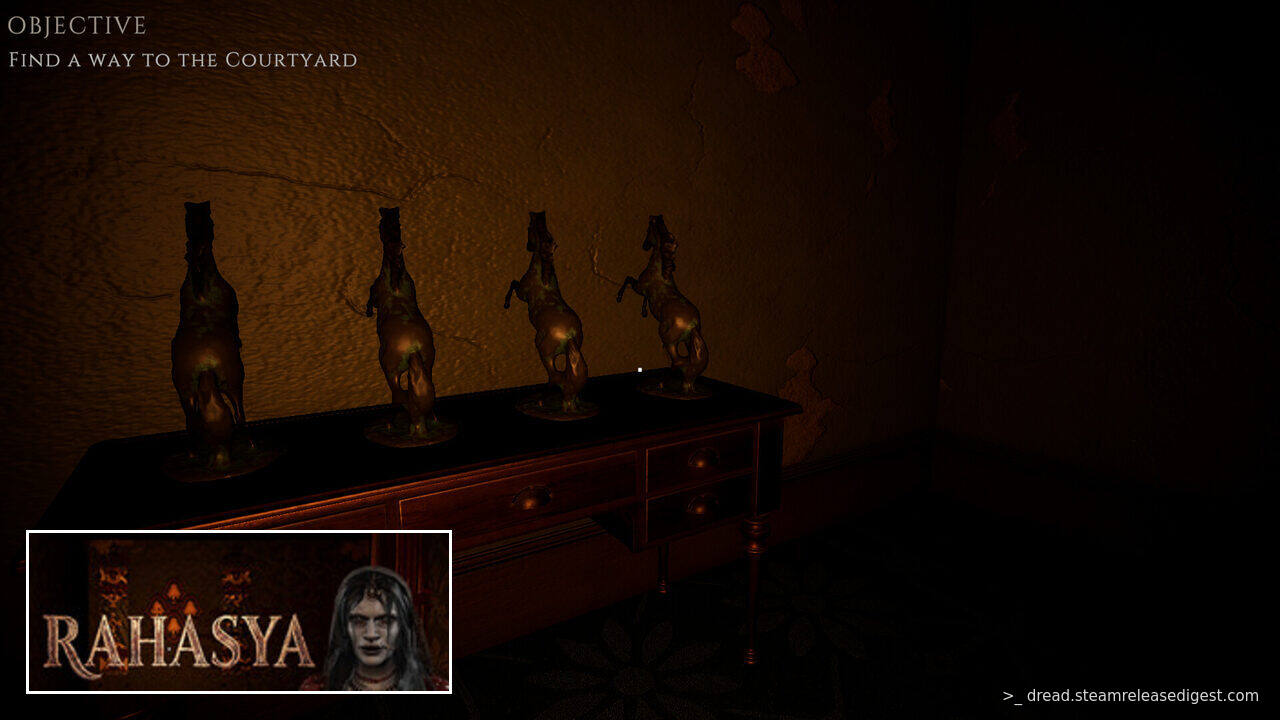
    The premise of the game is rooted in classic gothic tragedy: you have reclaimed your family’s long-sealed ancestral estate, only to find the dust-laden rooms harboring a dark, forgotten history. In this haunted house, there are no weapons. You cannot fight back against the entity that stalks the hallways. Instead, survival hinges on your ability to navigate the intricate layout of the haveli—its courtyards, hidden passages, and locked ritual rooms—while solving puzzles that require careful observation rather than explicit instructions. The level design is non-linear, allowing you to tackle objectives in different orders, but this freedom comes with a distinct lack of safety.

    What elevates the experience above a standard walking simulator is the game’s reactive entity, the “Bhootni.” This is not a monster on a fixed, predictable track. The AI listens to your movement, tracks your sounds, and actively learns your habits. If you consistently use a specific hallway because it feels safe, the entity will catch on and begin waiting for you there. This dynamic forces a tense, constantly shifting playstyle where you must continually find new paths and avoid falling into predictable patterns—or risk getting caught in what players have described as “the loop” of endless chases. The sound design plays a critical role here; every creaking floorboard and distant scrape is a warning that you are being monitored.

    Rahasya: The Revelation gameplay screenshot
    Image courtesy of SuperHorizon Studios via Steam

    Steam players have responded very warmly to the game’s cultural identity, resulting in a 100% positive review rating. In a subgenre saturated with Western asylums and generic haunted houses, the game’s use of Indian mythology and folklore to drive its narrative feels refreshing and distinct. Reviewers frequently praise the tense atmosphere and immersive sound design, noting that the tension builds naturally from the environment rather than relying on cheap, ear-splitting jump scares. The voice acting also receives high marks for drawing players deeper into the mystery of the bloodline, making the unfolding narrative feel personal and tragic.

    However, the community is honest about the game’s rough edges. Early players encountered a scattering of bugs, and while recent patches from the developers have smoothed out much of the experience, some users still feel the title could have benefited from a more rigorous playtesting phase before its launch. There is also a consensus that, when compared to polished international indie heavyweights, the game can feel slightly unpolished. Some reviewers expressed a desire for deeper lore surrounding the Bhootni and more cinematic cutscenes. Additionally, at $8.99, a few players felt the price tag was slightly steep given the game’s modest length, comparing it to other regional horror titles like Kamla which offer similar themes with different levels of polish.

    Ultimately, this is a highly commendable effort that will appeal directly to horror fans who prize atmosphere and setting over high-octane action. If you enjoyed the domestic dread of Kamla or appreciate hide-and-seek horror that respects your intelligence, this Indian gothic tale is well worth your time, bugs and all. It is a quiet, tense exploration of generational guilt and mythological dread that proves you don’t need a massive budget to make a player hold their breath.

    Key Facts

    • Developer: SuperHorizon Studios
    • Publisher: Jabsz Studios
    • Release Date: Jul 10, 2026
    • Price: $8.99
  • 11 Trials of Raz: The Quiet, Paranoid Terror of an Endless Dive Bar

    11 Trials of Raz: The Quiet, Paranoid Terror of an Endless Dive Bar

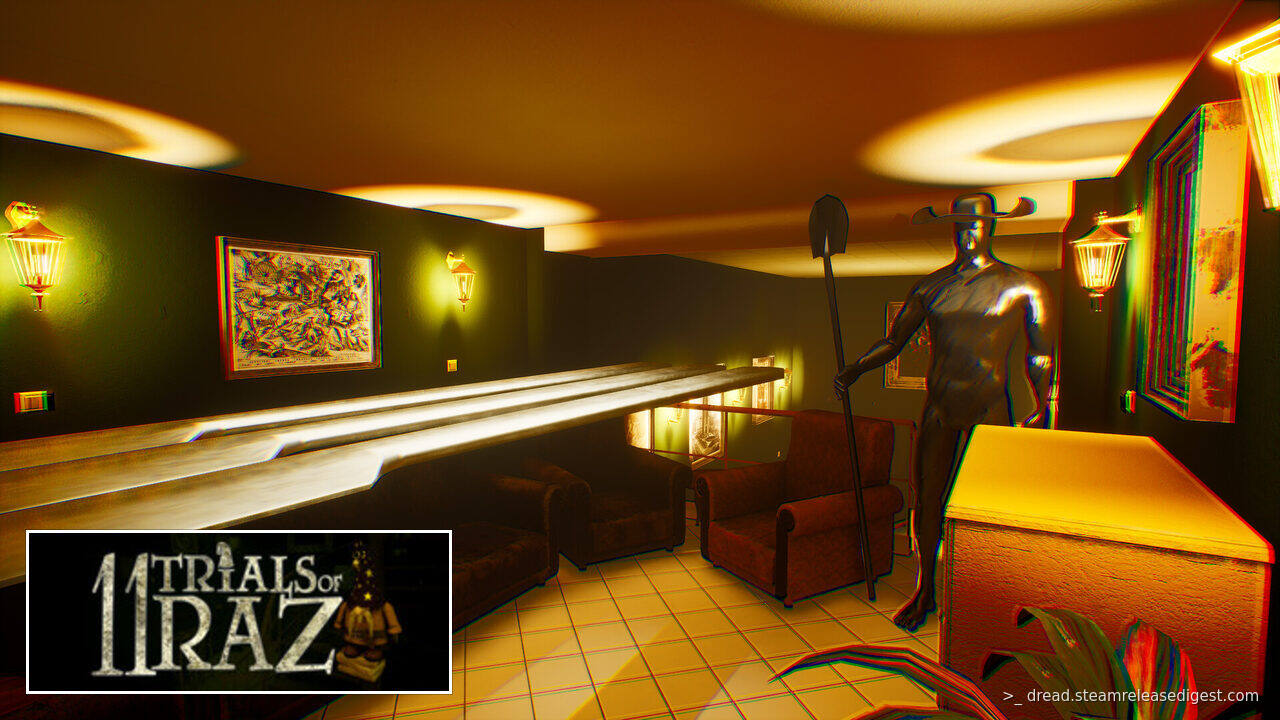
    The quiet weight of an empty dive bar becomes a psychological trap in this release, where survival is measured not by how fast you run, but by how closely you memorize the positioning of a beer glass or the tilt of a barstool. It is an exercise in escalating paranoia, taking the familiar “spot-the-difference” loop popularized by recent observation-horror indies and locking it inside a wood-paneled lounge that refuses to let you go.

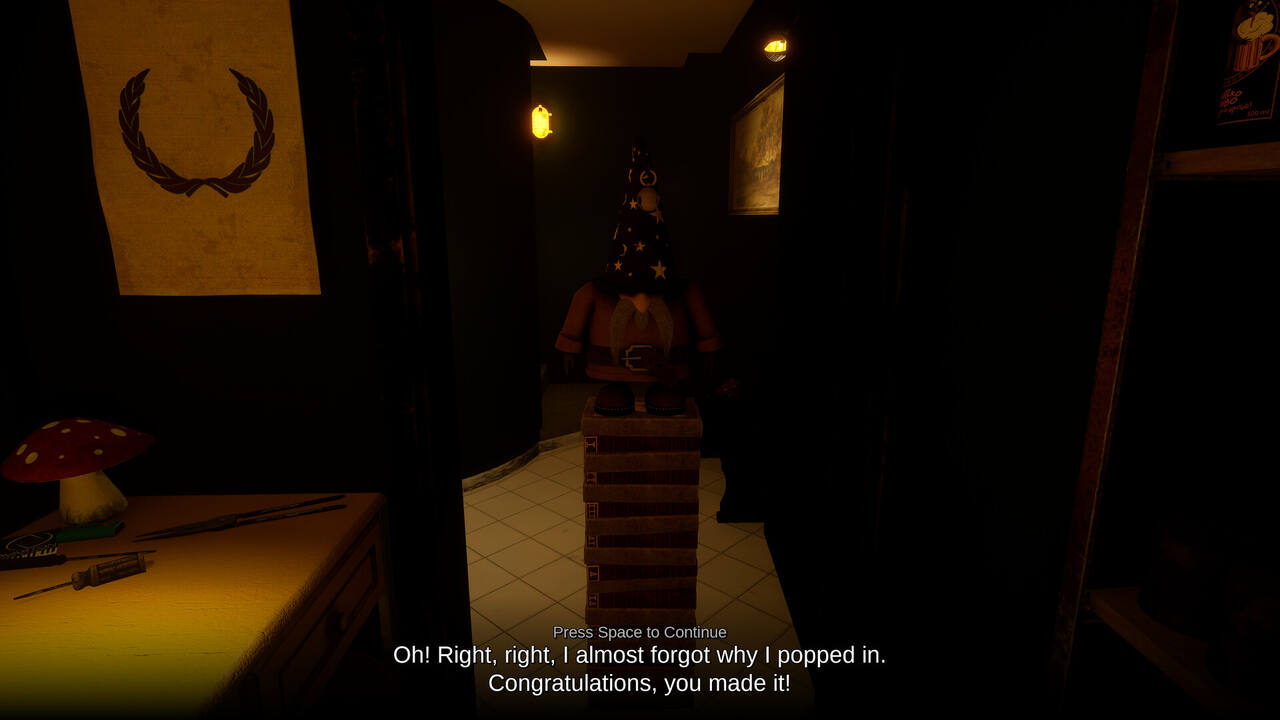
    At its heart, the game asks a simple but agonizing question every time you step into the bar: has something changed? You wake up in a frozen, strangely familiar watering hole where your current trial number is marked on the wall. If the environment looks identical to your baseline memory of the room, you must walk forward into the next loop. If you spot even the slightest anomaly—a shifted piece of furniture, a distorting light, or an object that simply shouldn’t be there—you must turn back. Guess correctly eleven times in a row, and you break free. Make a single mistake, and the loop resets under the watchful, mocking gaze of the mysterious host, Raz.

    What makes this formula work so well is how deeply it weaponizes your own perception across different playstyles. In Chill mode, the anomalies are distinct and serve as a gentle introduction to the layout. But as you step into Normal and Horror modes, the bar stops playing fair. Normal mode introduces “pseudo-anomalies”—deceptive tricks designed to make you second-guess your own memory and hesitate at the threshold. Horror mode strips away any pretense of safety, turning the bar hostile with aggressive distortions of reality, psychological tricks, sudden scares, and mistakes that do more than just reset your count—they actively punish you for your lack of attention.

    11 Trials of Raz gameplay screenshot
    Image courtesy of Arcanix Studio via Steam

    The auditory landscape plays a massive role in building this claustrophobic tension. Supported by full stereo and surround sound design, the creaks of the floorboards, the hum of the neon beer signs, and the quiet whispers of the bar demand that you play with your ears as much as your eyes. A sound coming from the wrong corner of the room is often your only clue that the loop has corrupted. Crucially, the developer has built this gauntlet with camera comfort and options to play without timed inputs, ensuring that the difficulty lies purely in your own head rather than frustrating physical controls.

    Player consensus highlights how addictive this cycle of self-doubt becomes. Steam reviewers have praised the game’s meticulous attention to detail, noting that even after several hours of play, they are still discovering new anomalies and environmental secrets. The bar is dense with small, tactile elements, forcing you to study the environment with a level of focus that standard horror games rarely demand. While the difficulty of Horror mode is steep, players find that it never feels cheap or impossible—it simply demands absolute concentration.

    Interestingly, players have also noted that despite the isolation of the loop, you never feel truly alone. Unsettling characters occasionally populate the space. While they are deeply creepy and add to the mounting dread, they also serve as a strange comfort—a sign that life exists somewhere within this twisted game, even if that life is staring back at you with unblinking eyes.

    The game’s economy is another point of praise among its audience. For the price of a sandwich, players are finding a highly replayable psychological puzzle box that comfortably stretches past the ten-hour mark for completionists aiming to conquer the brutal final difficulty. It manages to balance the frustration of a reset with the immediate, “just one more run” pull of an addictive puzzle.

    This is not a game of mindless violence or bloody spectacles. It is a slow, methodical test of awareness that relies on the player’s own mind unraveling under pressure. If you are a horror fan who prefers a held breath to a loud jump-scare, and if you enjoy the tension of a nagging suspicion that a shadow has just moved, this clever indie puzzle is well worth your time.

    Key Facts

    • Developer: Arcanix Studio
    • Publisher: Arcanix Studio
    • Release Date: Jul 10, 2026
    • Price: $7.99
  • 180° and the Unforgiving Art of Never Turning Your Back

    180° and the Unforgiving Art of Never Turning Your Back

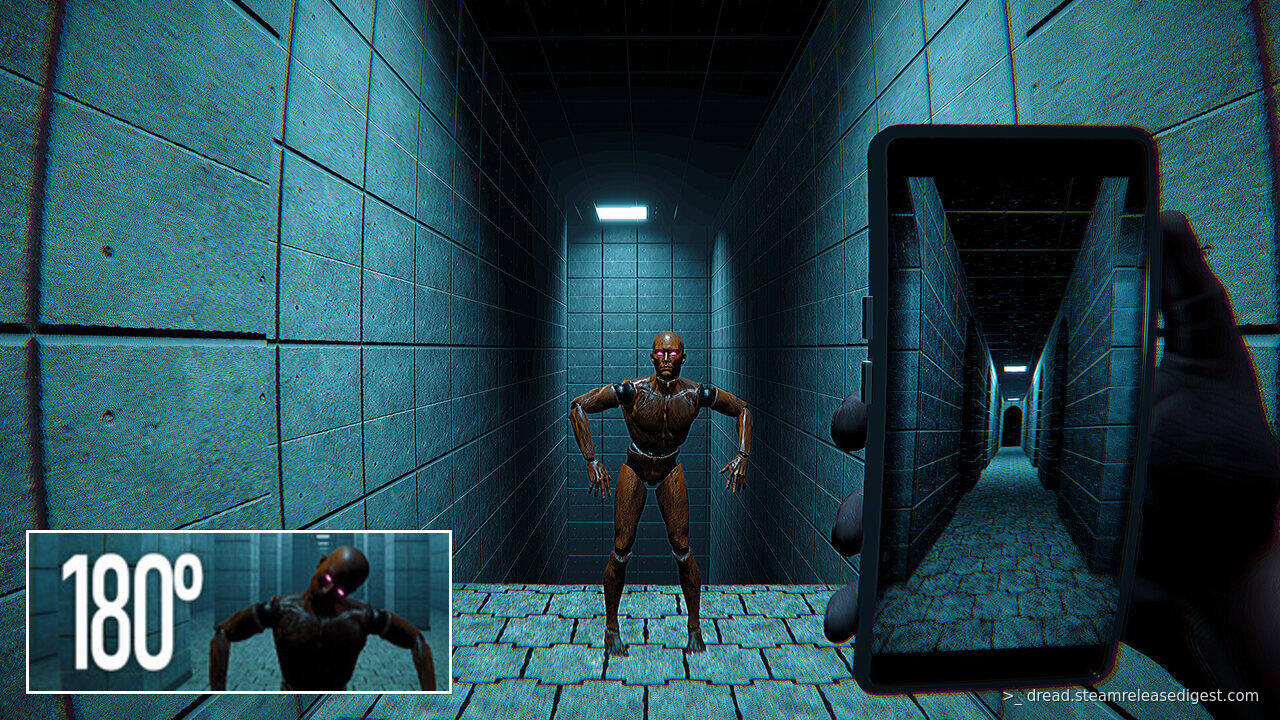
    A single involuntary blink is all it takes for the space behind you to shrink. You cannot see the shape pursuing you when your eyes are open, but you know with absolute certainty that every time your eyelids flutter down—even for a microsecond—it takes a silent, heavy step forward. To survive, you must master the unnatural coordination of walking backward through unfamiliar geometry, keeping your gaze fixed on the empty air where you know the threat is lurking. It is a struggle against your own biological imperatives, turning a simple bodily function into a countdown to your own demise.

    This micro-horror experience from developer ABKB is built entirely around a single, highly focused mechanic. It takes the classic “Weeping Angel” trope—an entity that only moves when you aren’t looking at it—and strips away almost everything else. There are no elaborate inventory systems, no complex lore documents to sift through, and absolutely no in-game text. It is a pure exercise in spatial awareness and mechanical tension, designed to be completed in a single, breathless thirty-minute sitting. By removing language entirely, the game relies solely on environmental design and the raw panic of proximity.

    The Mechanical Dread of the Forced Blink

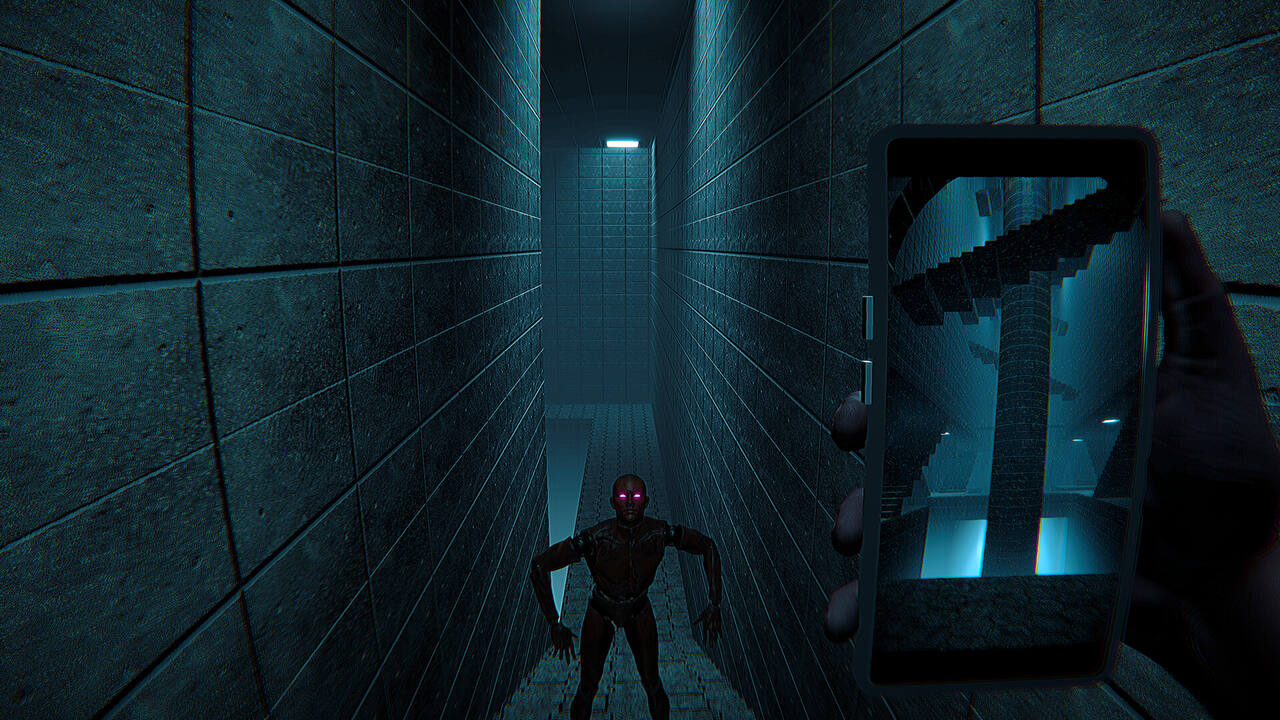
    The core loop of the game is deceptively simple: you must navigate a series of eerie, abstract rooms while constantly retreating. Because looking away means death, your movement is entirely inverted. You are forced to stumble backward into the dark, hoping you do not collide with a wall, hit a dead end, or fall into a hazard. The developer elevates this familiar setup by introducing a forced blinking mechanic. Your vision periodically cuts to black for a brief moment, simulating a blink. In that fraction of a second, the dry, scraping sound of a shifting presence makes it clear that the distance between you and your pursuer has closed.

    180° gameplay screenshot
    Image courtesy of ABKB。 via Steam

    The environmental puzzles are minimalist but effective, serving as roadblocks that force you to break your gaze and adapt. One standout sequence involves a pitch-black room where the player must navigate with highly limited visibility. Here, the tension spikes dramatically because you cannot rely on visual confirmation to keep the entity at bay. You are forced to rely on sheer instinct, sound, and spatial memory to survive. By keeping the interface clean and removing any HUD clutter, the game creates an immediate, visceral connection between the player’s real-world anxiety and the avatar’s struggle.

    What the Community Thinks: Pure Concept vs. Limited Depth

    Players who have braved this short nightmare are broadly appreciative of its atmospheric focus. Steam reviews highlight the game’s ability to cultivate a quiet, creeping anxiety without relying on a constant barrage of loud, cheap jumpscares. The simple puzzles are generally praised for being intuitive and satisfying to solve in the moment. For many, the sheer tension of having to look over their shoulder, combined with the clever blackout sequence, makes the short playtime feel incredibly dense and memorable. It captures the essence of classic internet creepypastas, where the terror comes from a simple, unyielding rule.

    However, the game’s hyper-focused nature is also its main point of criticism. Several players noted that once the novelty of the walking-backward mechanic wears off, the experience can feel a bit surface-level. Without a variety of enemy types, escalating behaviors, or more complex, punishing puzzles, the gameplay can feel slightly too easy for seasoned horror veterans who are already desensitized to these kinds of tension loops. Additionally, the audio design has divided players. While the silence amplifies the dread of a sudden footstep, some felt the near-total lack of ambient audio or a subtle soundtrack made the quieter corridor segments feel a bit hollow rather than genuinely tense.

    The Verdict

    This is not a sprawling psychological narrative or a mechanically complex survival game. It is a bite-sized, atmospheric experiment that does exactly what it sets out to do. If you have half an hour to spare and want a concentrated dose of tension that respects your intelligence, this quiet indie title is well worth the entry price. It is an ideal palate cleanser for horror fans who prefer the cold sweat of anticipation to the loud shock of a gore-splattered jumpscare. It serves as a promising proof of concept, leaving players eager to see how this developer might expand these ideas in the future.

    Key Facts

    • Developer: ABKB。
    • Publisher: ABKB。
    • Release Date: Jul 10, 2026
    • Price: $3.20
  • Midnight Massacre: Retro Campfire Dread and a Surprising Shotgun Afterparty

    Midnight Massacre: Retro Campfire Dread and a Surprising Shotgun Afterparty

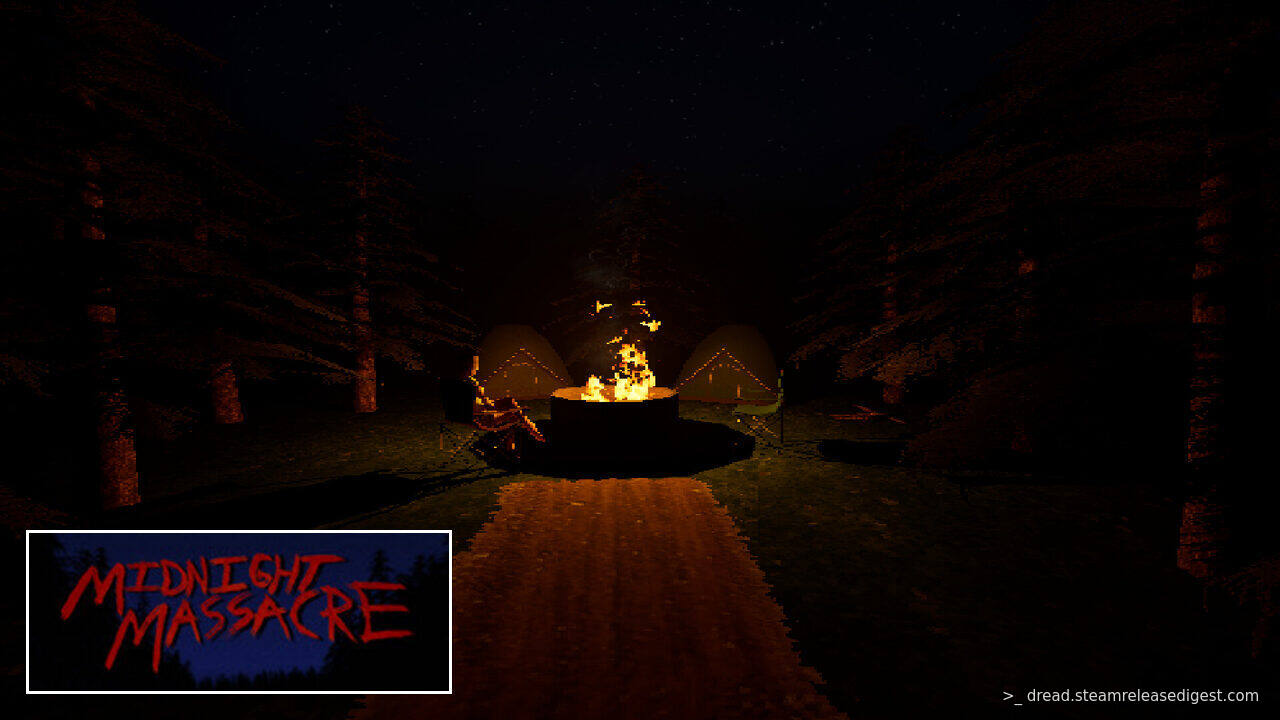
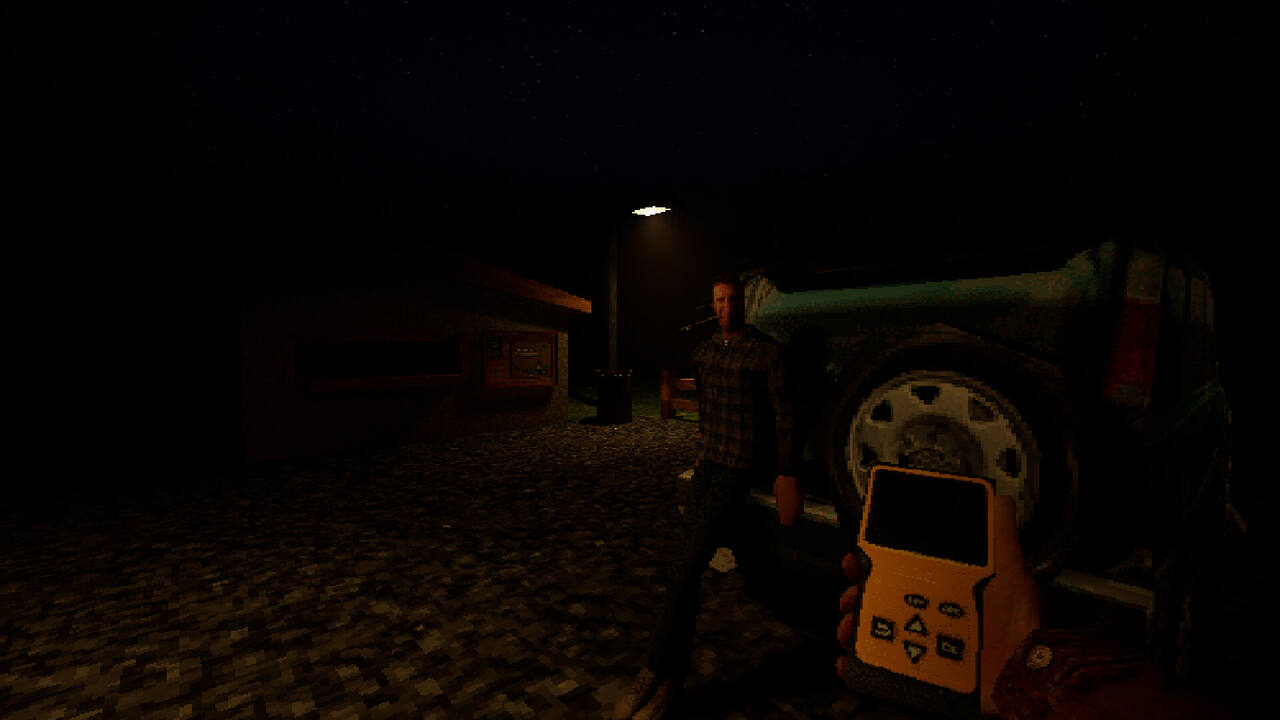
    You are deep in the pitch-black Angeles Mountains, your friends’ car has broken down, and when you try to hurry through the dark campsite to help them, the game strips away your ability to run. This deliberate, forced slowdown is the mechanical heart of Midnight Massacre. By locking your sprint key for a large chunk of the experience, developer Creepshow forces you to slowly digest the ink-black woods, ensuring every step feels heavy, deliberate, and thick with the threat of what might be lurking just beyond the tree line.

    The Anatomy of a Low-Fi Night Out

    At its core, Midnight Massacre is a linear, low-fi walking simulator that trades on the classic “lost in the woods” trope. The setup is deceptively simple: a late-night call for roadside assistance draws you into a campsite shrouded in shadow. Rather than bombarding you with high-fidelity gore or sensory overload, the game constructs its tension through a moody, retro aesthetic and a remarkably effective original soundtrack that keeps the shivers running down your spine. Your time is spent exploring the quiet campsites, interacting with objects, and talking to your stranded companions.

    What prevents this walk in the dark from becoming a sterile exercise in horror tropes is its writing. The characters you meet are symbols of campy horror, delivering dialogue that sits comfortably in the realm of B-movie charm. Yet, players have noted that this slight silliness actually makes the conversations feel more authentic and human. It captures that specific, nervous energy of friends trying to laugh off a bad situation in the middle of nowhere, making the eventual descent into something far more sinister land with a surprising amount of weight.

    Midnight Massacre gameplay screenshot
    Image courtesy of Creepshow via Steam

    Where the Shadows Stretch and the Shotgun Sings

    Player feedback paints a clear picture of a game that punches well above its five-dollar weight class, though not without a few rough edges. On the positive side, the community has roundly praised Midnight Massacre for prioritizing a thick, spooky atmosphere over cheap, ear-splitting jump-scares. It is a smooth, remarkably stable experience free of the technical bugs that often plague micro-budget indie horror. Furthermore, once you survive the main narrative, the game unlocks a bizarrely delightful post-game arcade mode complete with cheats. Players have found immense joy in this unexpected shooting gallery, praising the developers for loosening up on genre boundaries by handing the player a punchy, satisfying shotgun to blast away at the darkness.

    However, the night in the Angeles Mountains is not entirely seamless. That same forced walking mechanic that builds early-game tension can wear out its welcome, leading to moments of tedious back-and-forth backtracking where you desperately wish you could just jog. The pacing also hits a harsh snag at the climax. The final confrontation—a showdown with a hostile wolf—has left some players cold due to its punishing, borderline-impossible difficulty spike that threatens to derail an otherwise smooth ride. Additionally, those who dive deep into the arcade mode have noted that while the shotgun feels fantastic to fire early on, its utility falls off sharply as the arcade waves scale in difficulty, leaving you feeling underpowered just when the action peaks.

    The Verdict

    Midnight Massacre is a compact, highly atmospheric treat for horror fans who miss the era of PlayStation-style lo-fi dread. It understands that the quiet hum of the forest and a brilliant soundtrack are far scarier than a monster screaming directly into your headphones. If you can forgive some slow backtracking and a frustratingly steep final boss fight, you will find a wonderfully moody campfire tale that doesn’t take itself too seriously—and rewards your survival with one of the most surprising, action-packed post-game modes in recent memory.

    Key Facts

    • Developer: Creepshow
    • Publisher: Creepshow
    • Release Date: Jun 5, 2026
    • Price: $4.99
  • Nowhere To Go: Finding Quiet Dread Beneath the Mascot Clichés of Home Forest

    Nowhere To Go: Finding Quiet Dread Beneath the Mascot Clichés of Home Forest

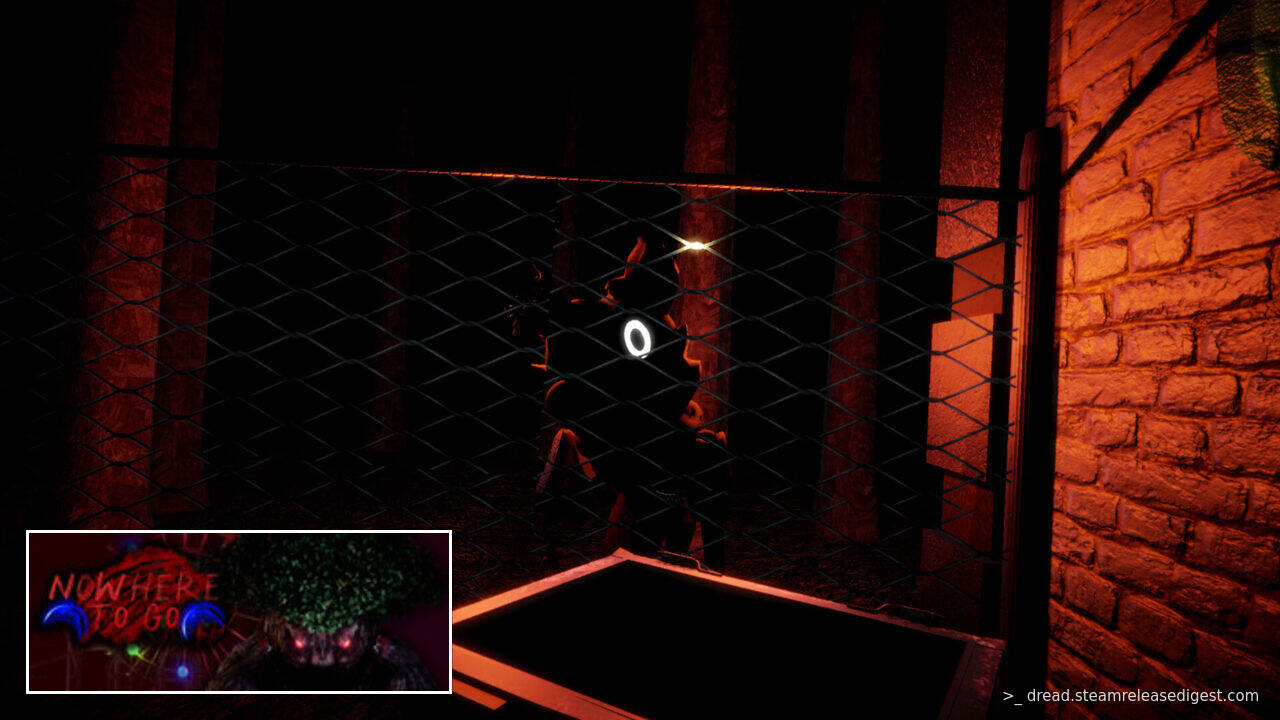
    Quietly maneuvering through the shadow-draped ruins of the Home Forest theme park, you must crack environmental puzzles and employ cautious stealth to evade the mutated caricatures of a forgotten children’s cartoon.

    The Echoes of Home Forest

    Nowhere To Go cast you as a police officer responding to a routine, late-night call at a recently shuttered attraction. Home Forest was once a sanctuary of joy built on the wholesome values of “Forest Companionship,” an old television show that preached kindness, friendship, and growing up together. Naturally, in the grand tradition of corporate horror, something went terribly wrong behind the scenes. Your investigation quickly devolves into a search for the truth behind the horrible experiments that took place beneath the colorful facade, forcing you to navigate the park’s decaying environments, solve puzzles, and survive encounters with the monstrous entities left behind.

    This is mascot horror in its purest, most familiar form. For $4.99, players receive the base Chapter 1, which introduces the core gameplay loop of exploration, puzzle-solving, and sudden, high-tension chase sequences. Amidst the darkness, the game also promises the intriguing possibility of an ally—someone, or something, that still remembers what Home Forest was like before the rot set in. It’s a classic setup that relies heavily on the uncanny juxtaposition of childhood innocence and body horror.

    Familiar Shadows and Mechanical Roughness

    If you have spent any time in the indie horror scene over the last few years, you will immediately recognize the DNA of Nowhere To Go. The game draws heavy, undeniable inspiration from genre giants like Poppy Playtime and Indigo Park. From the moment you approach the park’s entrance—greeted by a golden statue of the park’s owner and mascot, accompanied by eerie music and nostalgic cardboard cutouts—the thematic debt is obvious. It does not reinvent the wheel, preferring to walk a well-trodden path of ruined nostalgia rather than forging its own aesthetic trail.

    Nowhere To Go gameplay screenshot
    Image courtesy of Trinity Studios via Steam

    According to player feedback, this familiarity is a double-edged sword. On one hand, players who love the mascot horror subgenre find a lot to appreciate here. The environmental design manages to capture a genuinely creepy atmosphere, translating the colorful ruins of Home Forest into a space that feels appropriately dead and abandoned. The story, while occasionally leaning into cheese, offers a solid enough mystery to keep players intrigued through its brief runtime.

    On the other hand, the game is heavily plagued by technical jank and design oversights. Players note that the animations are stiff and awkward, and the gameplay can feel frustratingly clunky. The optimization appears highly inconsistent; while some players report a smooth experience on their rigs, others complain of poor optimization that hinders the experience. More glaringly, the game suffers from odd bugs, including issues during its chase sequences and a bizarre glitch where players walking near a treehouse find themselves abruptly and randomly teleported inside it. Furthermore, the game’s puzzles and objectives suffer from a lack of direction, leaving players wandering aimlessly through areas that feel artificially padded.

    The Verdict: Is It Worth the Trip?

    Nowhere To Go is not a polished masterpiece of psychological dread, nor does it strive to be. It is a budget-friendly, rough-around-the-edges mascot horror game that serves as a decent distraction for fans of the subgenre. If you can overlook the stiff animations, the lack of clear direction, and the occasional jarring bug, there is an atmospheric, nostalgic creepiness to Home Forest that makes the low price point palatable.

    This game is best suited for horror enthusiasts who enjoy the specific aesthetic of corrupted childhood mascots and don’t mind supporting a small indie team working through early-release hurdles. If you are looking for highly polished stealth or groundbreaking mechanics, you may want to look elsewhere; but if you want an affordable, eerie hour of exploration with a cheesy storyline, Nowhere To Go is a worthwhile weekend curiosity.

    Key Facts

    • Developer: Trinity Studios
    • Publisher: Trinity Studios
    • Release Date: Jun 6, 2026
    • Price: $4.99
  • The Claustrophobia of Demonic Agency in A talk beneath the tree

    The Claustrophobia of Demonic Agency in A talk beneath the tree

    A single conversation beneath a quiet tree carries the weight of a slow-motion existential collapse.

    In A talk beneath the tree, the horror is intimate, quiet, and deeply rooted in the terror of losing control over your own skin. Developed and published by RALWORKS, this indie visual novel strips away the loud, frantic tropes of contemporary horror to focus entirely on a confrontation between two old friends. It treats demonic possession not as a spectacle of contorted limbs and gravelly voices, but as a quiet, devastating medical reality. In this world, magic is a curse of containment: to wield power is to host a demon, and to host a demon is to be a walking disaster waiting to happen.

    The Claustrophobia of Choice

    The setup is deceptively simple and tightly focused. Sylvain is fleeing the Alchemical Institute—a fortress designed to keep volatile, possessed mages under permanent surveillance. Celeste, his friend and a fellow researcher who has made peace with her confinement, pursues him. They stop beneath the branches of an ancient tree, and the game begins. Over the course of a brief, forty-minute playthrough, you guide their conversation, playing as both Sylvain and Celeste.

    This dual-perspective mechanic is where the game’s tension truly tightens. By forcing you to make decisions for both characters, the game denies you the comfort of a traditional protagonist. You cannot simply root for Sylvain’s freedom or Celeste’s safety; instead, you are complicit in their mutual undoing. You choose what they say, probing at each other’s deepest insecurities and fears, knowing that any path you choose will ripple outward into one of 27 distinct epilogues. These epilogues are structured like novel chapters, fully voiced like audiobooks, and accompanied by a melancholy acoustic guitar soundtrack that underscores the tragedy of their situation.

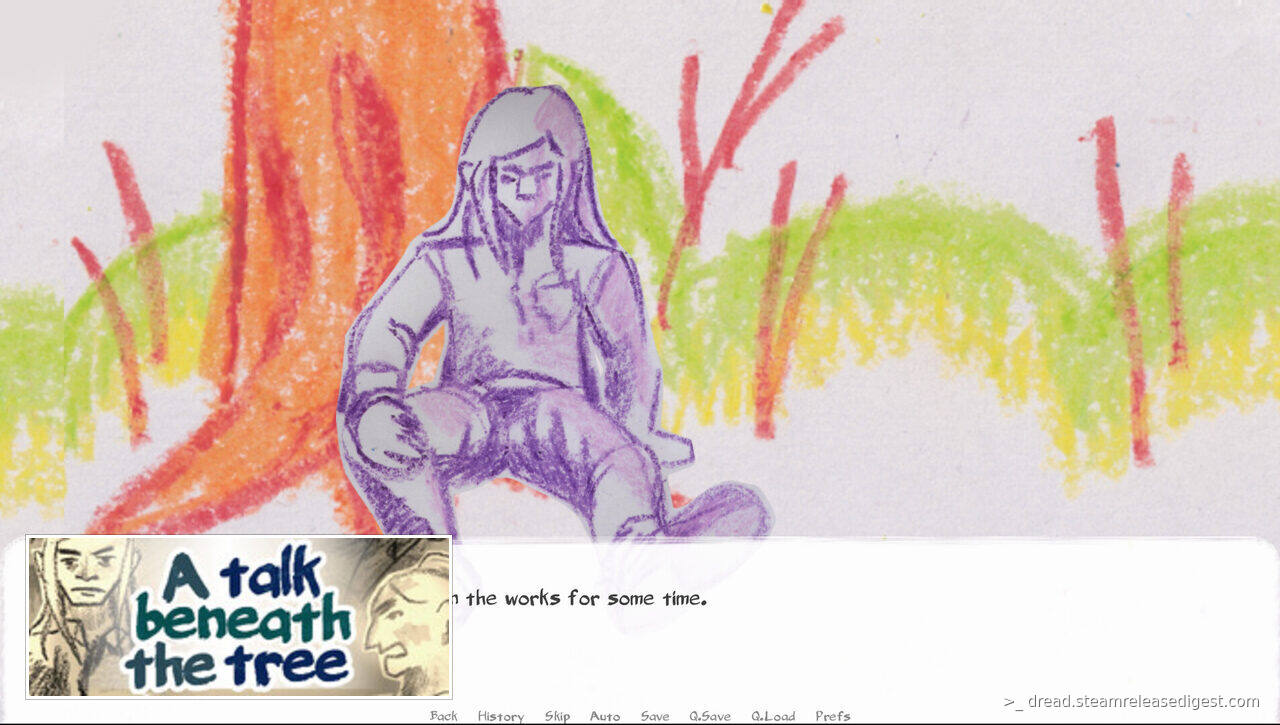
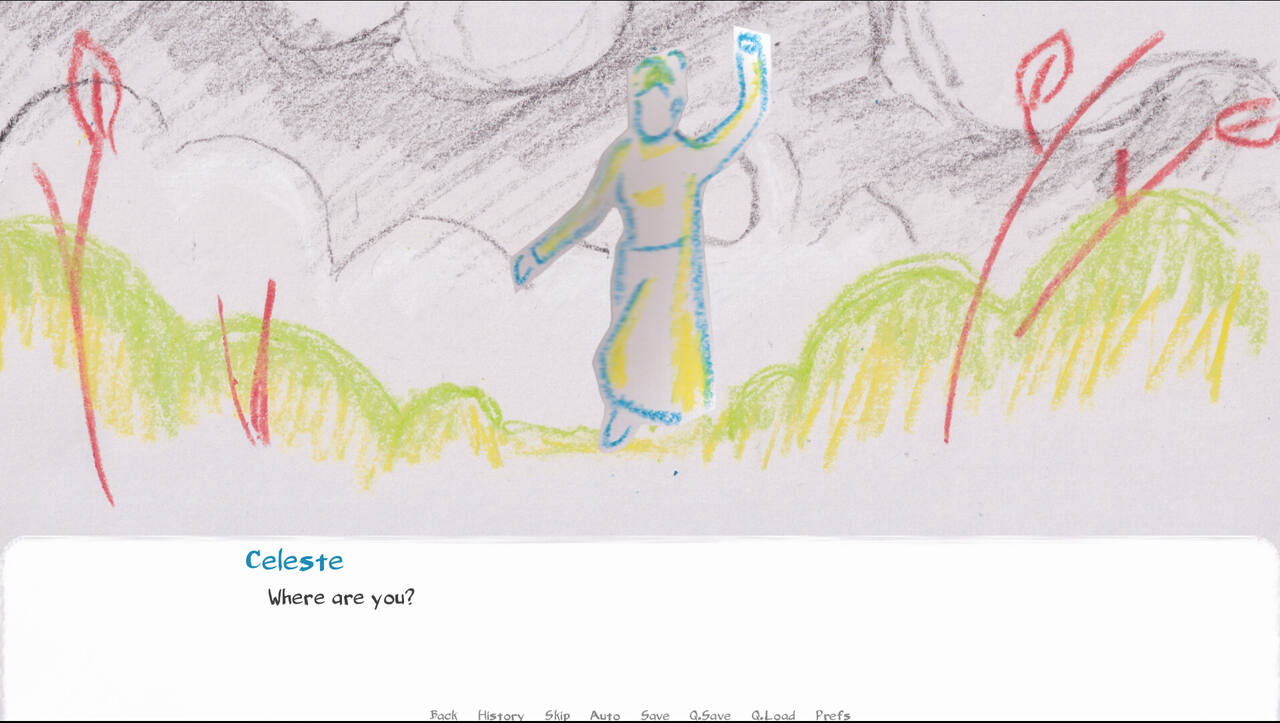
    A talk beneath the tree gameplay screenshot
    Image courtesy of RALWORKS via Steam

    What the Community Thinks: Human Resonance and Rough Edges

    The response from those who have sat beneath the tree is overwhelmingly positive, with players praising the game’s profound emotional weight. The horror here is psychological and existential; one player noted that the characters’ struggle with their possessed bodies struck a deeply personal chord, mirroring the real-life claustrophobia of chronic medical illness and the feeling of being trapped inside your own flesh. It is this specific, uncomfortable vulnerability that elevates the game beyond standard dark fantasy. It feels like a project made with genuine human care, standing out in a crowded market of formulaic, asset-flipped horror titles.

    However, A talk beneath the tree is not a flawless masterpiece, and the player reviews are honest about its limitations. The visual style, while striking and unique, is described as “rough around the edges”—an uncompromising artistic statement that may alienate players looking for high-budget, polished anime aesthetics. Additionally, because the narrative relies on 27 different endings, completionists will run into some mechanical friction. The core conversation itself is not fully branching in its midsection, meaning that subsequent playthroughs require you to skip through repeated dialogue to reach the distinct narrative payoffs of the different epilogues.

    The Verdict

    A talk beneath the tree is a triumph of small-scale, literary dread. It is a game designed for players who value atmosphere over action, and who prefer the agonizing weight of a difficult conversation over a cheap jump scare. If you are looking for visceral gore or bombastic action, this is not your beat. But if you appreciate quiet, character-driven psychological horror that respects your intelligence and leaves you with a lingering sense of melancholy, this $4.99 experience is an essential addition to your Steam library.

    Key Facts

    • Developer: RALWORKS
    • Publisher: RALWORKS
    • Release Date: Jun 5, 2026
    • Price: $4.99