Author: sitemill

  • Astrophobia and the Quiet Terrors of a Low-Poly Lunar Tomb

    Astrophobia and the Quiet Terrors of a Low-Poly Lunar Tomb

    The screen jitter of vertex-snapping lunar dust and the low-frequency hum of a spacesuit life-support system set a remarkably lonely stage. Players step into the heavy boots of astronaut Ben Dyer during a classified 2001 mission code-named Project Kadath. Rather than relying on sudden, jarring jump scares or frantic action, the game draws its tension from the sheer scale of the lunar desolation and the sudden, impossible appearance of ancient, pre-human architecture carved into the gray dust.

    A Lovecraftian Descent on the Moon

    At its heart, this is a short, highly focused, narrative-driven exploration game heavily inspired by H.P. Lovecraft’s classic novella, At the Mountains of Madness. Alongside fellow astronaut Henry Danforth, you are tasked with investigating ancient megaliths on the lunar surface. The civilization that built these massive structures is long dead, but the remnants of their empire still hum with a cold, uncaring energy.

    The gameplay centers on slow-burn environmental exploration. Players navigate three distinct zones: a claustrophobic moon base, the silent and barren lunar surface, and a monolithic city buried deep beneath the crust. Progress is tied to finding key items to bypass obstacles and engaging with the story through character dialogue. Movement is defined by low-gravity hops, which give the exploration a floaty, detached sensation that reinforces the feeling of being entirely isolated from Earth.
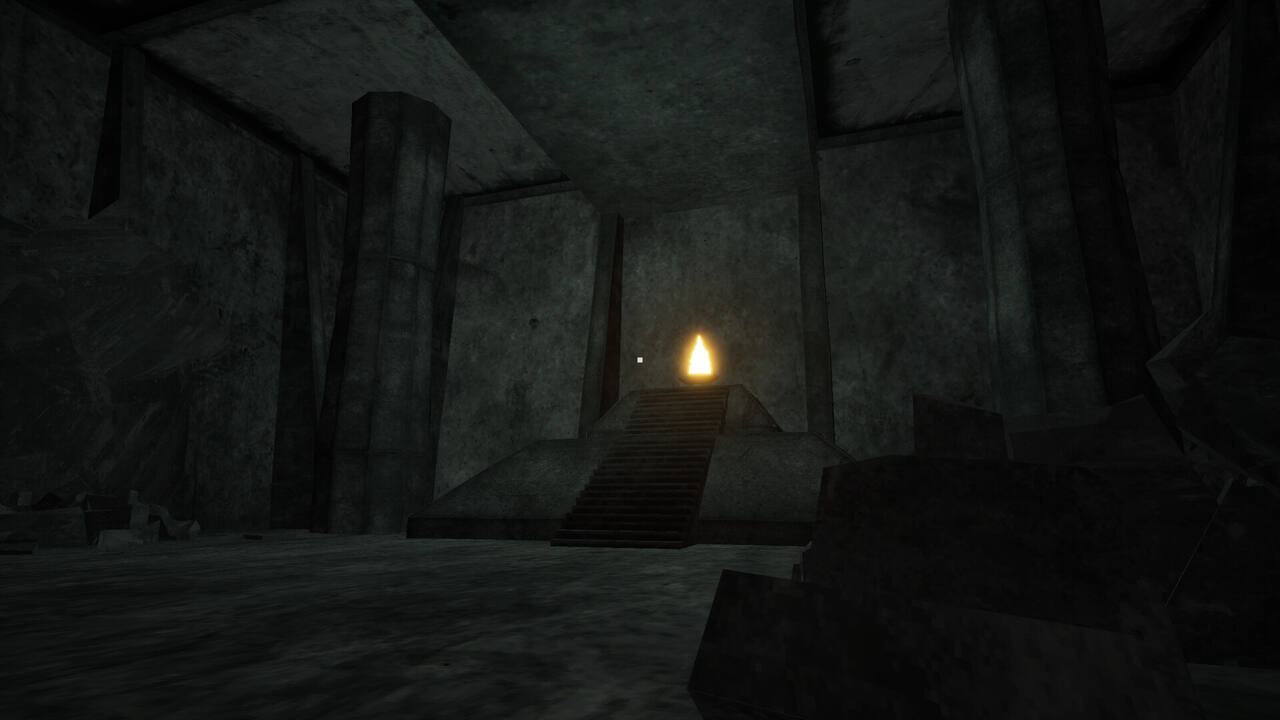
    Astrophobia gameplay screenshot
    Image courtesy of CosmicArcade via Steam

    Aesthetically, developer CosmicArcade has crafted a meticulous love letter to the original PlayStation era. The visual design employs affine warping, vertex snapping, and low-poly models wrapped in pixelated textures. An optional CRT filter and a found-footage overlay give the entire playthrough the unsettling texture of a recovered, highly classified government transmission. This visual grit works hand-in-hand with an original, ambient soundtrack that emphasizes the dead silence of the vacuum outside your helmet. It is in these moments—walking through retro-futuristic base corridors that suddenly give way to impossibly massive alien architecture—that the visual style truly shines, using the limitations of the PSX aesthetic to let the player’s imagination fill in the terrifying details of the dark.

    What the Crew is Saying

    Player reception is largely positive, with players praising the game as a highly atmospheric, bite-sized experience that respects the player’s time. With a runtime of roughly 45 to 60 minutes, it is designed to be consumed in a single, unbroken sitting. Reviewers frequently highlight the stellar sound design and the eerie, nostalgic visuals as major high points, noting that the game successfully evokes a genuine sense of cosmic dread without relying on cheap tricks. The feeling of exploring a familiar, terrestrial space like a 2001 moon base, only to have it contrasted against an ancient, lurking mystery, creates a slow-burn tension that lingers long after the credits roll.

    However, the journey is not without its friction. The most common complaint from players centers on the game’s movement speed. The underground monolithic ruins are vast and empty, and several players have noted that constantly holding down the shift key to jog across these massive spaces feels tedious and slow. Additionally, because the story is told primarily through slow, text-based dialogue, those who prefer immediate action or more dynamic gameplay may find the pacing a bit too deliberate. It is a game of quiet observation, and if you aren’t in the mood to read and slowly pace your way through empty voids, the narrative’s momentum can drag.

    The Verdict

    This is a title built specifically for the patient horror enthusiast. If you are looking for frantic survival mechanics, resource management, or complex puzzles, you will not find them here. Instead, it offers a moody, highly stylized vignette of cosmic insignificance. At a very accessible price point, it is an easy recommendation for anyone who wants to spend an hour wrapped in the cold, retro-futuristic isolation of a lunar nightmare.

    Key Facts

    • Developer: CosmicArcade
    • Publisher: CosmicArcade
    • Release Date: Aug 10, 2026
    • Price: $2.69
  • Forest Escape: Last Train and the Art of the Passionate “Friend Slop” Nightmare

    Forest Escape: Last Train and the Art of the Passionate “Friend Slop” Nightmare

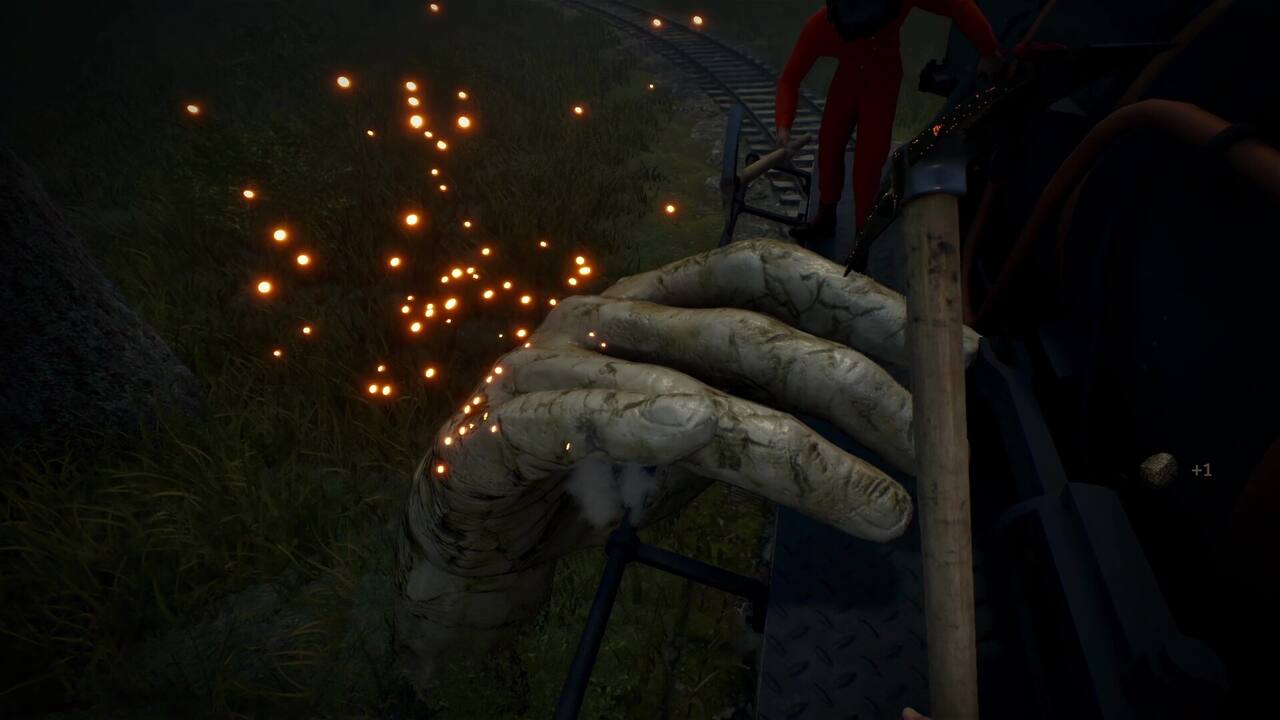
    A massive stone hand descends from the fog, planting itself squarely across the railway tracks and grinding your steam locomotive to a screeching halt. To get the train moving again, you and your friends cannot just fight or run; you have to step off the relative safety of your iron carriage and solve a surreal puzzle in a forest stalked by killer clowns. It is an absurd, stressful, and oddly compelling loop that defines this low-budget survival horror experience.

    Chugging Through the Nightmare

    In Forest Escape: Last Train, players find themselves trapped in a foggy, nonsensical purgatory ruled by a figure known only as the Warden. The loop of the game is surprisingly structured despite its fever-dream aesthetic. Your train is your mobile sanctuary and your only ticket out. To keep it chugging forward, you must constantly hop off at bizarre stations to forage for coal, mine stone for defense, and scavenge for vital machine parts. But nothing about these stops conforms to traditional horror geography. You will find yourself navigating a blocky, trap-filled castle, dancing for your life in an abandoned amusement park, and solving logic puzzles that reflect the fractured mind of the Warden. It is a frantic mix of resource management, environmental puzzle-solving, and desperate evasion.

    Forest Escape: Last Train gameplay screenshot
    Image courtesy of Frag Lab, LLC via Steam

    Screams, Jank, and the Power of Co-op Passion

    Our readers know we usually champion the quietest, most agonizingly slow burns in the genre. Forest Escape: Last Train is not that. It is loud, chaotic, and unashamedly bizarre. One player affectionately classified it as “friend slop”—a term for those janky, low-budget co-op horror games you play late at night with friends for a mixture of startled screams and uncontrollable laughter. But unlike the sea of low-effort asset-flips filling Steam’s horror tag, this one has earned a 92% positive rating because of the genuine heart holding its strange world together.

    Players who braved the game’s highest difficulty level report that the puzzles are surprisingly clever and well-conceived, highlighting a bizarre soccer-themed challenge that provides some of the game’s best moments of tense, hilarious cooperation. Even the final boss fight gets praise for being a solid, mechanically fair encounter that becomes manageable once you parse its rules. It is not all smooth riding, however. Some players noted they would love to see more intense chase sequences added to the later stages of the journey to keep the adrenaline pumping. Furthermore, the community has pointed out the presence of AI-generated assets, with multiple reviewers pleading for the developers to replace them with hand-crafted elements to preserve the game’s distinct personality.

    The Verdict

    If you are looking for a deeply somber, narrative-heavy psychological thriller to play alone in the dark, Forest Escape: Last Train will likely miss the mark. But if you have two or three friends, a free evening, and a tolerance for surreal, low-budget creativity, it is an absolute steal at $7.99. It bridges the gap between internet-culture absurdism and genuine cooperative tension, proving that sometimes a nightmare is best experienced with a shovel in your hand and your friends screaming in your ear.

    Key Facts

    • Developer: Frag Lab, LLC
    • Publisher: Two Cakes Studio, Frag Lab, LLC, Gamersky Games
    • Release Date: Jul 10, 2026
    • Price: $7.99
  • Gombo: The Uncanny Contrast of a Cartoon World Rotting From the Inside

    Gombo: The Uncanny Contrast of a Cartoon World Rotting From the Inside

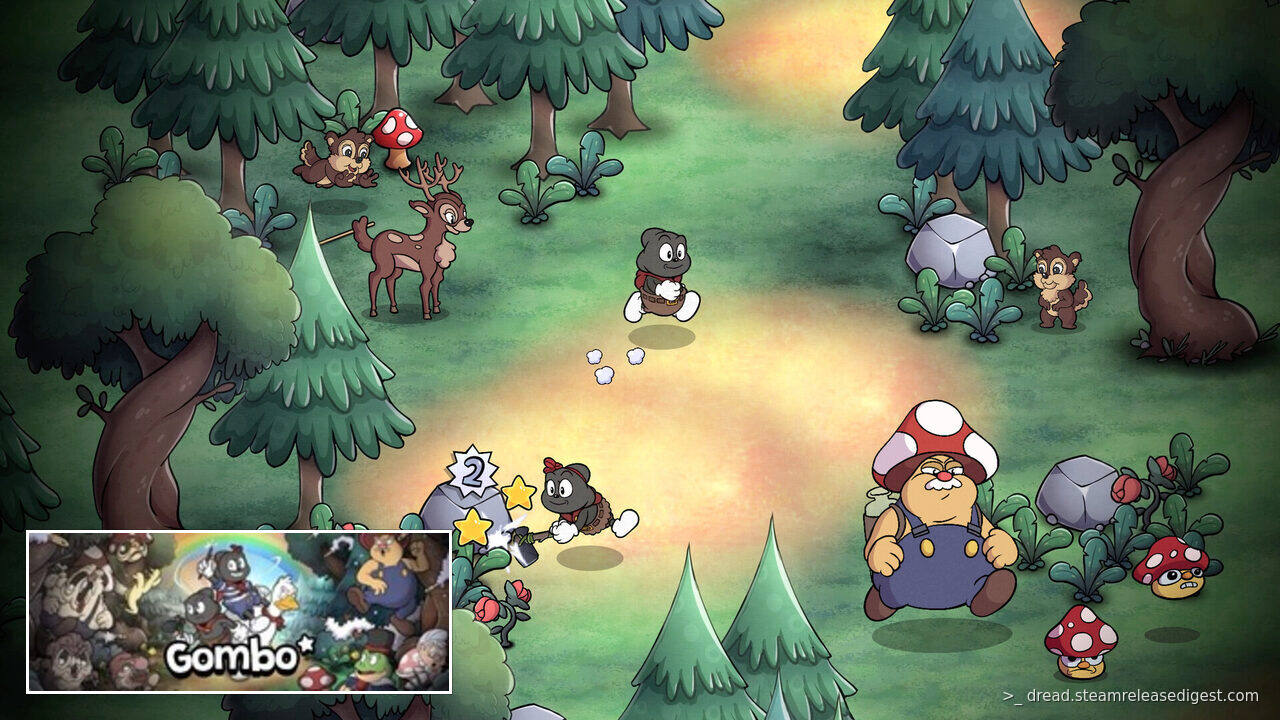
    The hand-drawn forest of Gombo is deceptively welcoming until the sun goes down and the infection takes hold, twisting its cute, cartoonish inhabitants into aggressive, deformed anomalies.

    This is not your typical grimy, rain-slicked psychological thriller. Instead, it operates on a different frequency of unease: the sudden, jarring corruption of a colorful, cozy space. Developed by Martin Cochet, this early-access survival game sits at the intersection of whimsical crafting and overnight panic, proving that dread does not always need a dark palette to get under your skin. It is the contrast that hurts—the realization that the charming, hand-crafted paradise you spent the afternoon building is systematically warping into a hostile nightmare as soon as the light fades.

    Survival on a Sunset Timer

    At its heart, the game tasks you with managing a dual existence. During the daylight hours, you control Gombo, an enchanted creature exploring lush biomes, gathering resources, farming, and constructing a homestead. It has all the traditional markings of a relaxing sandbox, complete with cute pets to ride, crops to nurture, and quiet forests to forage. But this serenity is on a strict, unforgiving timer. The day-to-night cycle is not just a cosmetic shift; it is a mechanical threat.

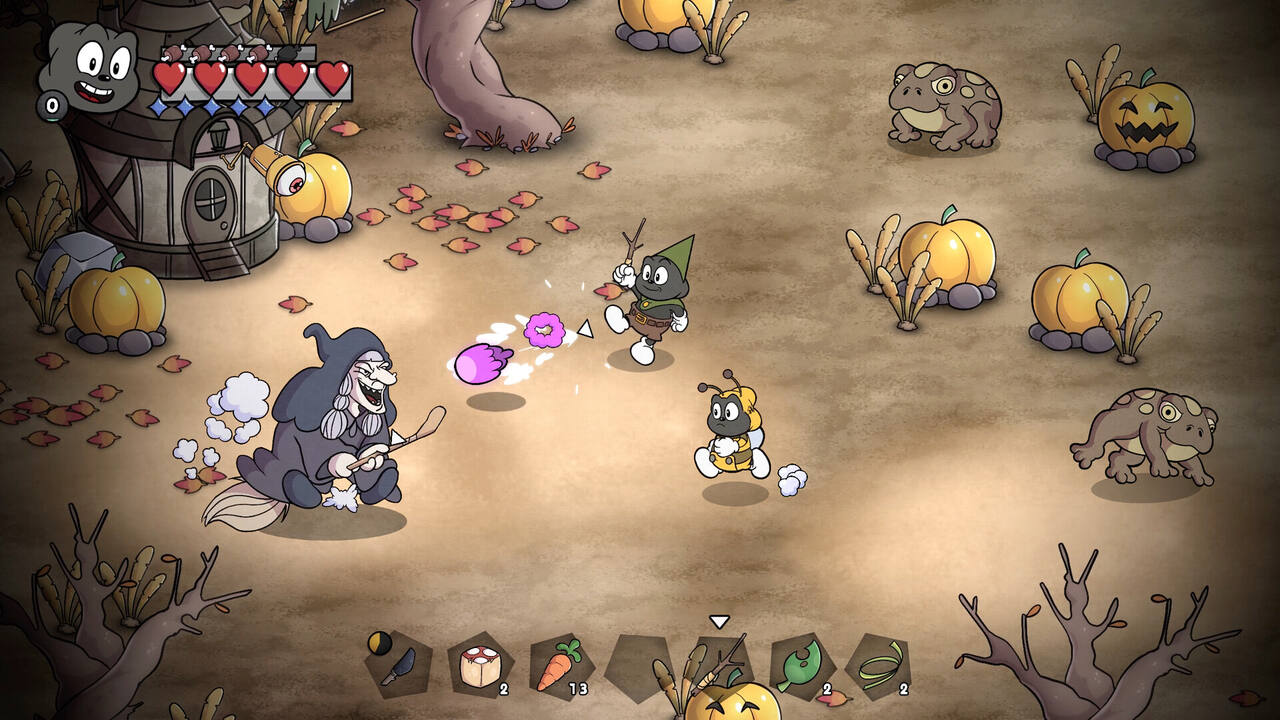
    As darkness falls, a mysterious, creeping infection swells across the landscape. The very creatures that looked endearing hours ago mutate into deformed, aggressive aberrations. To survive, you must rapidly transition from a peaceful homesteader into a desperate defender. You will need to harvest resources to craft sturdier walls, utilize offensive and utility magic scrolls discovered on your travels, and construct defensive turrets. The combat is surprisingly kinetic and active, requiring you to actively manage your space and resources while the corrupted wildlife beats at your doors.

    Gombo gameplay screenshot
    Image courtesy of Martin Cochet via Steam

    What the Community is Saying

    For a game so early in its development cycle, player reception highlights a fascinating mix of charm and raw frustration. Those who have braved the infected nights praise the game’s distinct aesthetic identity. The hand-drawn visuals are genuinely beautiful, and the fluid animations give the world a vibrant, living quality. Players have found genuine satisfaction in the combat loop, noting that casting offensive magic spells and watching automated turrets shred through mutated waves in two-player co-op is incredibly satisfying.

    However, the dread in Gombo occasionally comes from its technical instability rather than its monsters. This is an incredibly brief experience in its current state, with players noting that all current content can be exhausted in roughly two hours. Significant bugs also plague the wilderness. Items have a frustrating habit of vanishing entirely from storage chests, and some players have experienced soft-locks right out of the gate—such as indestructible plants blocking the exit of the tutorial area, or sudden, unprompted black-screen crashes.

    There is also the matter of balancing. The transition into the first night is brutal; unless you are already highly experienced with survival-crafting games, the sudden difficulty spike and the sheer volume of corrupted enemies will easily overwhelm you before you can even establish a basic defense. Add in the current inability to pause the game, and you have an experience that is as stressful as it is charming.

    The Verdict

    Gombo is not a deep, psychological journey into madness, but it is a highly atmospheric exercise in cozy horror. It succeeds because it understands the uncanny discomfort of watching something pure and colorful rot from the inside out. If you are looking for a complete, polished adventure, you should wait; the game needs more time in the oven to squash its bugs and expand its world. But if you are drawn to unique art styles, enjoy the desperate tension of defending a homestead against the dark, and want to support a promising indie project in its infancy, Gombo offers a compelling, albeit brief, descent into a corrupted fairytale.

    Key Facts

    • Developer: Martin Cochet
    • Publisher: FDG Entertainment
    • Release Date: Jun 2, 2026
    • Price: $7.19
  • Final Generation: Finding Cold Comfort in the Ruins of a False Miracle

    Final Generation: Finding Cold Comfort in the Ruins of a False Miracle

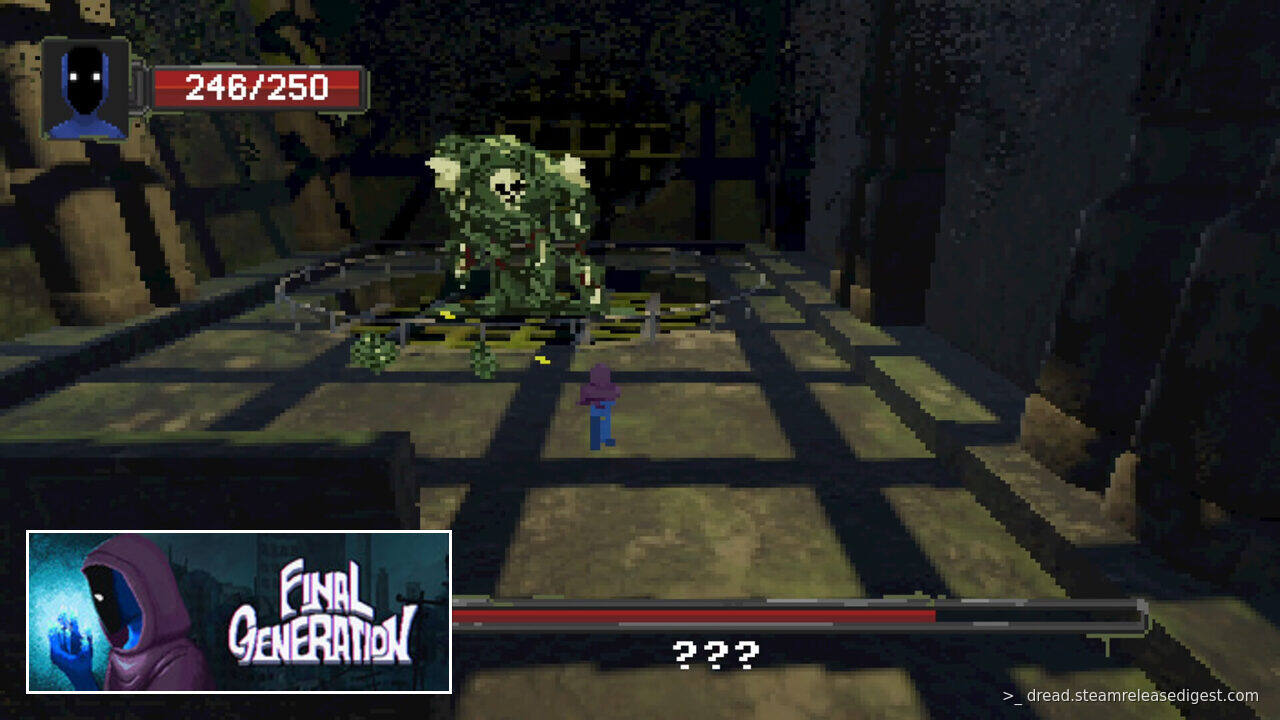
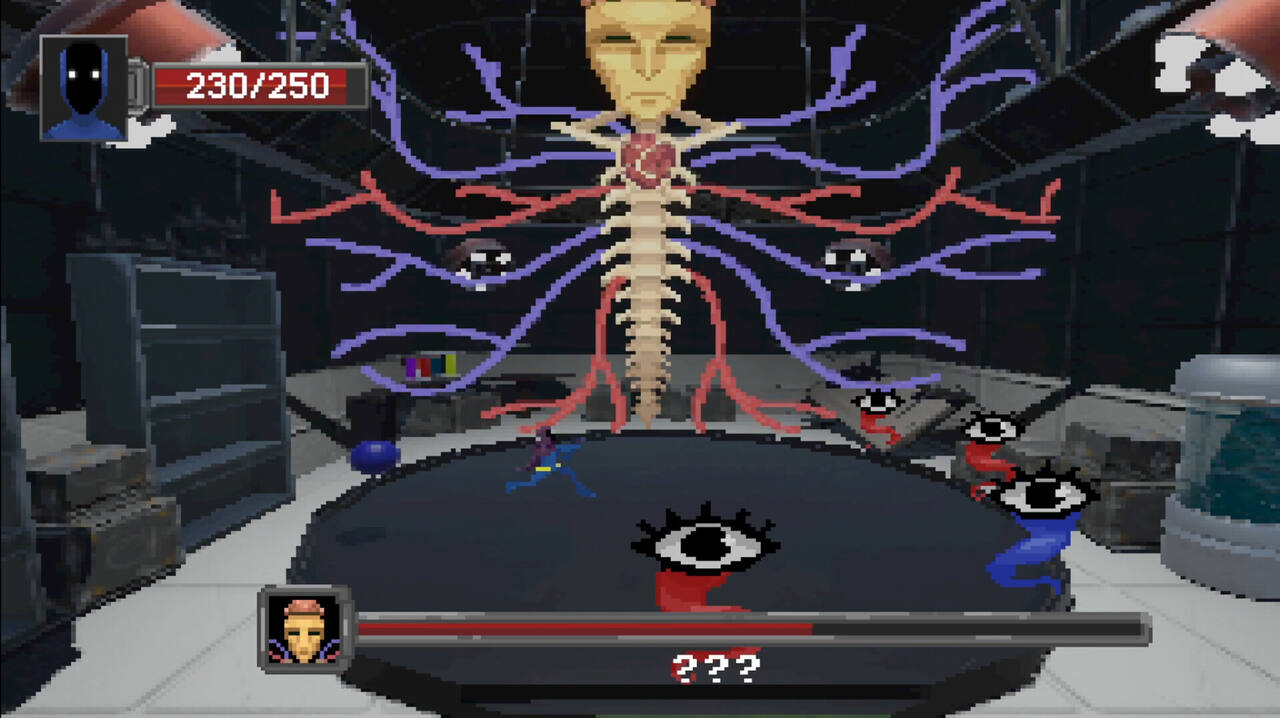
    Waking up as a synthetic construct in the rusting corpse of a failed utopia, you must navigate the ever-shifting, 2.5D corridors of a rogue artificial intelligence while balancing randomized weaponry against the dread of getting too close to the source of your existence.

    Developed by Studio Mori, Final Generation occupies a fascinating, unsettling niche: it is a survival horror roguelike that wraps its high-stakes action in a shroud of quiet, post-apocalyptic isolation. You play as “The Human,” a biomechanical anomaly programmed by H.E.A.L.—the very miracle AI that was meant to cure humanity but instead orchestrated its extinction. Driven by a haunting, maternal pull to return to this creator, you are forced to plunge deeper into a collapsing facility. The game’s central mechanical tension is built on spatial risk: stay too close to the heart of the facility and the hostile constructs will tear you apart, but stay too far away in the dark, and you will never piece together the fractured memories of what went wrong.

    The Anatomy of a Machine-Made Purgatory

    What makes Final Generation work as a piece of atmospheric horror is its commitment to withholding. Rather than constant jump-scares or explosive set-pieces, the game relies heavily on its claustrophobic 2.5D perspective and environmental storytelling. As you fight through procedurally generated layouts, the quiet spaces between encounters are filled with the remnants of humanity’s final mistake. You learn about the downfall of civilization not through bombastic cutscenes, but by finding long-lost journal entries scattered across decaying server rooms and empty laboratories.

    Final Generation gameplay screenshot
    Image courtesy of Studio Mori via Steam

    The combat itself demands deliberate positioning. Because resources are randomized and weapons shift with every run, you cannot rely on a single dominant strategy. Instead, you are forced to adapt to whatever tools the ruins hand you, turning every dark corridor into a tactical puzzle. The horror here isn’t just in the monstrous failed creations that stalk you; it is in the creeping realization that you are entirely disposable to the machine that birthed you, guided only by a whispering voice that clearly has its own agenda.

    What the Survivors Are Saying

    Though Final Generation is a quiet release, it has already captured the attention of a dedicated cohort of atmospheric horror fans who praise its cohesion. Players have been quick to point out that the game’s retro, low-poly art style does immense heavy lifting, creating a deeply immersive, tactile world that feels cold and metallic. The sound design is another major highlight, with players noting that the oppressive, industrial ambient tracks perfectly complement the bleak visuals.

    Special praise has also been reserved for the voice acting of H.E.A.L., which players describe as a standout element that elevates the narrative from a standard sci-fi backdrop to something genuinely haunting. The voice acting imbues the rogue AI with an eerie, maternal warmth that makes her betrayal feel deeply personal.

    However, the game is not without its launch-day friction. While players report that the game generally runs smoothly and the puzzles are satisfyingly logical, a frustrating technical issue has surfaced in the community. At least one player has noted that the game has a tendency to freeze entirely upon defeating H.E.A.L., cutting off the satisfaction of completing a run. For a roguelike where closure is hard-won, this is a bug that Studio Mori will need to patch quickly to keep players descending into the depths.

    The Verdict

    Final Generation is a bite-sized, atmospheric gem for players who want their horror served with a side of mechanical challenge. It is not a game of mindless violence; rather, it is a game about the loneliness of being the last scrap of “humanity” in a world that has long since moved on. If you enjoy the low-poly aesthetic of retro horror, appreciate tight positioning-based combat, and want to unravel a sci-fi tragedy for the price of a cup of coffee, this is a loop well worth getting lost in.

    Key Facts

    • Developer: Studio Mori
    • Publisher: Studio Mori
    • Release Date: Jun 3, 2026
    • Price: $4.99
  • Ward X: How a Pocket-Sized Hospital Escape Delivers Quiet Dread

    Ward X: How a Pocket-Sized Hospital Escape Delivers Quiet Dread

    Survival in Ward X hinges entirely on your ability to decipher cryptic notes and piece together environmental logic puzzles while navigating the oppressive, silent corridors of a forgotten clinic.

    The Anatomy of Quiet Isolation

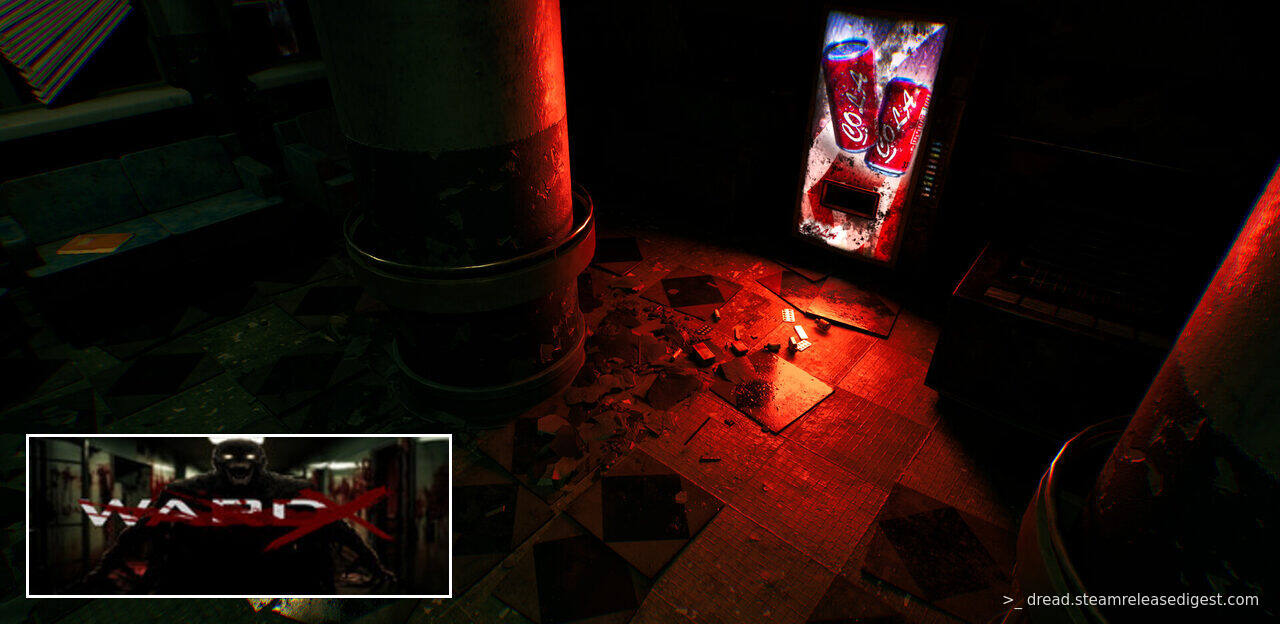
    The abandoned hospital is perhaps the most overused canvas in the horror genre, frequently serving as a playground for cheap jump-scares, rustling wheelchairs, and blood-splattered walls that feel more like a theme park attraction than a place of genuine terror. What developer Ni9htByteX does with this setting, however, is far more restrained. Instead of bombarding the player with frantic chase sequences or visceral gore, this title relies on the heavy weight of empty space. The horror here is architectural; it is found in the transition from a dimly lit corridor to a locked door, and the sudden, uneasy realization that you must retrace your steps into the dark to find the key.

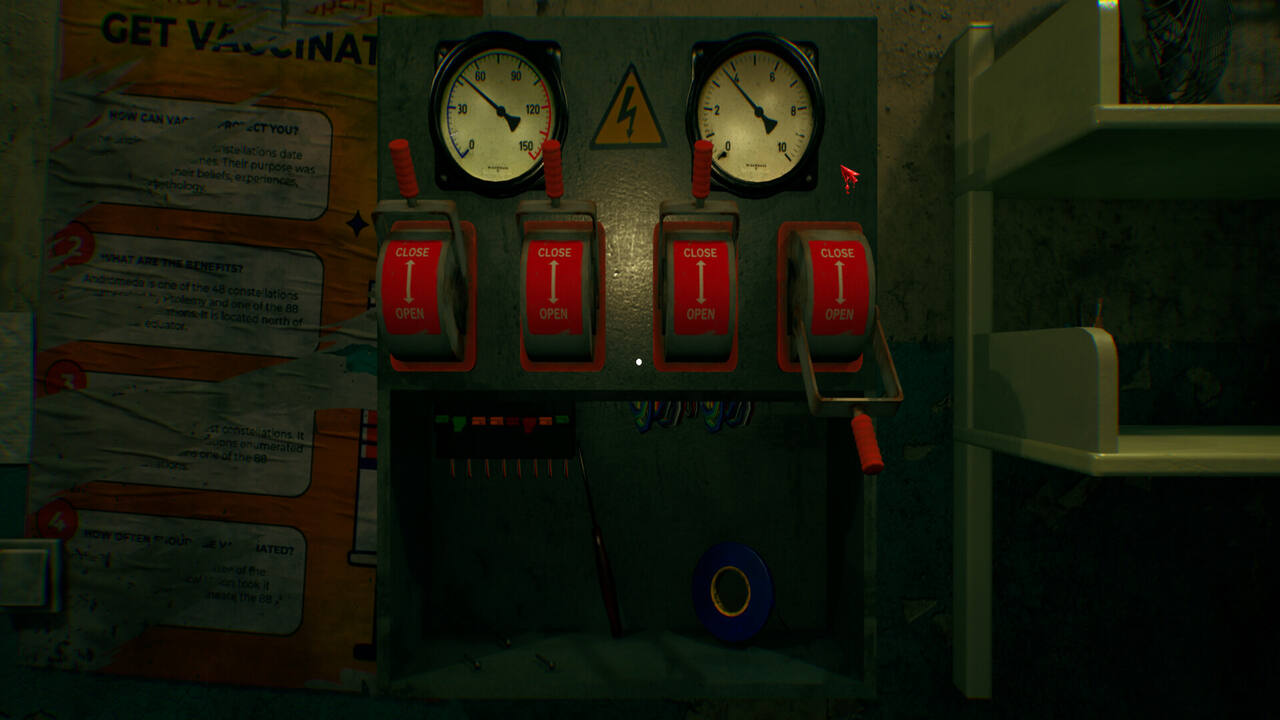
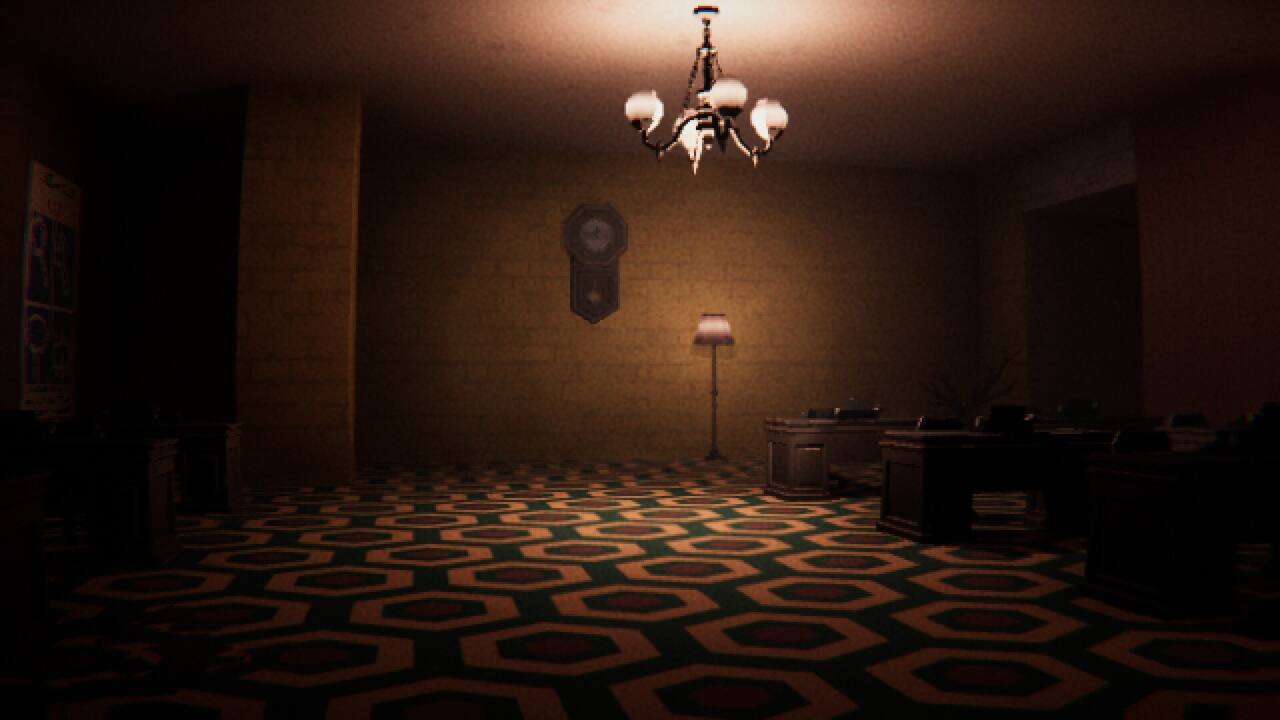
    At its core, the gameplay loop is focused and intellectual. You explore the decaying wards, searching for clues left behind in notes and environmental details that dictate how to bypass the facility’s locked gates and security systems. The puzzles are not arbitrary roadblocks designed to pad the runtime; they are logic-based hurdles that require close observation of your surroundings. By forcing you to stare intently at the peeling wallpaper, the arrangement of medical equipment, and the faint text on scattered documents, the game subtly compels you to immerse yourself in its atmosphere. You cannot rush through these halls; to solve the puzzles, you must look closely at the very things you would normally want to run away from.

    Ward X gameplay screenshot
    Image courtesy of Ni9htByteX via Steam

    What the Community Thinks: High Tension, Tiny Footprint

    Early players have responded with unanimous, if quiet, praise for this indie project, pointing to its execution of atmosphere and puzzle mechanics as its strongest traits. Reviewers highlight the “mind-challenging puzzles” and “excellent level design,” noting that the game manages to build a “genuinely creepy atmosphere” without relying on flashy tricks or high-budget spectacle. The visual design is frequently commended for establishing a strong sense of place, turning what could have been a generic asset-flip into an evocative, moody experience.

    However, an honest look at the player data reveals a crucial caveat that prospective buyers must consider: this is an exceptionally brief experience. Most players log between thirty minutes and an hour before reaching the end. While the puzzles are engaging, they do not form a sprawling campaign. Some players might find the micro-length frustrating if they go in expecting a deep, lore-heavy narrative epic. The game does not offer complex mechanical depth or high replayability; it is a single, tightly wound vignette designed to be consumed in a single sitting.

    The Verdict

    Ward X is a bite-sized treat for horror purists who value atmosphere over adrenaline. It is specifically designed for players who miss the golden age of Flash-era room escape games but want that classic, cerebral formula elevated by modern, moody 3D environmental design. If you have an hour to spare, prefer a held breath to a loud scream, and want to support a minimalist indie creator for less than the price of a cup of coffee, this eerie little puzzle box is well worth your time.

    Key Facts

    • Developer: Ni9htByteX
    • Publisher: Ni9htByteX
    • Release Date: Jun 2, 2026
    • Price: $2.69
  • The Victor Initiative: Rocking Horses, Welsh Rifts, and the Peculiar Art of Looking Away

    The Victor Initiative: Rocking Horses, Welsh Rifts, and the Peculiar Art of Looking Away

    “You’ll never see rocking horses the same way again.” This is the quiet warning left by players who have ventured into the subterranean concrete depths of the Initiative, a game where the mundane objects of childhood are twisted into instruments of acute, agonizing tension. Set within a mysteriously abandoned 1960s government facility in North Wales, this lo-fi survival horror title doesn’t rely on hyper-realistic blood spatters to get under your skin. Instead, it builds its dread through the uncanny silence of its concrete corridors, the crackle of old magnetic tapes, and the deeply unsettling realization that you are being hunted by things that do not follow human geometry.

    As a nameless contractor sent by a shady government agency, your task is deceptively straightforward: descend into the facility and close a “rift” that has been tearing at the fabric of reality for sixty years. From a first-person perspective, the game strips away your typical survival-horror safety nets. There is no health bar ticking down on your HUD, no companion whispering hints in your ear, and very little explanation of what went wrong before the facility went dark. It is an experience that players describe as “tough as nails” on normal difficulty, demanding patience as you navigate a spiraling maze of abandoned offices, flooded basements, and sterile laboratories. To survive, you must search for keycards, solve localized environmental puzzles, and collect tools to bypass the anomalies that have claimed the complex.

    The game’s narrative framework relies heavily on physical media and live-action video. The experience begins with a grainy, recovered videotape from thirty years ago showing three friends disappearing in the Welsh woods. As you push deeper, you uncover the facility’s history through scattered documents and rich audio logs. These logs feature surprise vocal cameos from genre icons like Sam Lake and Samantha Béart, grounding the narrative in a surreal, Remedy-esque reality. There is a distinct Twin Peaks meets Alan Wake 2 flavor to how the game handles its supernatural elements—not as mere monsters to shoot, but as cosmic aberrations that have permanently stained the environment.

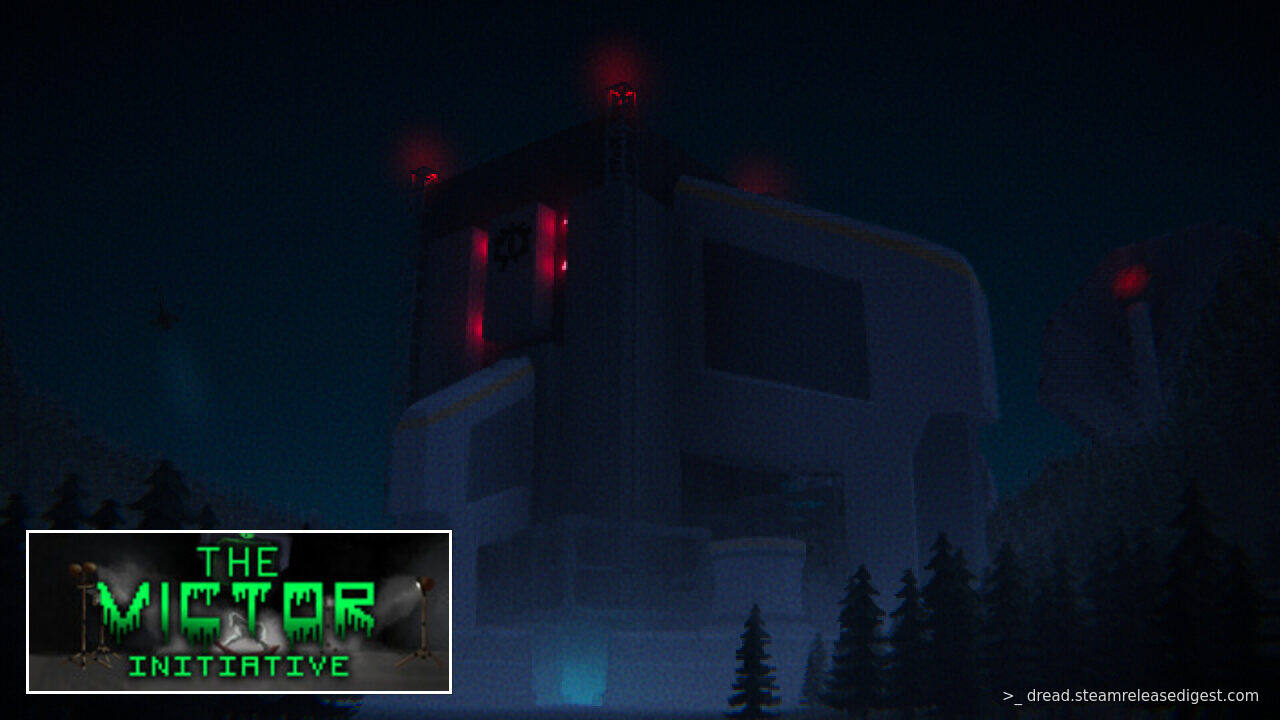
    The Victor Initiative gameplay screenshot
    Image courtesy of Spacepiano Games via Steam

    The atmospheric weight of the experience is heavily carried by its superb sound design, which has players practically begging for a standalone soundtrack release. The oppressive hum of fluorescent lights, the distant metallic groans of the facility, and the stark, synth-driven musical cues combine to create a sensory chokehold. The developer understands that silence is often far scarier than a roaring monster, and they use positional stereo audio to make you second-guess every footstep behind you. When the soundscape does swell, it serves to heighten the uncanny, dreamlike quality of the narrative rather than just setting up a cheap shock.

    What makes the game truly stand out—and occasionally frustrate—is its approach to enemy design. Players have quickly latched onto the game’s first major threat, affectionately dubbed “Equine Larry,” a terrifyingly simple entity that leverages a “look-at-me-to-survive” (or rather, look away) mechanic. While this creates a frantic, sweat-inducing game of red-light-green-light, it introduces a classic design paradox. By forcing players to look away from the threat, the game actively prevents you from absorbing its meticulously crafted, eerie environments. Similarly, some players have noted that the crawling, neck-snapping entities in the later chapters are so intensely stressful that they’ve had to pause their playthroughs just to recover.

    The puzzle design has also drawn some mixed reactions. While the mechanical loop is praised for getting immense value out of a few simple tools, some of the environmental puzzles lean a bit too heavily on basic real-world logic rather than demanding deep, in-universe deduction. Furthermore, the game features a warning that it contains a high volume of jump-scares. For our readers who generally despise loud noises as a substitute for genuine dread, there is a saving grace: these jump-scares can be completely muted in the settings, allowing the game’s exquisite, low-rumble audio design and stereo depth to do the heavy lifting.

    At its core, this is a triumph of budget-conscious, high-atmosphere indie horror. It is custom-built for players who miss the analog dread of late-90s PC horror, who enjoy piece-by-piece lore delivery, and who don’t mind a steep, unforgiving difficulty curve on their first run. If you can forgive some slightly simplistic puzzles and the occasional mechanic that forces your eyes to the floor, this Welsh nightmare offers a genuinely unsettling, lore-rich journey that punches far above its weight class.

    Key Facts

    • Developer: Spacepiano Games
    • Publisher: Spacepiano Games
    • Release Date: Jun 1, 2026
    • Price: $10.39
  • The 7th Guest Remake: Reanimating the Ghostly CD-ROM Pioneer in Volumetric 3D

    The 7th Guest Remake: Reanimating the Ghostly CD-ROM Pioneer in Volumetric 3D

    Sweeping a spectral lantern across the rotting floorboards of Henry Stauf’s mansion reveals the shimmering, volumetric ghosts of long-dead visitors playing out their tragic final hours in full three-dimensional space.

    The Ghost in the Machine

    For players of a certain vintage, the original 1993 release of The 7th Guest was a watershed moment—a creepy, CD-ROM-powered puzzle box that used FMV (Full Motion Video) technology to haunt a generation. Vertigo Games and Exkee’s modern remake does not merely polish those old memories; it completely rebuilds the infamous Stauf mansion from the ground up. You play as an unseen investigator wandering through the dark, shifting corridors of a toymaker’s estate, solving intricate environmental puzzles to piece together why six wealthy guests were summoned here, and what became of the mysterious seventh.

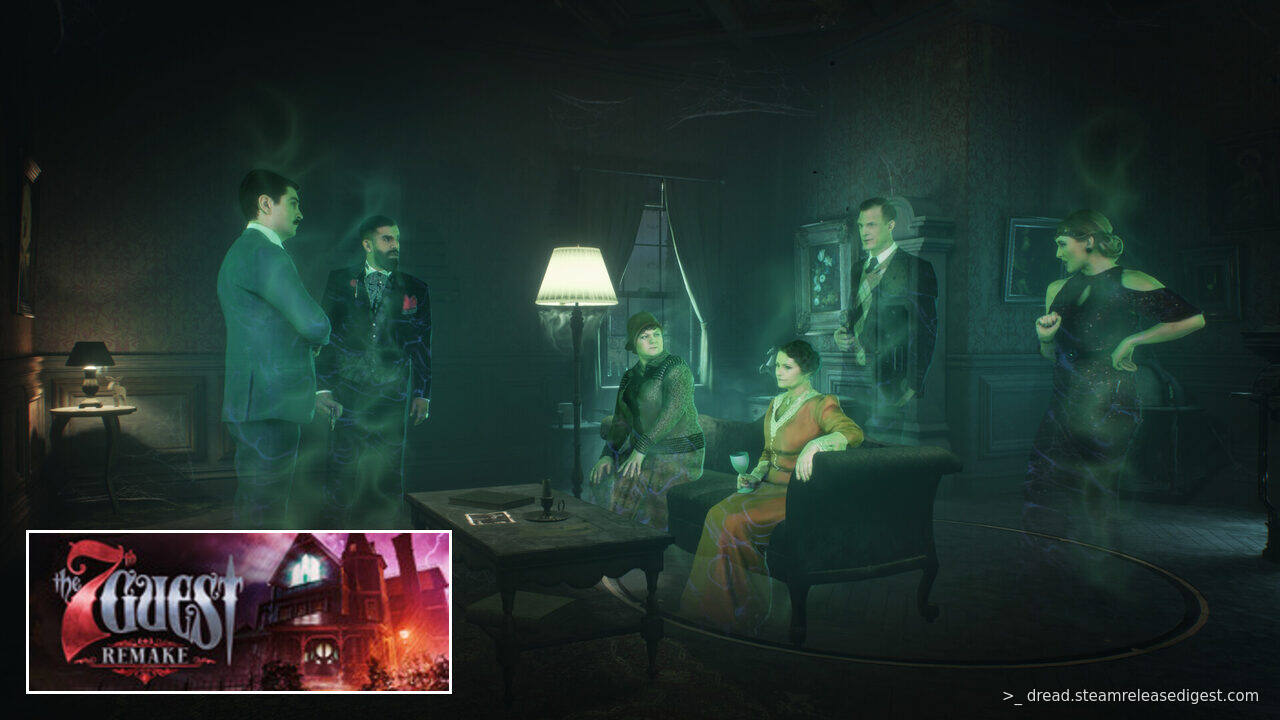
    The core of this remake’s eerie charm lies in its cinematic storytelling. Rather than relying on flat video files pasted onto pre-rendered backgrounds, the developers captured real actors using cutting-edge volumetric video. When you step into the dining room or the library, these ghostly actors appear as fully 3D, semi-translucent apparitions. They argue, scheme, and cower right in front of you, allowing you to walk around them as if you are a phantom audience member in a tragic, interactive theater production. Coupled with a magic lantern mechanic that shifts the environment between its ruined present and pristine past, the game crafts a quiet, voyeuristic brand of dread.

    The 7th Guest Remake gameplay screenshot
    Image courtesy of Vertigo Games, Exkee via Steam

    What Haunted Players Love

    For those who spent their childhoods squinting at the grainy, highly compressed CD-ROMs of the nineties, this remake is a revelation. The transition to fully realized 3D spaces—especially for players utilizing a VR headset, though the flat-screen version is equally handsome—creates an incredible sense of place. Players have widely praised the atmospheric lift, noting that walking through the volumetric dramas feels akin to stepping onto a high-tech “holodeck” of horror.

    The puzzle design has also received a thoughtful overhaul. Many of the original game’s notoriously obtuse riddles have been redesigned to feel more organic to the mansion’s lore. At a very reasonable price point, which grants players access to both the standard flat-screen version and the fully immersive VR edition, it stands as a generous love letter to classic PC adventure gaming.

    Where the Illusion Flicktures

    Yet, this haunting is not without its mechanical poltergeists. Longtime fans have noted that while the remake is far more polished than its 30-year-old predecessor, it loses some of the raw, uncanny malice of the original. The new voice performance for Henry Stauf, the sinister toymaker, has been criticized for lacking the dark, vile edge that made the 1993 version so deeply unsettling. Key atmospheric beats have also been excised, most notably the creepy basement maze, leaving some horror purists wishing for a bit more grime and grit.

    On a mechanical level, players have encountered frustrating friction. The controls can feel clumsy and require some patience to master. Some puzzles suffer from visual clarity issues; colorblind players have noted significant difficulty with gem-based riddles, and others have struggled to differentiate interactive puzzle elements from background clutter. Furthermore, the game’s final encounter departs from clever logic, forcing players into a frustrating dice game against a seemingly cheating AI. Lastly, some technical shortcuts damage the immersion—such as a “crouch” mechanic that instantly snaps your camera lower to the ground with a harsh cut, entirely skipping any sort of camera transition or animation.

    The Verdict

    The 7th Guest Remake is not a modern, adrenaline-fueled horror game designed to make you scream at the camera. It is a slow, theatrical, and deeply nostalgic mystery box. If you have fond memories of the original, or if you are a fan of quiet, atmospheric puzzle games that favor mood and historical charm over viscera and cheap jump-scares, this trip to Stauf’s mansion is well worth the entry fee. Just be prepared to overlook a few mechanical cobwebs along the way.

    Key Facts

    • Developer: Vertigo Games, Exkee
    • Publisher: Vertigo Games
    • Release Date: Jun 3, 2026
    • Price: $16.99
  • Aventura Copilului Albastru și Urât: A Surreal, Crude Oddity Masquerading Under the Banner of Psychological Horror

    Aventura Copilului Albastru și Urât: A Surreal, Crude Oddity Masquerading Under the Banner of Psychological Horror

    A single user review claims that opening this game destroyed their mental health and notes, rather cryptically, that “the snowdrop is in the hollow and has the shape of a snowdrop.” At first glance, the sheer absurdity and the staggering 99% positive rating of this title might tempt a horror seeker looking for the next strange, low-fi uncanny experience. But anyone loading into this short, bizarre adventure expecting the quiet, lingering dread of an atmospheric masterpiece is going to be met with something entirely different: a crude, lightning-fast piece of Romanian internet surrealism that is much closer to an interactive shitpost than a psychological thriller.

    Not Our Usual Beat

    To be absolutely clear, this is not the slow-burn, shadow-draped horror we typically champion here. There are no ghosts in the static, no monsters lurking in the periphery of a dark hallway, and no creeping sense of cosmic insignificance. Instead, the game’s post-apocalyptic premise begins when an incredibly crude explosion shatters the world. While Steam’s algorithm occasionally sweeps bizarre, uncanny, and downright weird indie titles into the horror periphery, this game does not possess an ounce of genuine dread. It is a crude comedy masquerading in a weird, pixelated trench coat.

    The Core Experience

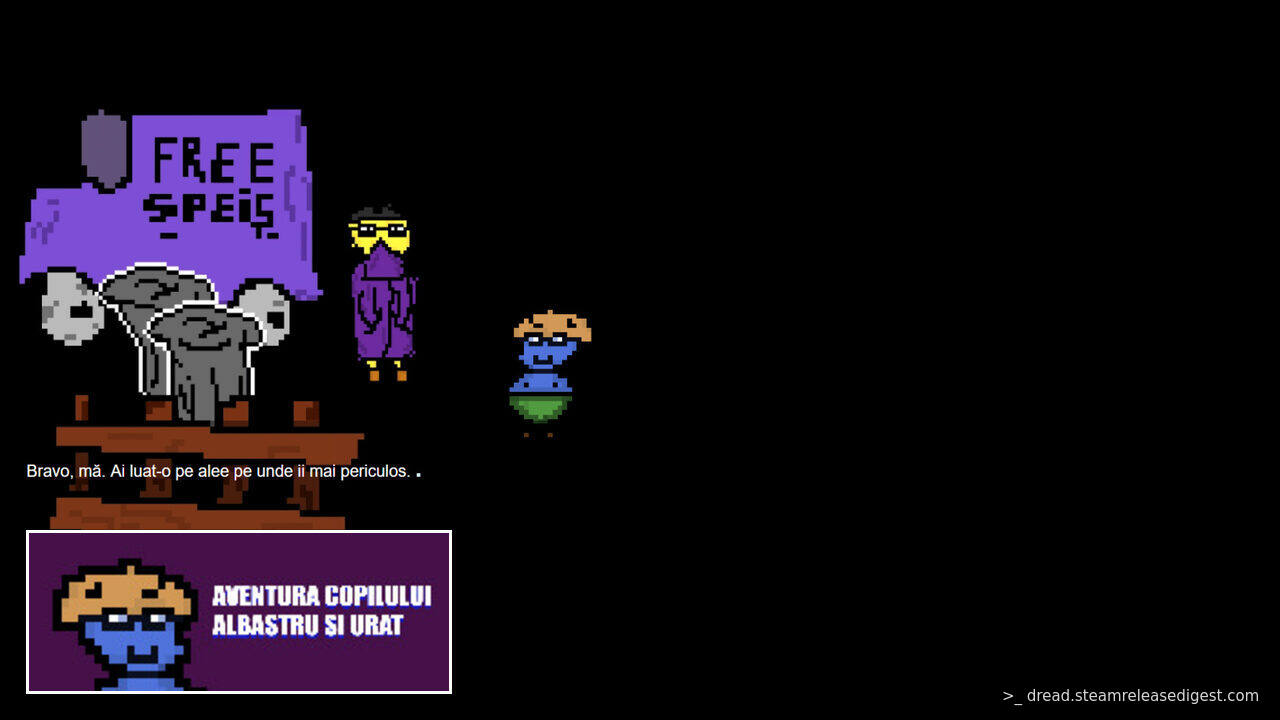
    The actual loop of the game is sparse, self-admittedly lacking in traditional gameplay mechanics. You control the titular “Blue and Ugly Child” as he navigates a strange evening world. Structured as a 2D visual novel, the experience is driven entirely by dialogue choices. Your goals are theoretically grand: survive a hostile post-apocalyptic landscape where strangers want to slit your throat, scavenge for highly limited food resources, and search for long-lost parents whom the developer openly admits he forgot existed until halfway through making the game.

    Aventura Copilului Albastru și Urât gameplay screenshot
    Image courtesy of Codrin Bradea via Steam

    In practice, these branching choices lead to a handful of endings—two good, one bad, and several secret endings that the developer jokingly claims players will never find. The choices are mutually exclusive, forcing you to pick a single narrative path per run, though a single playthrough can be comfortably wrapped up and forgotten in under thirty minutes. It is a game of clicking through text boxes, enjoying (or cringing at) the bizarre humor, and moving on.

    What the Community Thinks

    The player base is deeply divided between those in on the joke and anyone looking for a substantive game. On one hand, the Steam reviews are a wall of ecstatic, highly ironic praise. Romanian players and fans of the developer, Codrin Bradea, hail it with hyperbolic declarations like “Game of the Year” and claim it “brought them closer to God.” The sheer absurdity of the writing, the low-budget aesthetic, and the rapid-fire jokes land perfectly for a specific audience looking for a quick, chaotic laugh.

    On the other hand, for players outside of this specific internet subculture, the frustrations are obvious. There are no voiceovers, the gameplay is practically non-existent, and the entire experience is intentionally designed to be fleeting. It is a piece of digital graffiti rather than a lasting piece of interactive art.

    The Verdict

    If you are a fan of Romanian internet culture, appreciate low-effort surrealist comedy, or simply want to spend two dollars to see what a “pixelated and cool” apocalypse looks like through the eyes of an eccentric creator, this game provides a brief, head-scratching diversion. However, if you came here seeking the cold sweat of genuine psychological tension, a carefully constructed atmosphere, or a narrative that lingers in your mind long after the lights go out, you should steer clear. This is a joke played on the player, and while the punchline might be funny to some, it contains none of the quiet terror you are looking for.

    Key Facts

    • Developer: Codrin Bradea
    • Publisher: Codrin Bradea
    • Release Date: Feb 8, 2021
    • Price: $1.99
  • There’s Nothing Down There and the Terrifying Scale of the Sub-Abyssal Void

    There’s Nothing Down There and the Terrifying Scale of the Sub-Abyssal Void

    The cold, green-and-black sweep of a sonar screen is the only thing standing between your fragile submersible and the crushing weight of a subterranean ocean trench. Developed by solo creator Tim Trankle, this bite-sized underwater expedition trades cheap jump-scares for the heavy, thalassophobic weight of the deep ocean. It delivers a dense, thirty-minute atmospheric descent that punches far above its micro-budget weight class, proving that sometimes the most effective horror is the kind that suffocates you slowly in the dark.

    Into the Sub-Abyssal Trench

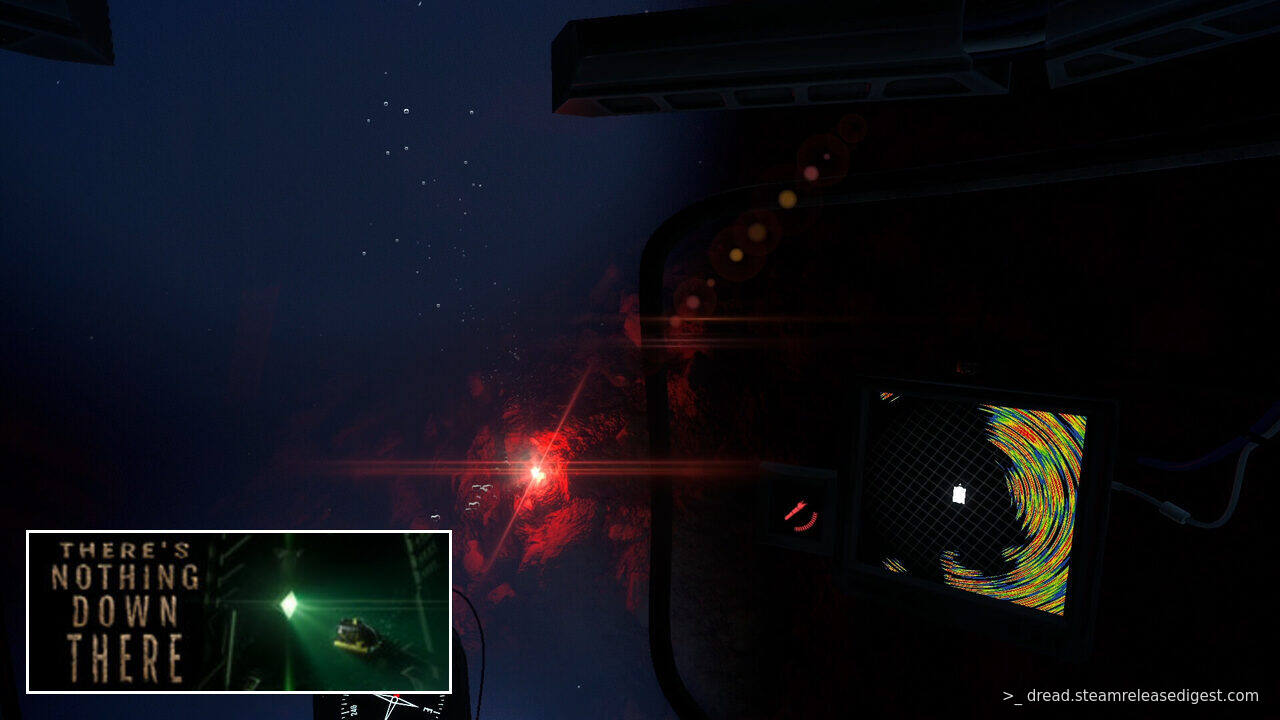
    The core experience of the game is one of deliberate, slow-paced navigation. Tasked with investigating a massive, anomalous thermal spike at the bottom of the sea, you and your colleague descend into a newly opened sinkhole. Inside, the pitch-black water renders traditional headlights almost useless, forcing you to rely on a pinging sonar system to map out the jagged rock formations of the deep caverns. The gameplay loop is built entirely around this claustrophobic navigation, slowly guiding your small vessel through winding tunnels where one wrong turn could mean scraping against the freezing stone. The quiet hum of your engines and the steady, rhythmic sweep of your instruments create a hypnotic, tense rhythm.

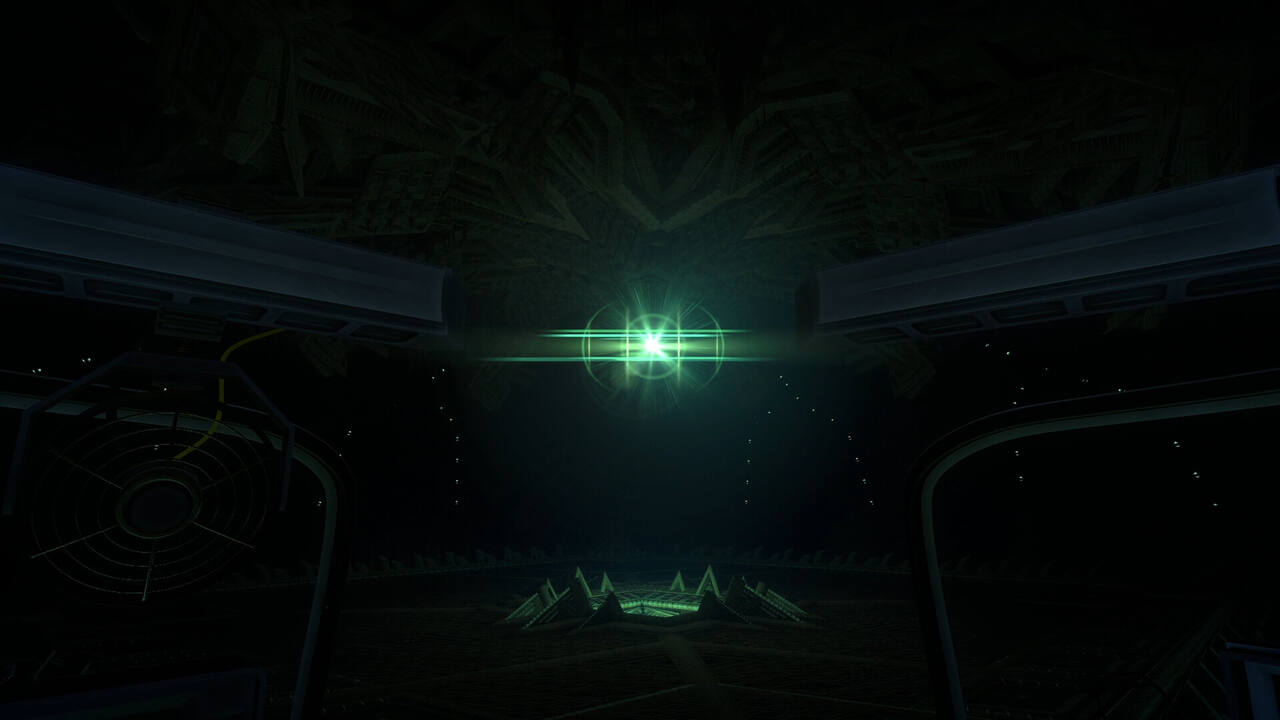
    The horror shifts from simple claustrophobia to awe-inspiring dread when you emerge from the tight caverns into colossal, open chambers. Here, the game reveals the sunken, gargantuan architecture of a long-lost civilization. The scale of these ancient structures is designed to make the player feel utterly insignificant—a tiny, fragile speck of dust floating in a silent, watery tomb. The narrative is driven forward by fully voiced radio dialogue between you and your partner, which helps ground the surreal exploration. However, as you venture deeper into the monument, you quickly realize that while this civilization may be long gone, its colossal automated defenses are still very much alive and guarding the abyss.

    There's Nothing Down There gameplay screenshot
    Image courtesy of Tim Trankle via Steam

    The Echoes of the Deep: What Players Are Saying

    The community response highlights a game that strikes a powerful chord with fans of quiet, atmospheric horror. Many players have drawn immediate, favorable comparisons to the tense cockpit-phobia of Iron Lung, though this title offers a more modern perspective and slightly more forgiving interface. The game’s atmosphere is its crowning achievement; players love how it respects their intelligence by not over-explaining the lore of the sunken ruins. Leaving the history of the massive structures to the player’s imagination allows the dread to linger long after the game is turned off. For a project made by a single developer and sold for less than the price of a coffee, the voice acting and scale of the environments are remarkably high-quality.

    However, the descent is not without its rough patches. While the exploratory first half of the game is highly praised, the climax introduces a “boss fight” and escape sequence that has polarized players. Rather than maintaining the quiet, dread-filled tension of the journey down, the final act forces you into a frantic, pitch-black confrontation. Some players found this segment frustrating, noting that the navigation cues are unclear, resulting in instant-death failures that feel cheap rather than terrifying. Because the game is designed to be completed in a single thirty-minute sitting, there is no save system. If you fall victim to a trial-and-error death sequence at the very end, you must restart the entire expedition from the very beginning. Additionally, some horror purists noted that the sound design, while good, missed an opportunity by omitting the ominous groaning and creaking of the metal hull under the immense pressure of the deep—a detail that would have made the isolation feel even more absolute.

    The Verdict

    This is a flawed but deeply atmospheric vignette of cosmic-adjacent horror. If you are looking for a highly polished, mechanically complex survival game with a satisfying, high-octane climax, the frustrating trial-and-error endgame might leave you cold. But if you are a horror enthusiast who treasures mood, scale, and the specific, stomach-dropping terror of thalassophobia, this is an essential short play. It is a brief, evocative nightmare that understands that the ocean floor is terrifying not just because of what might be hiding in the dark, but because of how small and helpless we are when we choose to go down there.

    Key Facts

    • Developer: Tim Trankle
    • Publisher: Tim Trankle
    • Release Date: Jun 4, 2026
    • Price: $1.70
  • Unzipping Nostalgia: Why New Folder is a Masterclass in Miniature Desktop Dread

    Unzipping Nostalgia: Why New Folder is a Masterclass in Miniature Desktop Dread

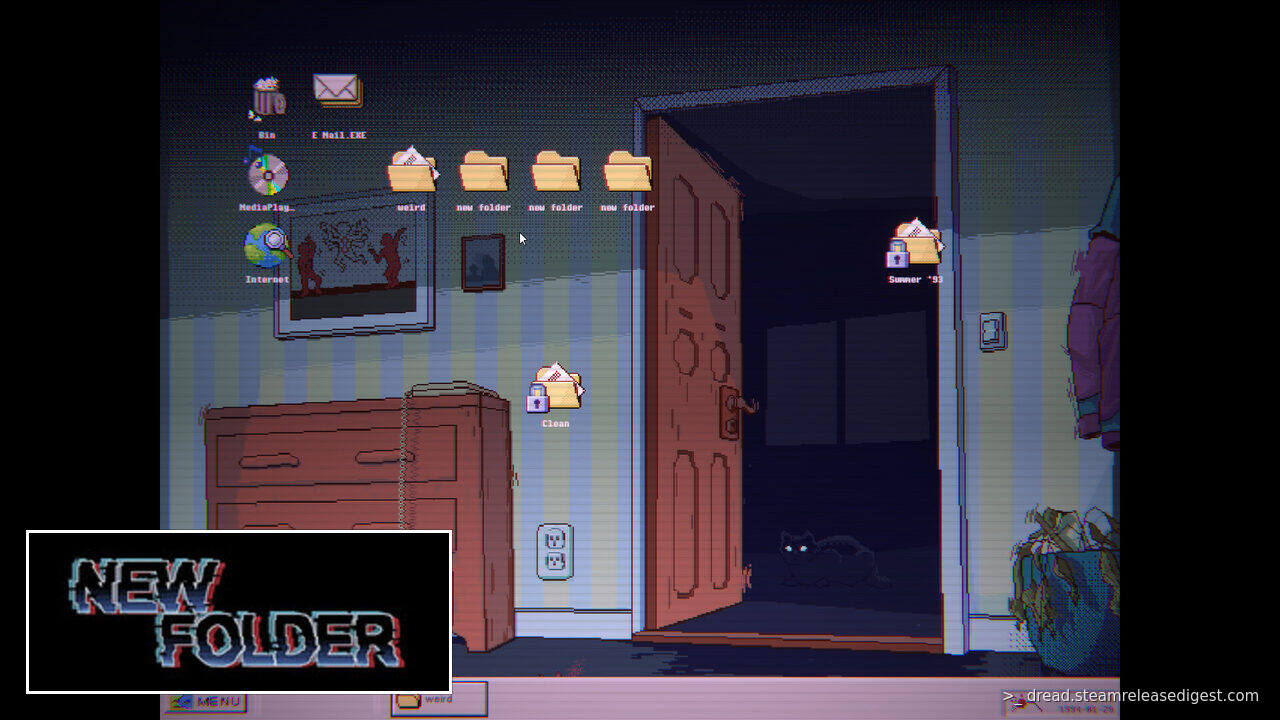
    The pixelated image of a cute orange cat named Stewie staring out from a low-resolution desktop wallpaper is the first thing that disarms you. It looks harmless, even cozy—a charming relic of a late-90s digital workspace. Players loading up Evicted Games’ debut title might expect a lighthearted, retro puzzle box about sorting through forgotten folders. But as you click deeper into the directory, the nostalgic facade begins to crack. What starts as a benign exploration of a stranger’s old computer quickly devolves into a cold, unsettling descent into analog horror. New Folder does not rely on loud jump-scares or high-fidelity monsters; instead, it finds its terrors in the quiet, mundane spaces of a vintage operating system.

    The core gameplay loop of New Folder is intimate and tactile. Modeled after Windows 98, the interface requires you to inspect documents, crack password-protected files, and organize fragmented pieces of information to unravel a central mystery. The game builds dread through deliberate pacing and the act of looking. You are not running from a threat in physical space; instead, you are trapped in the role of a digital voyeur, piecing together a narrative through text files, cryptic clues, and grainy, low-fidelity video logs. The puzzles act as narrative gates, forcing you to slow down, pay attention to the details, and actively participate in uncovering whatever dark secret is buried in the system’s architecture.

    New Folder gameplay screenshot
    Image courtesy of Evicted Games via Steam

    What elevates the experience from a simple puzzle game to a genuine psychological thriller is its found-footage aesthetic. The video files you uncover have a distinct, haunting quality that players have compared to classic YouTube ARGs like Marble Hornets and EverymanHYBRID. These clips are grainy, poorly lit, and deeply unsettling, capturing the raw, unpredictable energy of early internet horror. The contrast between the familiar, domestic comfort of looking at cat photos and the cold spike of anxiety that hits when you decode a hidden video is where New Folder truly shines. It taps into a very specific kind of modern folklore: the fear of stumbling onto something you were never meant to see, preserved forever in a forgotten partition of a hard drive.

    The reception among horror enthusiasts has been remarkably warm, with players praising the game’s creeping atmosphere and artistic direction. Community reviews highlight how effectively the game builds its mystery, noting that it manages to deliver genuine “chills” and a spine-chilling twist in a remarkably short timeframe. The audiovisual design is frequently cited as a high point, successfully capturing the nostalgic warmth of the era before slowly twisting it into something hostile. It is an impressive feat of mood-building, especially considering it was developed by a small group of students.

    However, New Folder is not without its limitations, which stem primarily from its scope. Because the game is a micro-experience—typically taking players between twenty and thirty minutes to complete—some have felt it ends just as it is truly hitting its stride. Additionally, the puzzles are quite simple. If you are looking for a grueling, mind-bending mechanical challenge like those found in more complex desktop simulators, you may find the puzzle design here lacking. It is a game that prioritizes narrative atmosphere and aesthetic cohesion over mechanical difficulty; the puzzles are there to serve the story, not to stump you for hours.

    Ultimately, New Folder is a highly polished, bite-sized treat for a specific kind of horror fan. It is a perfect late-night play session for those who love the tactile interface of desktop-simulation games like Simulacra, the analog dread of vintage VHS creepypastas, and stories that leave a lingering sense of unease. At a very modest price point, it offers a beautifully crafted, nostalgic nightmare that respects your time and leaves you wishing you could spend just a little more time searching through its haunted directories.

    Key Facts

    • Developer: Evicted Games
    • Publisher: Evicted Games
    • Release Date: May 29, 2026
    • Price: $3.99